
 []
[]
Share







Copied
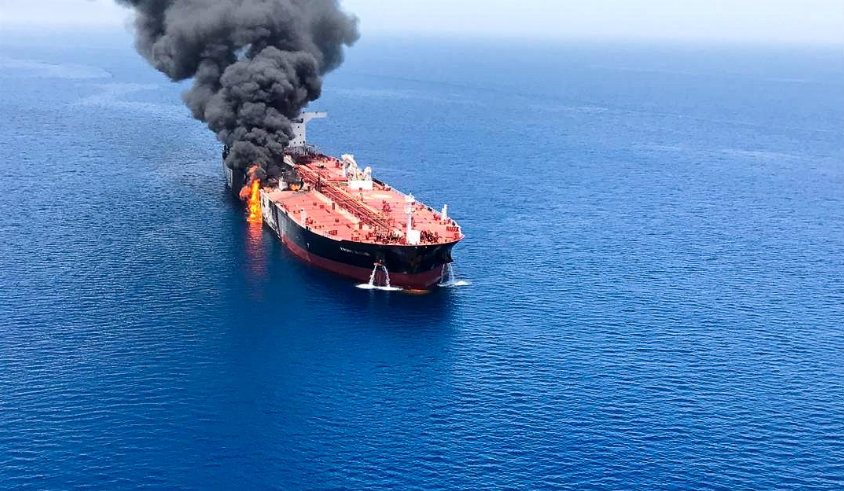
The two oil tankers crippled in attacks in the Gulf of Oman last week that Washington and Riyadh have blamed on Iran are being assessed off the coast of the United Arab Emirates before their cargos are unloaded, the ships' operators said on Sunday.
Damage assessment on Japan's Kokuka Courageous and preparation for ship-to-ship transfer of its methanol cargo would start after authorities in Sharjah, one of the UAE's seven emirates, complete security checks, Bernhard Schulte Shipmanagement said.
Thursday's attacks, which also hit Norwegian tanker Front Altair, have heightened tensions between Iran and the United States and its Gulf allies after similar blasts in May struck four ships, including two Saudi oil tankers, off the UAE.
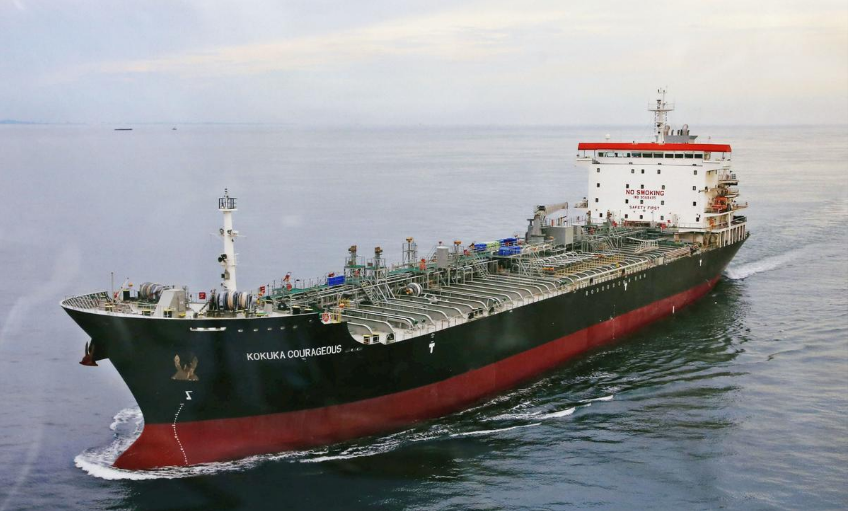
The picture of Japan's oil tanker Kokuka Courageous is displayed during a news conference by the ship owner Kokuka Sangyo Ltd. at the company office in Tokyo, Japan, June 13, 2019. /Reuters Photo
In a show of military strength, the Royal Saudi Air Force flew in joint formation with U.S. F-15 fighter jets over the Gulf Arab region, Saudi state news agency SPA said on Sunday.
U.S. President Donald Trump accused Tehran over those attacks last Thursday, while Tehran has denied any involvement in the attacks near the Strait of Hormuz, a major transit route for global oil supplies.
U.S. Secretary of State Mike Pompeo, a former director of the Central Intelligence Agency, also defended the conclusion of Trump administration that Iran was behind the attacks, saying there was other evidence beyond the video footage released by the U.S. last week. “The intelligence community has lots of data, lots of evidence. The world will come to see much of it.”
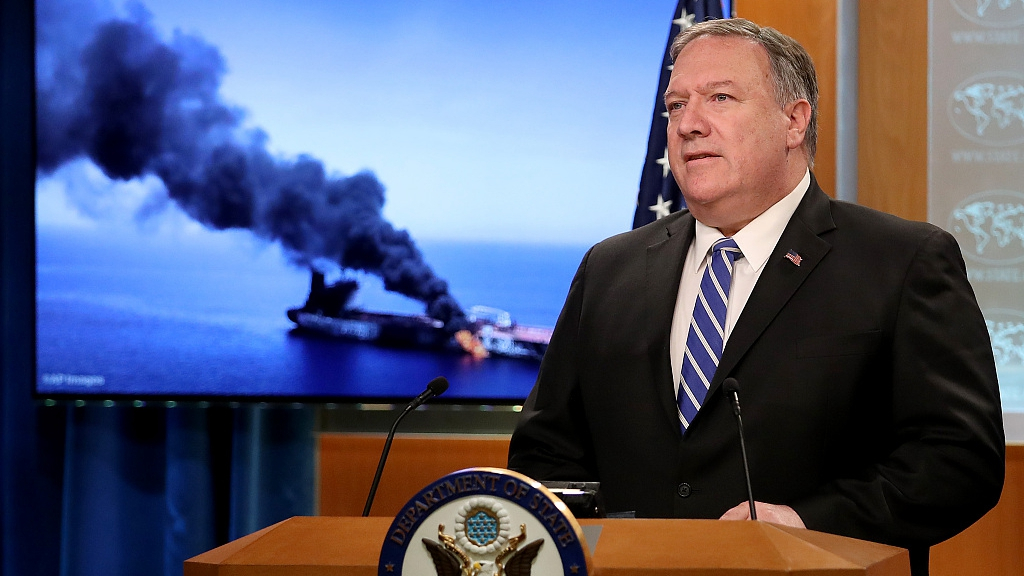
U.S. Secretary of State Mike Pompeo blames the attack on Iran in the State Department briefing room, in Washington, DC, June 13, 2019. /VCG Photo
However, with escalated U.S.-Iran tensions, Pompeo said the United States does not want to go to war with Iran but will take every action necessary, including diplomacy, to guarantee safe navigation through vital shipping lanes in the Middle East.
"We don't want war. We've done what we can to deter this," Pompeo said in an interview with Fox News Sunday, adding: "The Iranians should understand very clearly that we will continue to take actions that deter Iran from engaging in this kind of behavior."
He cited China, Japan, South Korea and Indonesia as countries that rely heavily on freedom of navigation through the straits. "I'm confident that when they see the risk, the risk of their own economies and their own people and outrageous behavior of the Islamic Republic of Iran, they will join us in this."
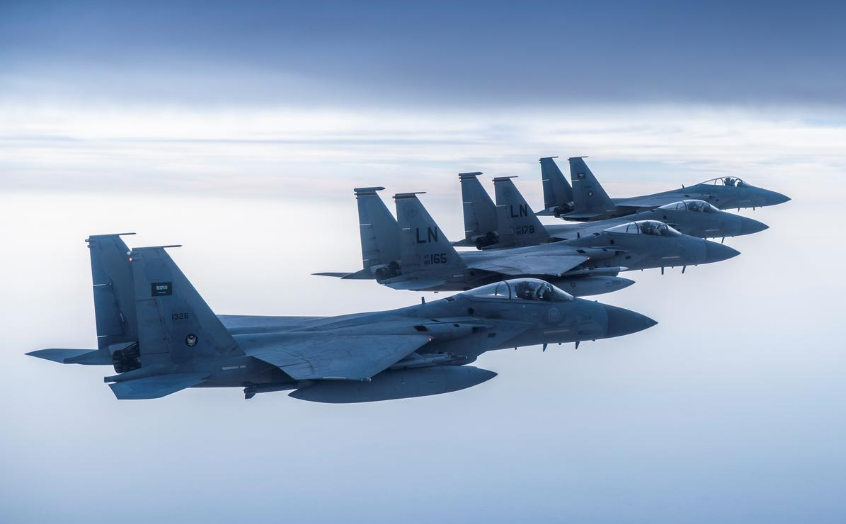
Royal Saudi Air Force F-15C Eagles fly in formation with U.S. Air Force F-15C fight jets in an undisclosed location, June 2, 2019. /Reuters Photo
However, Democratic Representative Adam Schiff, who chairs the House Intelligence Committee, cast doubt on America's ability to rally the international community to protect shipping lanes and impose sanctions, saying it had alienated its allies. He said the evidence pointing to Iran being behind Thursday's attacks was "compelling."
"The problem is that we are struggling, even in the midst of this solid evidence, to persuade our allies to join us in any kind of a response and it shows just how isolated the United States has become," he told CBS's Face the Nation.
(With input from Reuters)