
 []
[]
Share







Copied
Editor’s note: Gregory K. Tanaka is a winner of the James Clavell Literary Award and the author of Systemic Collapse and Renewal. The article reflects the author’s opinion and not necessarily the views of CGTN.
A long time ago, when I was a student at Harvard Business School, I learned an important lesson. I learned how the most important decisions in the U.S. are made. They do not come through open, democratic dialogue but instead from behind closed doors, where elites deliberate and decide among themselves.
I learned this from a strange, quirky turn of events. I had just been elected president of the student government. The dean was fearful of student leaders because the previous student president was an African American who had caused a shutdown of the student government.
Gone were the students to serve on faculty committees. Gone was the administration's trust in student governance. Everything had collapsed. This was the state of affairs that I inherited.
The associate dean asked that a retreat be convened of former student government presidents to discuss how to revive the student government. My immediate predecessor was not invited.
This is where it gets a little strange. The retreat was held in a small, out-of-the-way, private dinner club in Cambridge, Massachusetts. Located just two blocks from Harvard Square, it was accessible only from a narrow alleyway. Deep inside the alley, a lone sign stood above a solitary door. It read "Locke Ober" —not café, not restaurant, just "Locke Ober."
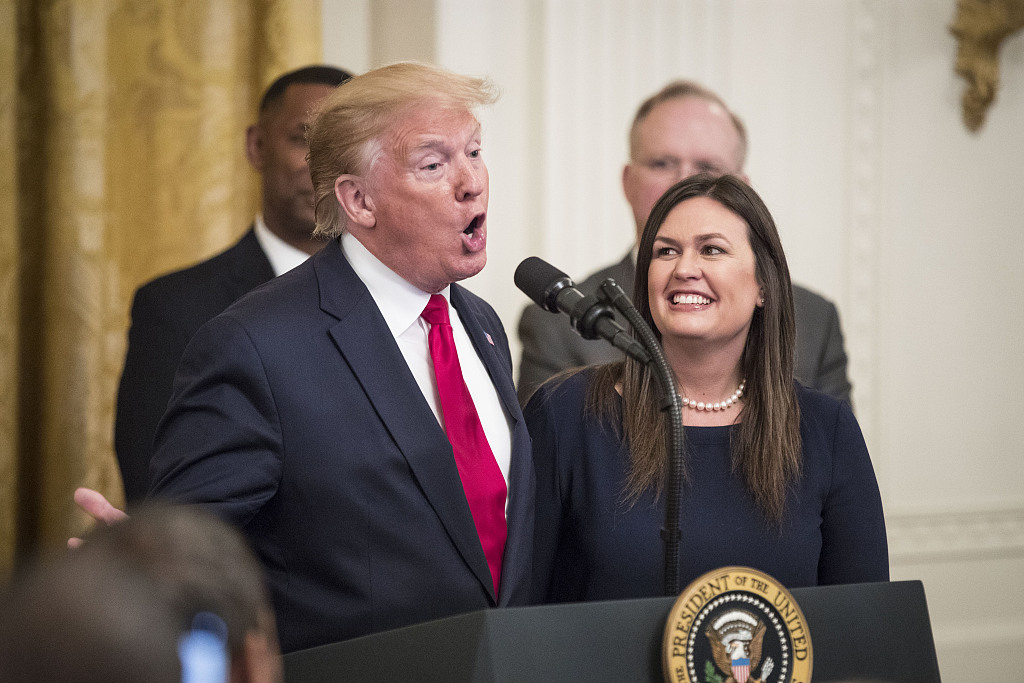
U.S. President Donald Trump speaks about the departure of White House press secretary Sarah Huckabee Sanders (right) during a second chance hiring and re-entry initiative event in the East Room of the White House in Washington, DC, on Thursday, June 13, 2019. /VCG photo
It was the dead of winter and very cold. So, I arrived at Locke Ober wearing a ski parka hastily thrown over a white shirt and tie. Three things gave me pause. First, I immediately realized I was underdressed. Other guests arrived wearing either black Chesterfields with felt collars or beautiful camel-hair overcoats. Here I was with a bargain basement ski parka.
Second, as I found myself being ushered into a back room, I saw that there were no women, not as guests, not as waitresses, none.
And third, as an Asian born in the U.S., I realized I was the only person in the club who was not white. The meeting hadn't even started, and I already felt silenced.
What happened in the conversation that ensued over dinner and cognac didn't matter to me anymore. Sitting with former student government presidents, most of whom were from New York City where they were top investment bankers or managers from elite consulting firms, I found myself in a room full of confidence, charm and a kind of self-importance that was not a part of my own upbringing. So I listened, and I learned.
What I realized was that the evening was all part of "a ritual" that could easily reflect the way all major decisions were made in the U.S. Though outwardly presenting itself as a democracy, all critical decisions in the U.S. were likely made in back rooms like this one, in members-only clubs, by white men who showed by their actions that this had always been how they did things and always would.
It was a way of being. There was an overarching politeness that allowed for a respectful difference of opinion, and every now and then, gentlemanly debate could give way to a brief explosion of laughter.
This was wholly different from my experience at the dinner table with my family of seven in all-white South Pasadena, California, where our family's Japanese cultural values and silence had prevailed.
What was the upshot of this ritualized dinner conversation? A name change. That was it. Instead of being called "Section Representatives," the governing body of the "HBS Student Association," this group would henceforth be called "the General Affairs Committee."
In other words, the name of this body would no longer be a constant reminder of the "elective" manner in which all 11 student sections having 80 students each would select their "student rep."
I realized it for what this was—a retreat from democracy. The name change was all about a desperate wish by the administration to control the students and minimize the uncertainty and unpredictability that each new group of students would bring every September.
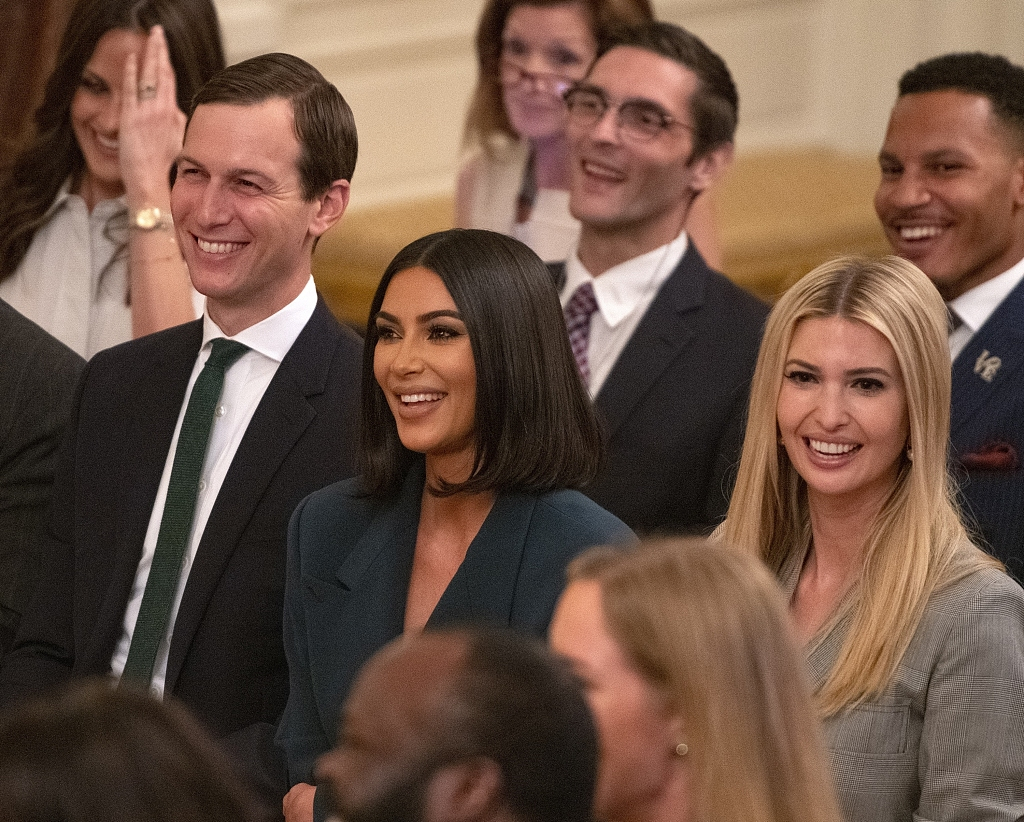
President Donald J. Trump's second chance hiring event in the East Room of the White House in Washington, DC, June 13, 2019. /VCG photo
But the problem was that every fall, new student representatives would still be selected by the same process of voting. So how had this name change altered anything?
In later years, I wondered if there could be a similar loss of democracy occurring in the U.S. itself. Sadly, the answer appeared as I worked as a research assistant at Georgetown University. This was no longer about an obscure Harvard student government but the hallowed halls of the U.S. Congress.
What we discovered was that a growing percentage of new legislation from Congress was being written not by the committee staff that elected Congressional committee chairs appointed but by people on high payrolls at conservative think tanks. From now on, the elected representative's sole duty was to make changes at the edges of draft legislation written by private, outside, deeply funded think tanks.
One could conclude that democracy was already lost.
Today I can just see those think tank writers, politely discussing the contents of the next legislation. There is an underlying air of normality in their polite expression of difference of opinion and dialogue. Every now and then, loud laughter will break out, and the wishes of the people will nowhere be found.
(If you want to contribute and have specific expertise, please contact us at opinions@cgtn.com.)