
 []
[]
Share







Copied

Delegates attending 25th anniversary of the World Day to Combat Desertification at Ankara, Turkey, June 17, 2019. /Photo courtesy: Mehmet Engin Karakas
Land degradation in developing countries is reducing national domestic product by nearly eight percent requiring urgent action to reverse the process, UN Secretary-General António Guterres said on the 25th anniversary of World Day to Combat Desertification held in the Turkish capital Ankara on Monday.
More than 169 countries – mostly in Asia and Africa – are facing some of the worst impacts of desertification, land degradation or drought, said Guterres.
"The world is dealing with sea, ocean and surface water protection. Fighting desertification is possible only when we work collectively. This is necessary to ensure that our next generation lives in a greener world," Recep Tayyip Erdogan, Turkey's president said in a message.
Ministers and senior delegates from more than 10 countries are attending the meet. Ibrahim Thiaw, head of the UN Convention to Combat Desertification (UNCCD) addressing delegates at the event said, with one out of every four hectares of productive land is becoming unusable and the time has arrived for combining traditional knowledge, faith in communities and technology to restore 150 million hectares of farmland by 2030.
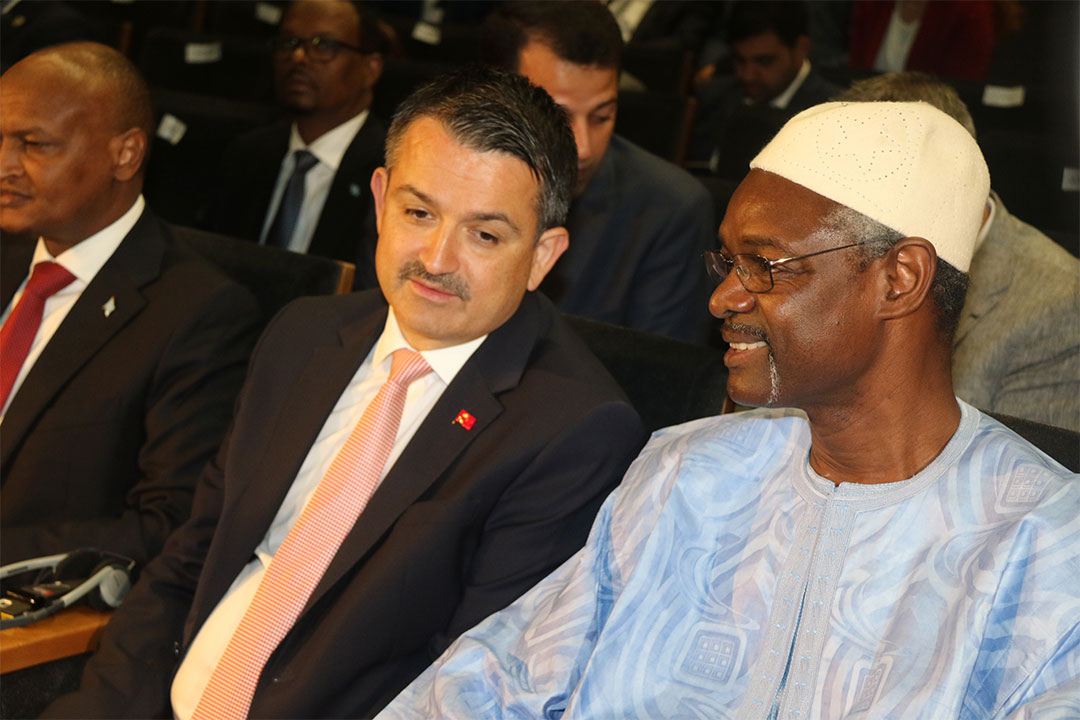
Bekir Pakdemirli, ministry of agriculture and forest, Turkey (Left) and Ibrahim Thiaw, head of United Nations Convention to Combat Desertification at World Day to Combat Desertification at Ankara Turkey, June 17, 2019. /Photo courtesy: Mehmet Engin Karakas
According to recent studies, urbanization, climate change, overgrazing and massive pressure on farmland to produce food are major factors behind land degradation. The United Nations Convention to Combat Desertification is striving to achieve land degradation neutrality to cease the advance of sand.
In 2015, a global consensus was made to balance the rate at which land is degraded and restored. The government decided to take concrete actions to avoid, reduce and reverse land degradation, and mitigate the effects of drought.
The fast pace of urbanization in developing countries has further added to the problem. Nearly half of the world's population resides in cities and consumes resources produced in an area 200 times the size of the city. The urban sprawl in Asia and Africa could lose 80 percent of their cropland to cities, experts attending the meeting said. Such factors have resulted in the world losing 24 billion tons of fertile land every year.
As a result of desertification, migration is likely to increase and displace of around 135 million people by 2045, the UN estimated.
"We have to increase food production by 50 percent, but crop yield has decreased by 50 percent in some regions because of land degradation, climate change and biodiversity," Thiaw added.
The UNCCD is the world's only agreement that binds countries to tackle land degradation and desertification and to mitigate the effects of drought.
Our simple, everyday choices have a huge and enduring impact on the land, climate and biodiversity, Thiaw said. Quicker and smarter individual and professional choices are required, if we want our society, economy and environment to grow together, he added.