
 []
[]
Share







Copied
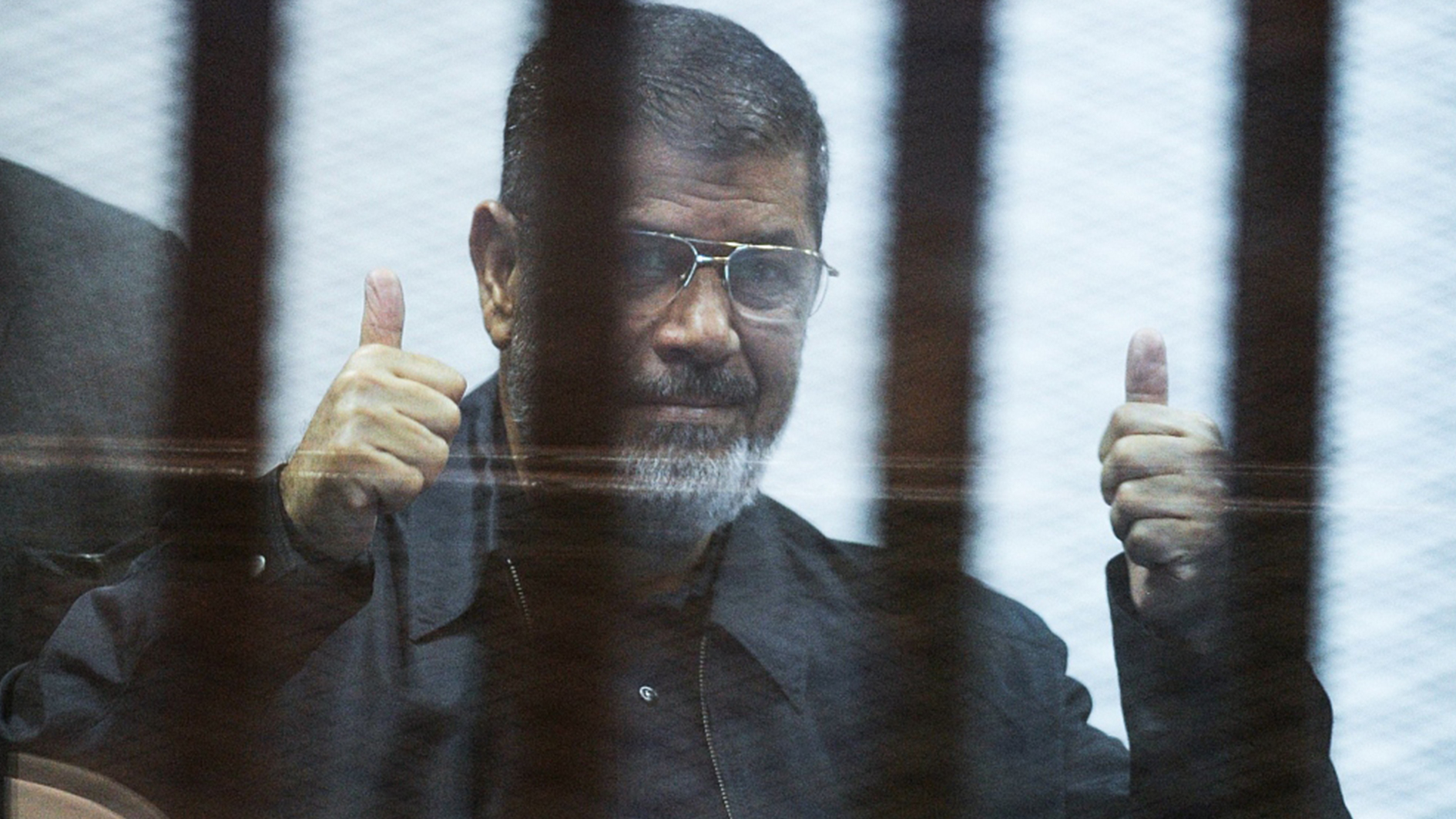
Egypt’s former President Mohammed Morsi was buried in Cairo Tuesday under heavy security a day after his dramatic collapse in a court and nearly six years since his ouster by now President Abdel Fattah al-Sisi. Egypt's first civilian president, a prominent Muslim Brotherhood member who was overthrown in 2013 after a year of divisive rule, had been held for six years in solitary confinement before his health.
Read More:
Egypt's ousted President Morsi dies in court: state TV
Morsi was buried on Tuesday morning at a cemetery in Cairo’s eastern district of Nasr City, according to a member of his defense team. This was despite his family’s plea and wishes to have the former president buried at the family’s cemetery in his hometown in Sharqia province. Associated Press news agency reported that security agents turned reporters away from the cemetery, banning them from taking photographs of the funeral. Reporters were also barred from traveling to Morsi’s hometown.
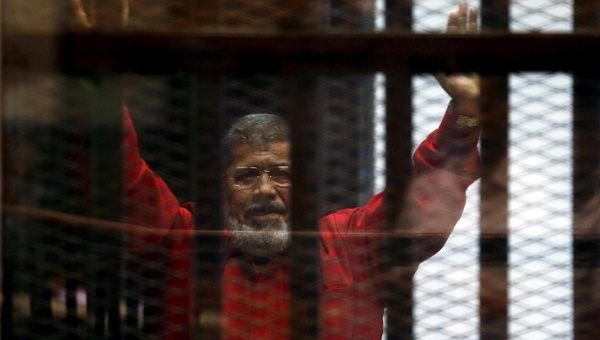
Deposed President Mohamed Morsi greets his lawyers and people from behind bars at a court wearing the red uniform of a prisoner sentenced to death, during his court appearance on the outskirts of Cairo, Egypt, June 21, 2015. /REUTERS Photo
Morsi, 67, was elected president in 2012 in the country’s first free elections following the ouster the year before of long-time leader Hosni Mubarak. He was subsequently toppled in 2013 after massive protests against his Muslim Brotherhood in a major crackdown, arresting Morsi and many others of the group’s top leaders.
Since then, Morsi had been sentenced to more than 40 years in prison in separate trials, including for leading an outlawed group, spying for foreign country and terrorism. He and other imprisoned Brotherhood leaders have rejected the rulings and denounced the trials as politically motivated to justify Morsi’s overthrow.
During his years in prison, Morsi, who was known to have diabetes, was often held in solitary confinement and was largely barred from receiving visitors. His family was only allowed to visit three times and while in detention, Morsi continued to appear in court on a range of charges.
The Muslim Brotherhood has described Morsi’s death as a “full-fledged murder” and took to the streets of the capital of Turkey Istanbul for mass gatherings to mark his passing.
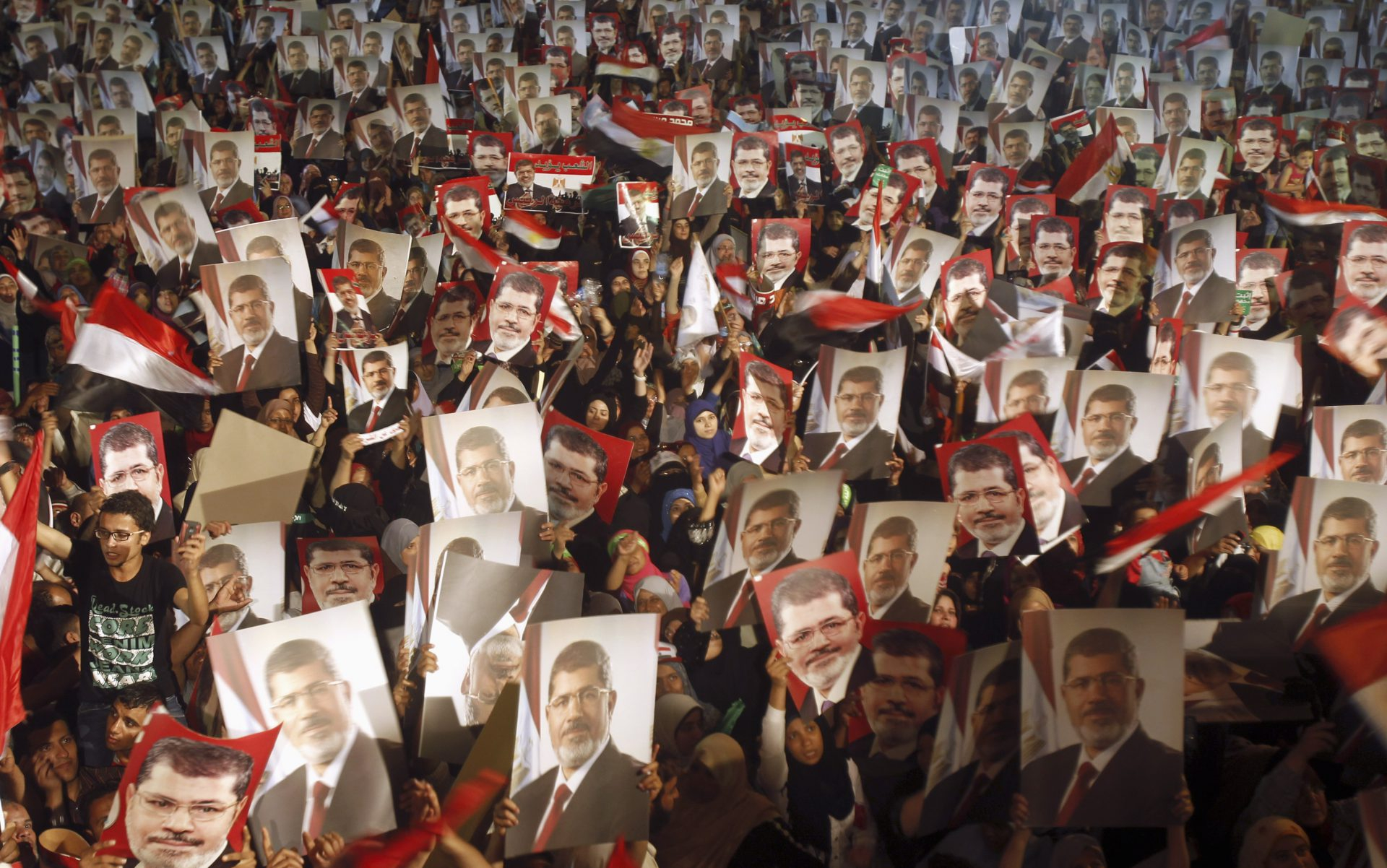
Members of the Muslim Brotherhood and supporters of Egypt's President Mohamed Morsi hold pictures of him at the Raba El-Adwyia mosque square in Cairo, July 3, 2013. /Reuters Photo
The UN human rights office called Tuesday for an "independent inquiry" into Morsi's death while in state custody. "Concerns have been raised regarding the conditions of Mr. Morsi's detention, including access to adequate medical care, as well as sufficient access to his lawyers and family, during his nearly six years in custody," said Rupert Colville, spokesman for the United Nations High Commissioner for Human Rights.
Egyptian officials have denied accusations that his health was neglected.
Turkey’s president, Qatar’s emir and the Palestinian Islamist group Hamas all paid tribute to Morsi, and Iran expressed regret over Morsi’s death. Other former allies of Morsi and opponents of Egypt’s current president, former army chief Abdel Fattah al-Sisi, also expressed their condolences on social media.
Comments from ordinary Egyptians were polarized, with Brotherhood supporters expressing anger at his treatment and accusing opponents of “gloating” over his death.
(With inputs from Reuters, AFP)