
 []
[]
Share







Copied
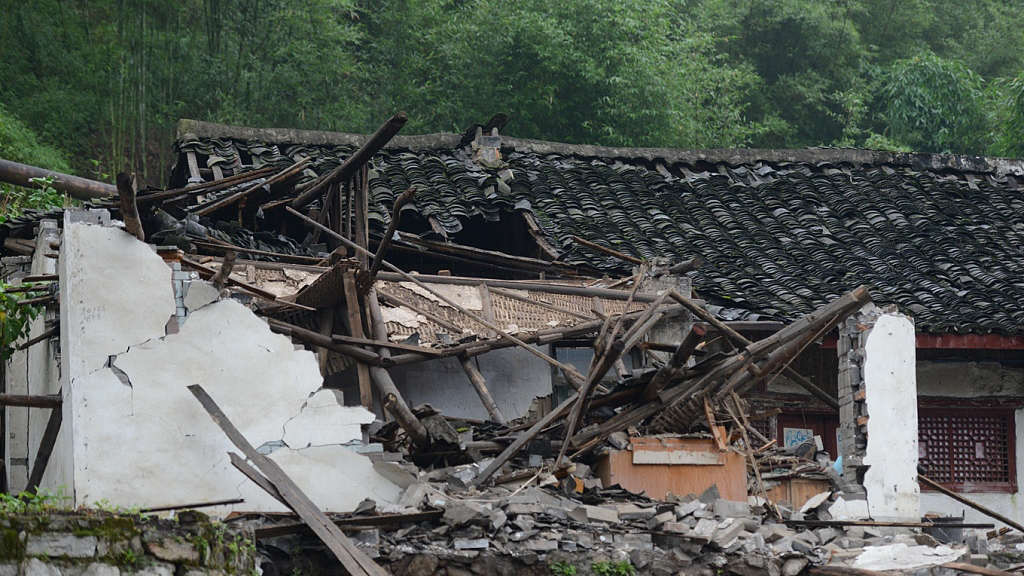
Thousands of people in Chengdu received a warning before the earthquake hit the city. And in Yibin City, people could see this warning alert on their TV screens 10 seconds before the temblor arrived.
The early warning service played a "magical role" in saving lives. But how does the service work?
Radio waves travel faster than seismic waves. Basically, there are two main types of waves in seismology- P-waves and S-waves.
P-wave, also called primary wave, is the first to "arrive" at a seismic station and travels at about six kilometers per second .
The second wave people can feel in an earthquake is the S-wave or the secondary wave, which can only move through solid rock with a velocity of over three kilometers per second.
Yet the speed of the electromagnetic waves can reach 300 thousand kilometers per second.
Take a place 200 kilometers away from the epicenter, the P-waves could arrive at that place in about 33.3 seconds, followed by S-waves in 66.7 seconds, yet the warning signal transferred by electromagnetic waves can arrive in 0.001 second.
This warning system can allow people to evacuate. Statistics show that being aware of an earthquake three seconds ahead can save 14 percent of the victims, and 10 seconds can save 39 percent.
The system makes China the third country in the world after Japan and Mexico with an earthquake early warning ability.
China is building 2,000 monitoring stations in Sichuan and its neighboring Yunnan Province.