
 []
[]
Share







Copied
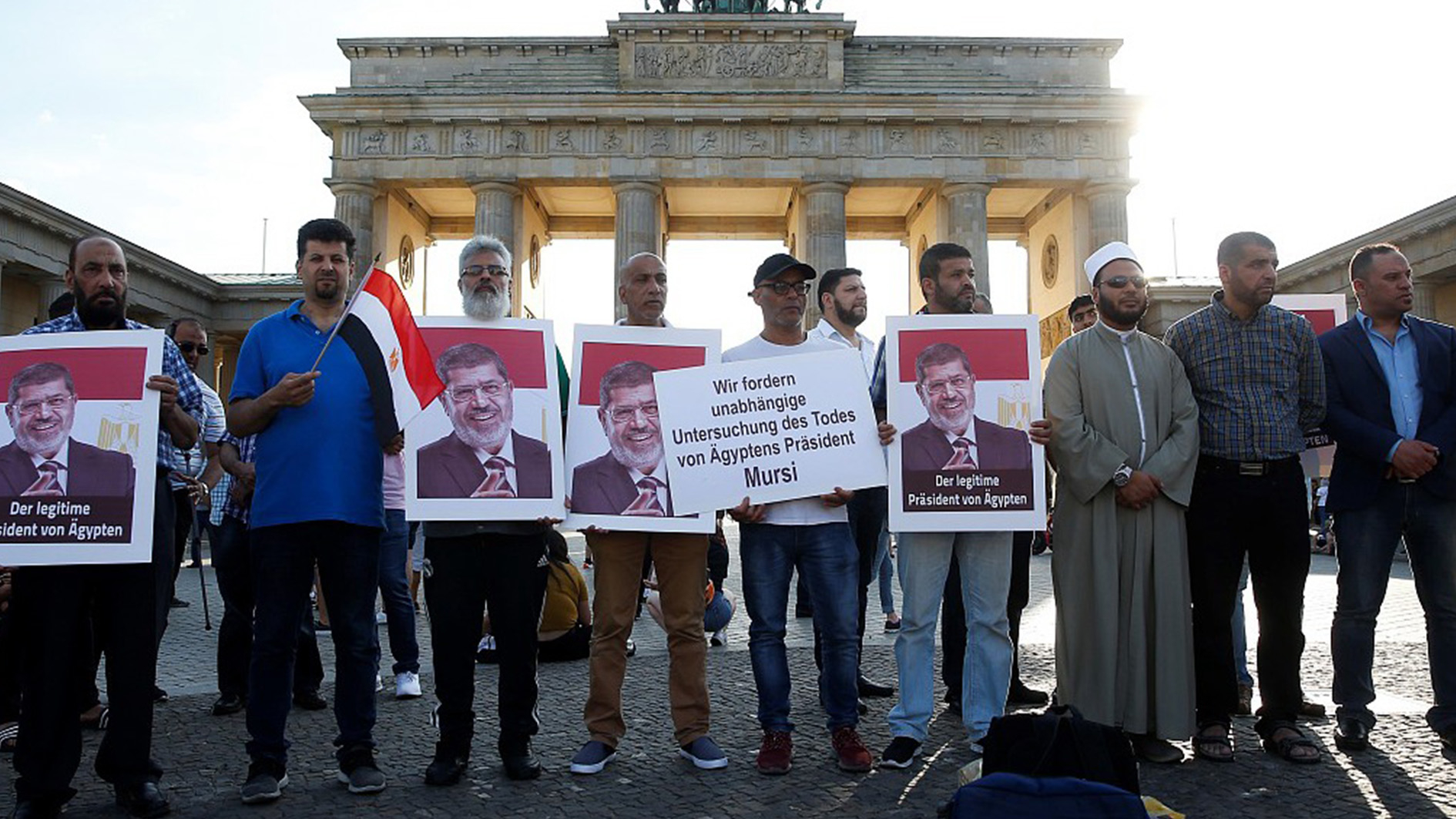
Mohamed Morsi, leader of the Muslim Brotherhood movement, rose to power in 2012 as Egypt's first democratically-elected leader.
But his presidency would only last a year. Morsi was toppled by the military, following a popular uprising in 2013. The former president remained a political prisoner until the end when he suddenly collapsed in an Egyptian courtroom and later died. The public prosecutor ordered a full investigation to determine the cause of death.
The UN has called for an independent probe into Morsi's death. Hesham Islam, a former commander in the United States Navy who served as special assistant for international affairs to the deputy secretary of defense, cannot be sure whether Morsi's death is murder because there is no evidence to prove the involvement of someone.
Morsi had diabetes, stroke, and high blood pressure. Islam thinks Morsi's demise would happen sooner or later. Nader Hashemi, the director of the Center for Middle East Studies at the Josef Korbel School of International Studies at the University of Denver, stressed that the deep state and military in Egypt backed by Western powers, such as the United States and Europe, will not allow a democratic process to take place in Egypt. He thinks that is the message behind Morsi's death.
Morsi, as a President, believed in non-violent political change, but the Egyptian military had different thoughts.
"Democracy entails respecting the result of the election and respecting the process of the political system," Hashemi said.
"There is a lot of protests to the policy of the Morsi's government. That is perfectly legitimate."
And what is not legitimate is calling for the military to change the result of the election. He also contends the legacy that Morsi left will be of a politician who tried to bring about political change by respecting the rules of the democratic game, but he was prevented from doing so. Young people in Egypt will see Morsi's effort to achieving democracy, and he ended up in the Egyptian prison along with 60,000 political prisoners.
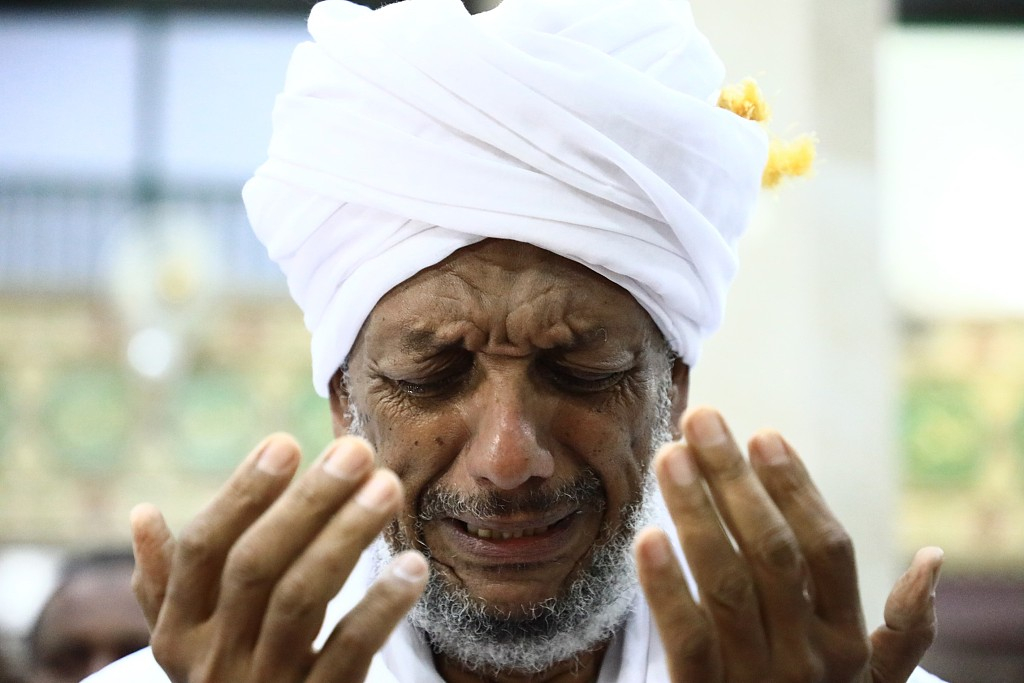
People attend the funeral prayer in absentia for former President of Egypt Mohamed Morsi, at Sayeda Sanhori Mosque in Khartoum, Sudan, June 18, 2019. /VCG Photo
Hesham Islam responded to Hashemi's point; in his view, "democracy" is a word that will go through left and right.
"You need to have educated people to understand what democracy all about," he said.
In terms of legacy, different Egyptians may have different ideas. Some people believe like Hashemi, and most of these people don't live in Egypt. And if they are in Egypt, they are in jail. While some people believe Morsi had taken Egypt in the wrong direction, and they are happy to see Abdel Fattah el-Sisi coming in and taking over. And the third group doesn't really care about political change.
Manal Omar, the CEO, and Founder of Across Red Lines thinks the Arab Spring was a mass polarization. She is worried about the options that Egypt is given, either the strong man who wanted to bring the country together or complete chaos like Iraq and Syria.
"We have seen a fear of democracy, and what happened to Morsi is a real proof of it," she argued.
She also worries about the president who will continuously be extreme and polarized. In addition, she points out there is a critical legacy of the Arab Spring and it is the importance of understanding transitional governance and transitional structures. Thus, Egyptians need more options than these extreme ways that constantly presented in the region.
Jeff Stacey, a former state department official in the Obama Administration, brings the perspectives of the United States on Morsi's death. He pointed out President Donald Trump makes friends with the regime in Egypt, in the United Arab Emirates and Saudi Arabia. These three leaders and governments have all been engaged in regional policy that is concerning what the U.S. national security interests are.
There is forcible prevention of democracy at work among these leaders and governments, and that's why the suspicious death of Morsi is a factor in this. There were some military operations and assassinations in this area. And if Morsi's death is not a typical assassination, it is undoubtedly the tortuous way in which Morsi was potentially brought to an earlier end. He thinks Western countries' intervention in democracy in Middle Eastern countries will be damaging not only to the regimes but also to democracy everywhere in the world.
(If you want to contribute and have specific expertise, please contact us at opinions@cgtn.com.)