
 []
[]
Share







Copied
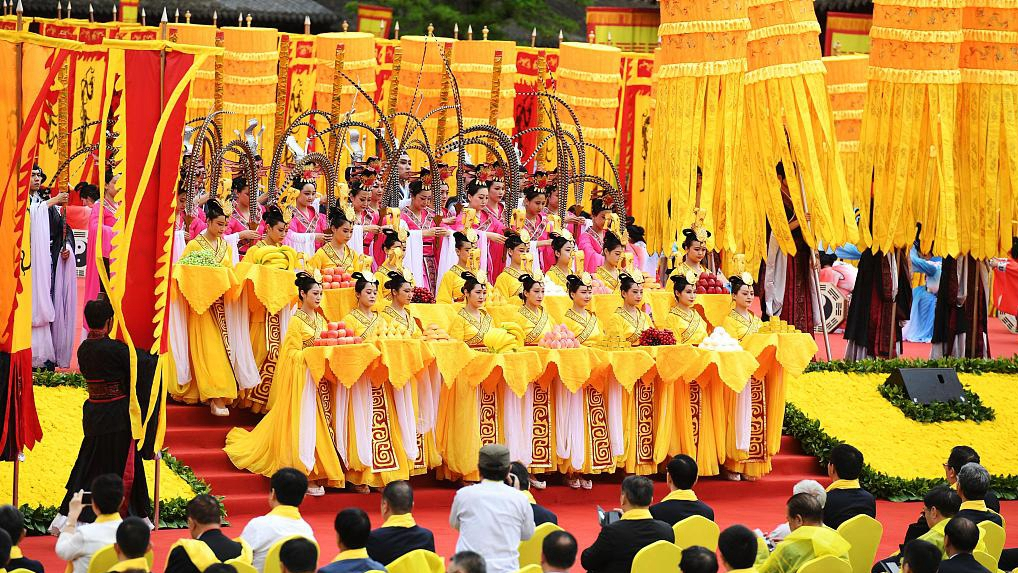
People provide offerings at a ceremony to Fu Xi. /VCG Photo
Ceremonies in memory of Chinese ancestors were held Saturday morning in Tianshui City, northwest China's Gansu Province, and Taipei, Taiwan, simultaneously. This is the sixth year that the annual cross-Strait ceremonies have taken place at the same time.
The cultural event was intended to commemorate the common root of Chinese civilization, pay tribute to ancestors and create a sense of belonging for all Chinese people.
The rituals included playing Chinese drums and bells, offering incense and sacrifices, giving salutes, making a memorial oration and more.
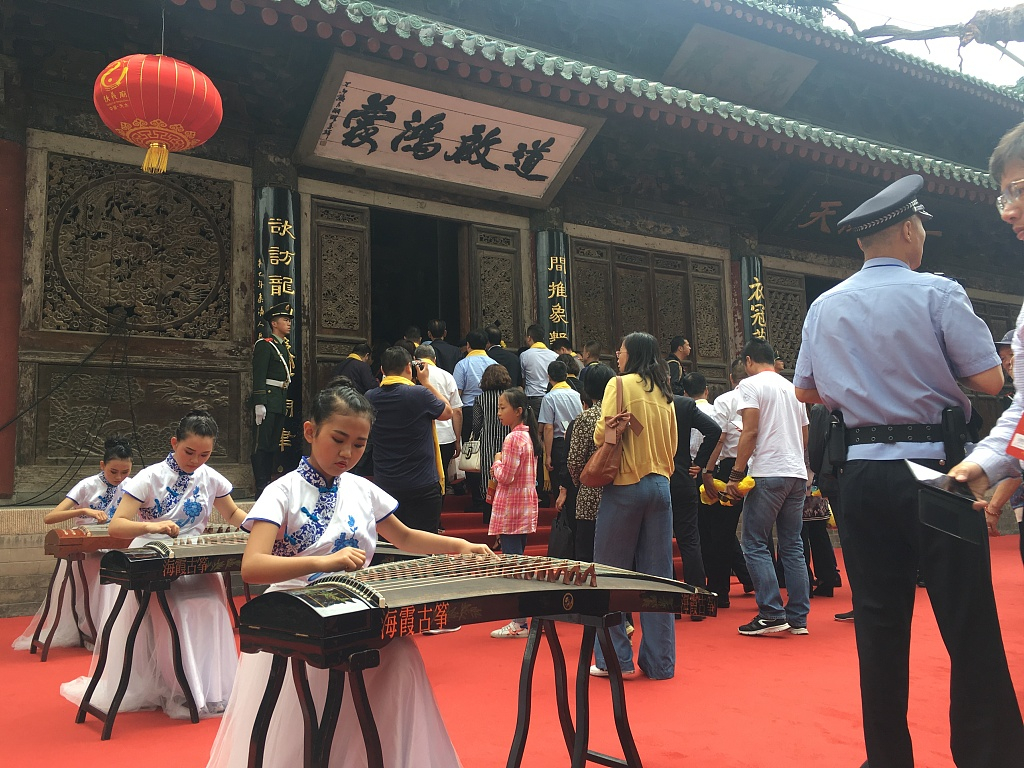
Children play guzheng, a Chinese traditional instrument, during a ceremony to commemorize ancestors. /VCG Photo
A cultural-tourism festival will also be held after the event, including various activities in culture, tourism and trade.
Fu Xi is a legendary forefather and ancestor in Chinese myths. It’s believed he invented Bagua, the eight symbols of Taoism, thus building a foundation for the primitive concept of unity between human and nature. He also taught people productive skills like livestock raising and fishing. He is regarded as the "ancestor of ancestors" in Chinese culture for the huge contributions he made for advancing Chinese civilization in ancient times.
Fu Xi Temple in Tiansui City, where the cultural event took place, was built in 1483 during the Ming Dynasty (1368-1644). It was renovated 12 times over the years, which contributed to the magnificent architecture complex covering more than three hectares. It is also the earliest and biggest existing temple in China in memorial of Fu Xi.