
 []
[]
Share







Copied
Iranian President Hassan Rouhani dismissed new U.S. sanctions on Iran's Supreme Leader Ali Khamenei and described the White House as "mentally retarded", an insult Iran has used in the past about U.S. President Donald Trump.
In a speech broadcast live on state television, Rouhani said sanctions against Khamenei would fail because he had no assets abroad. Rouhani described the latest round of sanctions as a sign of U.S. desperation.
"The White House actions mean it is mentally retarded," he said "Tehran's strategic patience does not mean we have fear."
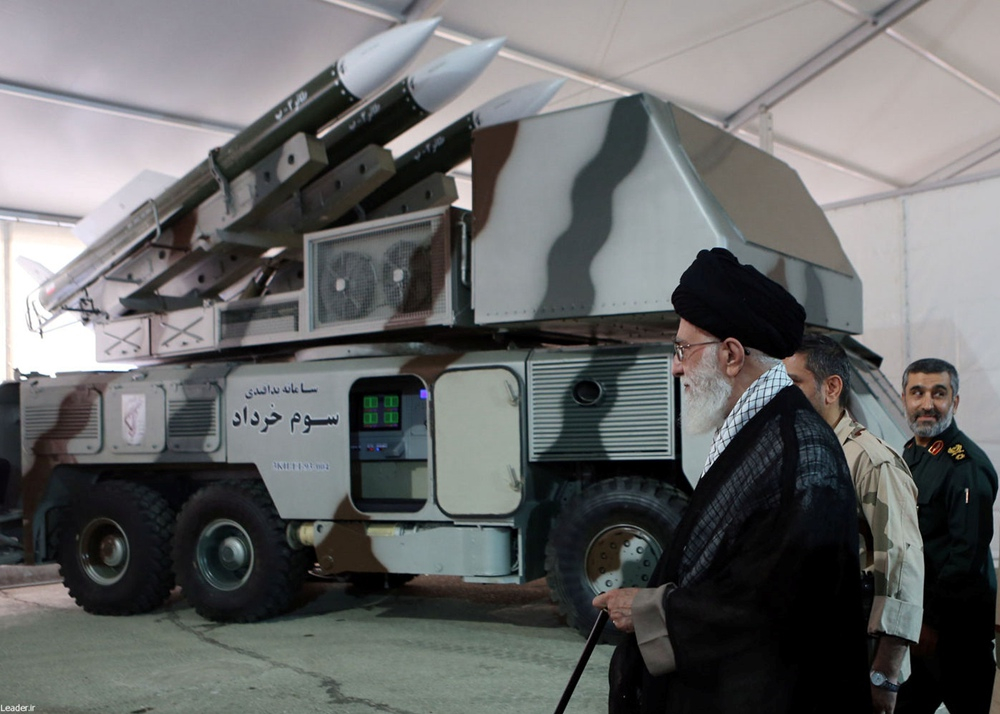
Iran's Supreme Leader Ayatollah Ali Khamenei is seen near a "Khordad 3" system, which is said to had been used to shoot down a U.S. military drone. /Fars Photo via Reuters
"Imposing useless sanctions on Iran's Supreme Leader Ayatollah Ali Khamenei and the commander of Iran's diplomacy (Foreign Minister Mohammad Javad Zarif) is the permanent closure of the path of diplomacy," Abbas Mousavi, Iranian Foreign Ministry spokesman, said in a tweet.
"Trump's desperate administration is destroying the established international mechanisms for maintaining world peace and security," he added.
Earlier, Iran's United Nations ambassador accused the United States of showing no respect for international law, describing tensions between the two countries as "really dangerous" and not the right atmosphere for talks.
"You cannot start a dialogue with somebody who is threatening you, who is intimidating you," Ambassador Majid Takht Ravanchi told reporters. "How can we start a dialogue with somebody whose primary occupation is to put more sanctions on Iran? The atmosphere of such a dialogue is not ready yet."
Ravanchi spoke as the UN Security Council met on Monday behind closed doors over Iran at the request of Washington.
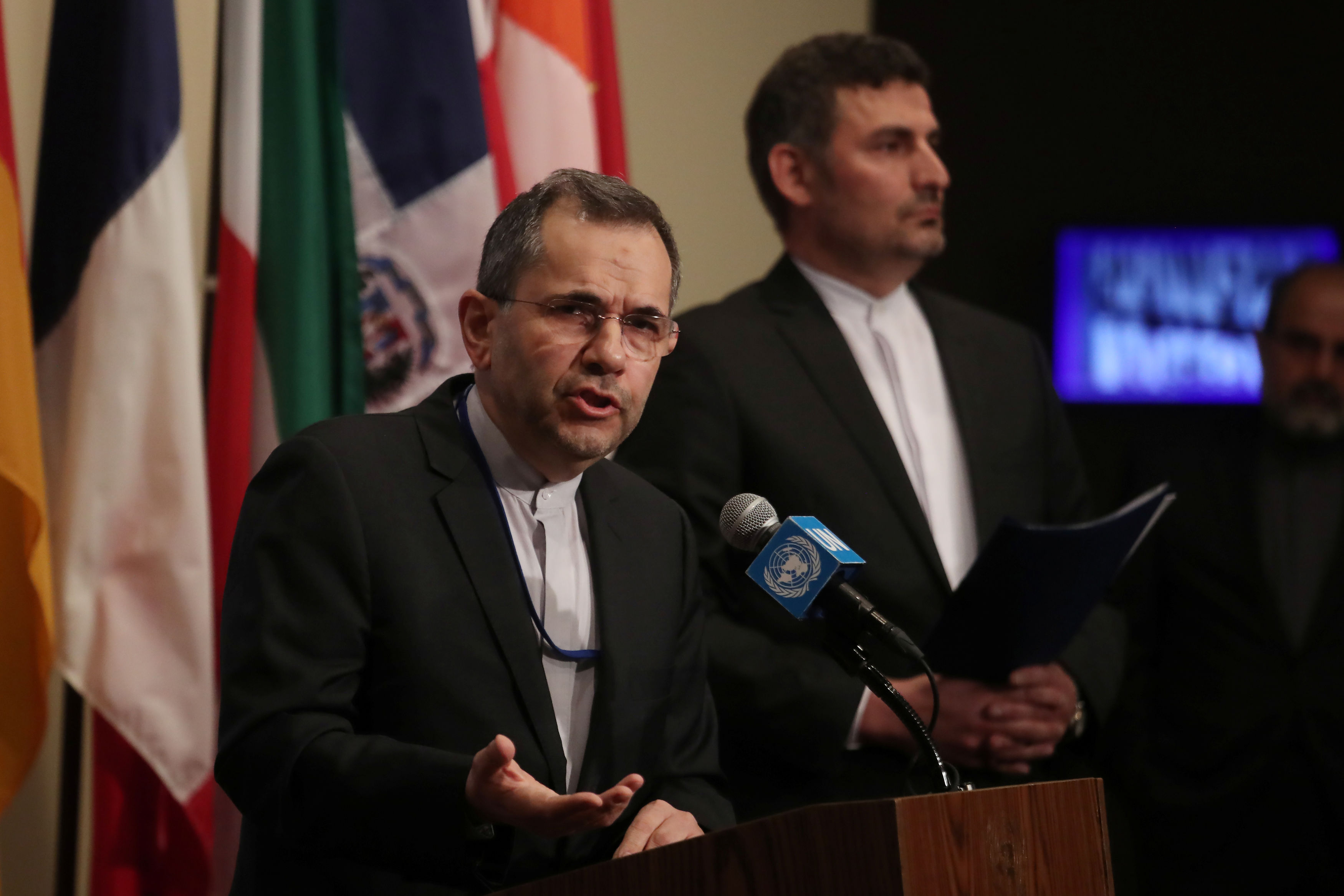
Iranian Ambassador to the United Nations Majid Takht-Ravanchi speaks to the media outside Security Council chambers at the U.N. headquarters in New York, U.S., June 24, 2019. /Reuters Photo
U.S. imposes new sanctions on Iran
On Monday, U.S. President Donald Trump targeted Khamenei and other senior officials with new sanctions, looking for a fresh blow to Iran’s economy after Iran downed a U.S. drone on June 20.
The new action is "imposing hard-hitting sanctions on the Supreme Leader of Iran and the office of the Supreme Leader of Iran and many others," said Trump.
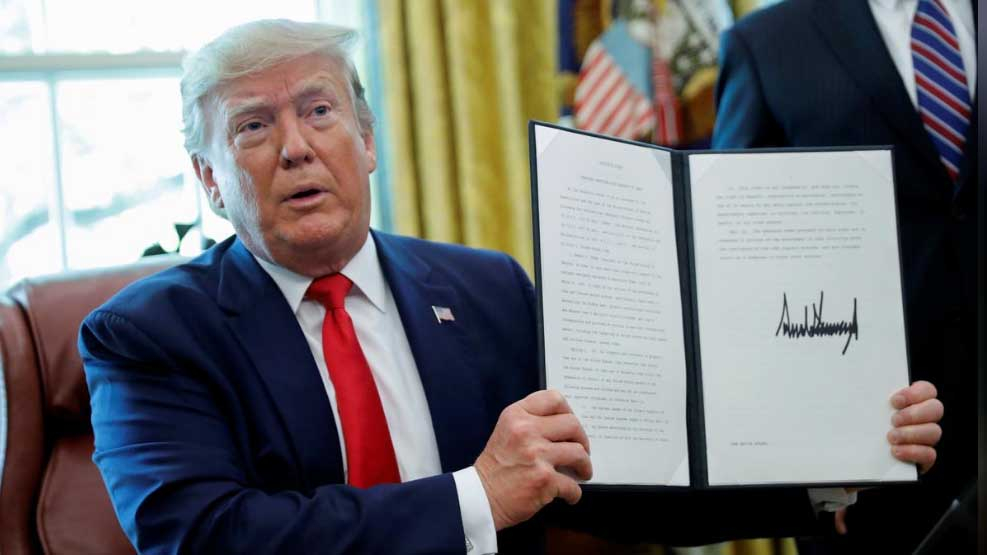
The U.S. president alleged that the supreme leader "ultimately is responsible for the hostile conduct of the regime."
The sanctions imposed by the order will deny Iran's leadership access to financial resources, blocking them from using the U.S. financial system or accessing any assets in the United States.
Zarif, in response to the U.S. new sanctions, said in a tweet that the hawkish senior U.S. officials close to Trump "despise diplomacy, and thirst for war."
The United States has also blamed Iran for attacks on oil tankers in the Gulf region in May and June. Iran has denied any involvement.
UNSC urges dialogue, end to U.S.-Iran tensions
Following the two-hour meeting, the 15-member council condemned the attacks on the oil tankers as a “serious threat to maritime navigation and energy supply” and urged maximum restraint by concerned parties and countries in the region.
"Council members urged that differences must be addressed peacefully and through dialogue,” said Kuwait’s U.N. Ambassador Mansour Al-Otaibi, president of the Security Council for June.
Acting U.S. Ambassador to the United Nations Jonathan Cohen told reporters after the meeting that Washington’s policy on Iran “remains an economic and diplomatic effort to bring Iran back to the negotiating table.”
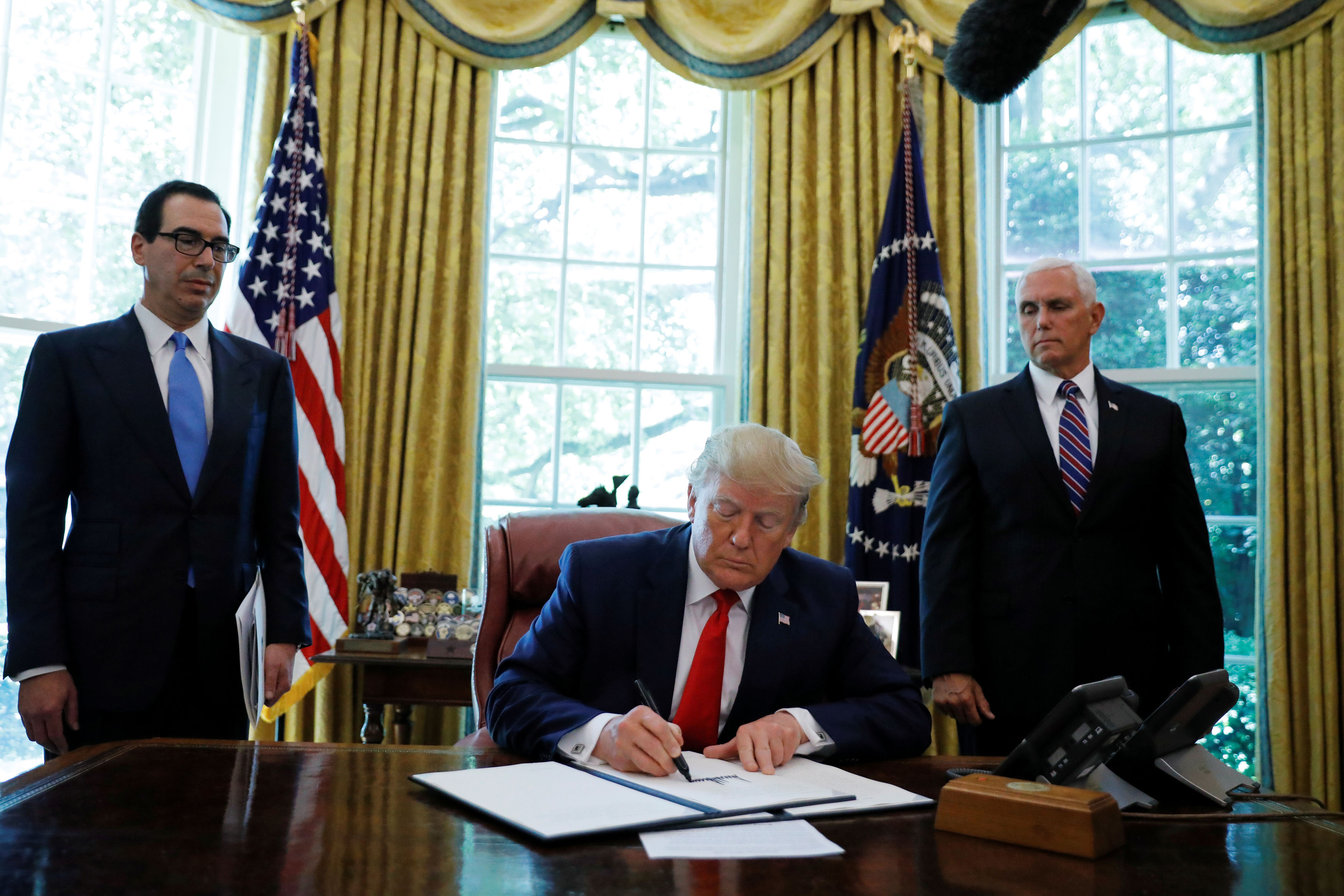
U.S. President Donald Trump signs an executive order imposing fresh sanctions on Iran as Treasury Secretary Steven Mnuchin and Vice President Mike Pence look on in the Oval Office of the White House in Washington, DC, U.S., June 24, 2019. /Reuters Photo
The Iranian ambassador called on the United States to withdraw its naval ships from the Gulf region and “move away from economic warfare against the Iranian people.”
"The situation is really dangerous and all we should do is try to de-escalate,” he said.
Iran also said on June 17 that it would breach internationally agreed curbs on its stock of low-enriched uranium in 10 days, but that European nations could still save a nuclear deal that sets those limits.
"We have been discussing how to move forward with our European colleagues,” Ravanchi said. “It is incumbent on them to compensate what we have lost as a result of the U.S. withdrawal from the nuclear deal.”
Most U.N. sanctions imposed on Iran were lifted in January 2016 when the U.N. nuclear watchdog confirmed that Tehran fulfilled commitments under a 2015 nuclear deal with Britain, France, Germany, China, Russia and the United States. The Trump administration unilaterally withdrew from the deal last year.
Under the nuclear deal, there is a process culminating at the U.N. Security Council that can trigger a so-called snapback of all sanctions if Iran violates the agreement.
When asked if the Europeans had threatened a sanctions snapback if Iran breaches the cap on its stock of low-enriched uranium, Ravanchi said, “Our discussions with our European colleagues are ongoing, we discussed a number of issues, but ... we cannot accept any intimidation or any threat from anybody.”
(Cover: Iran's Supreme Leader Ayatollah Ali Khamenei (L) and President Hassan Rouhani attend a government meeting in Tehran, Iran, May 14, 2019. /VCG Photo)