
 []
[]
Share







Copied
Mexico has deployed nearly 15,000 soldiers and National Guardsmen to its border with the United States, the army chief said Monday – admitting they are detaining migrants who try to cross, after the policy triggered backlash.
Under pressure from U.S. President Donald Trump to slow the surge of Central Americans crossing the border, Mexico promised earlier this month to reinforce its southern border with 6,000 National Guardsmen, but had not previously disclosed the extent of the crackdown on its northern border.
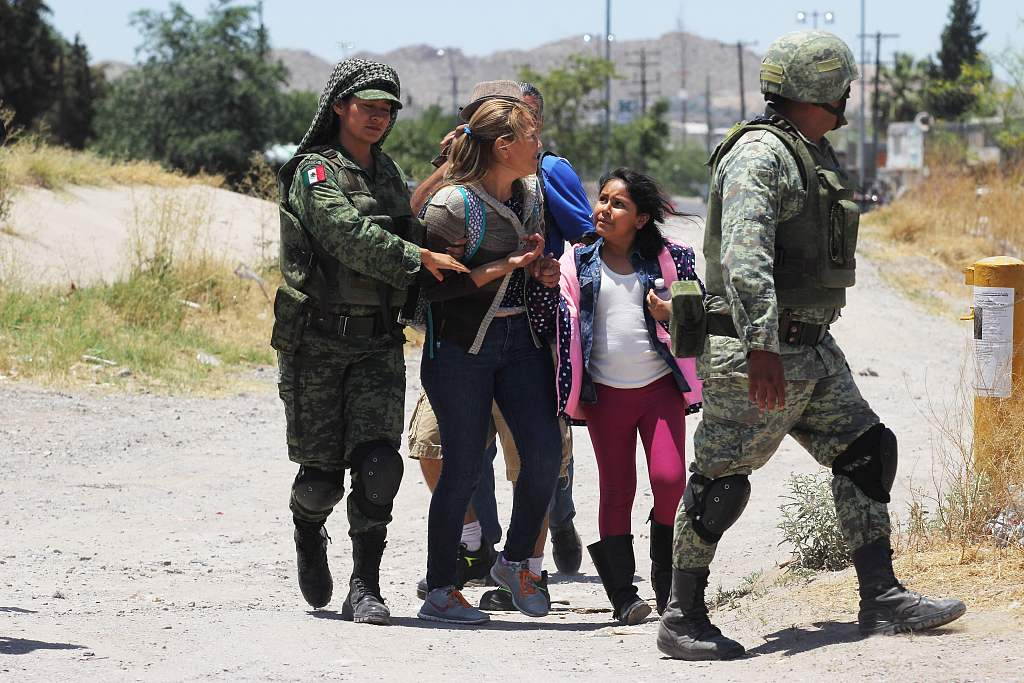
The Mexican National Guard detain Central American migrants trying to cross the Rio Bravo in Ciudad Juarez, Mexico, June 21, 2019. /VCG Photo
"We have a total deployment, between the National Guard and army units, of 14,000, almost 15,000 men in the north of the country," Secretary of Defense Luis Cresencio Sandoval said at a press conference alongside President Andres Manuel Lopez Obrador.
Asked whether those forces were detaining migrants to prevent them from crossing, Sandoval replied: "Yes."
"Given that (undocumented) migration is not a crime but rather an administrative violation, we simply detain them and turn them over" to immigration authorities, he said.
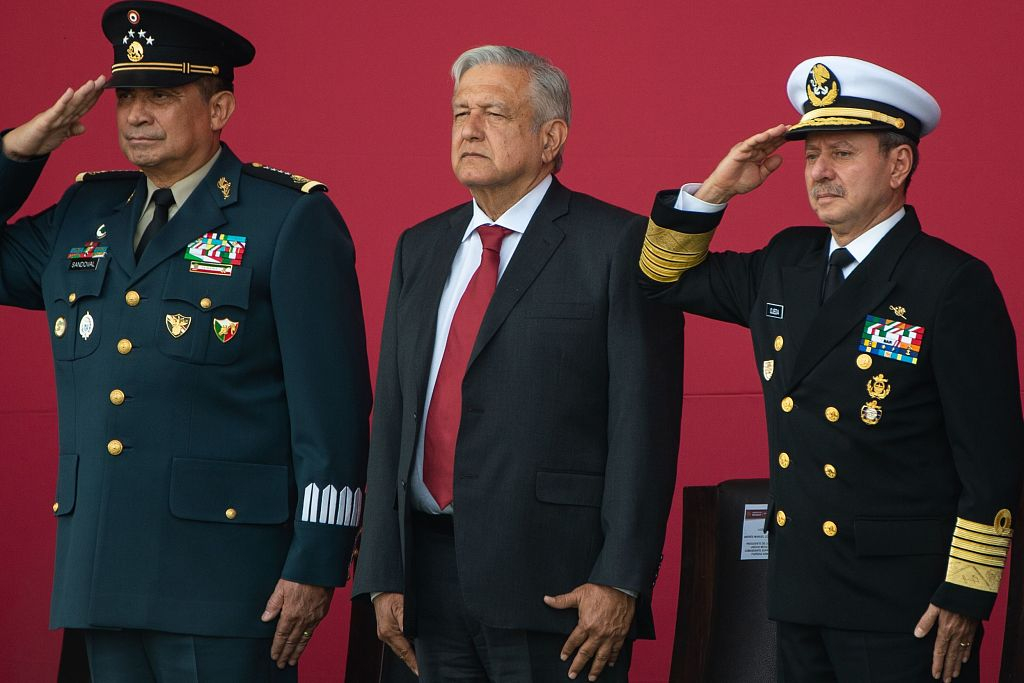
Mexican President Andres Manuel Lopez Obrador (C) and Secretary of Defense Luis Cresencio Sandoval (L) attend an event at the Santa Lucia Air Force Base in Zumpango near Mexico City, April 29, 2019. /VCG Photo
National Guardsmen and police have been patrolling the border in groups. The policy is a shift from previous practice. The Mexican security forces have long detained undocumented migrants as they travel in the country, but had not typically stopped them from crossing the U.S. border in the past.
'Doing the U.S.'s dirty work'
Mexico "is doing the United States's dirty work," Francisco Javier Calvillo, head of the migrant shelter Casa del Migrante in Ciudad Juarez, told journalists in reaction to the new practice.
"That's not the army's job, the federal police aren't trained to deal with migrants.... This policy is a clear violation of human rights," added Calvillo, a Catholic priest.
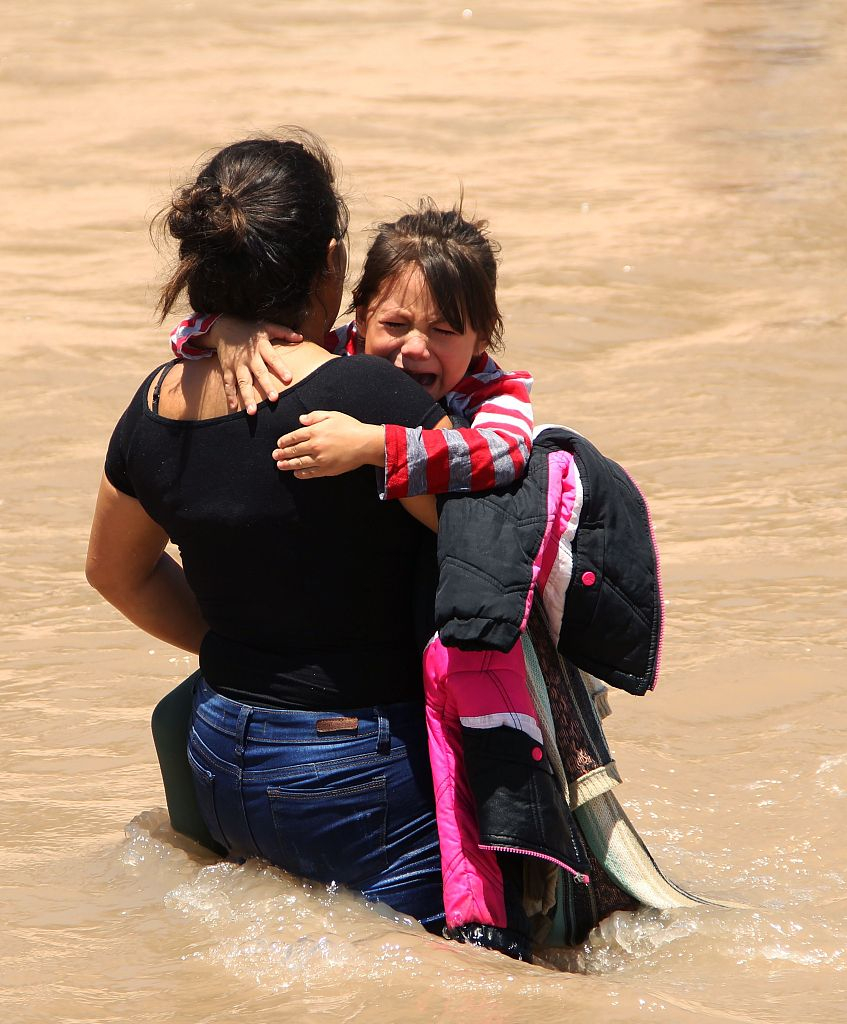
A Central American migrant and a girl cross the Rio Grande in Ciudad Juarez, State of Chihuahua, Mexico, before turning themselves into U.S. Border Patrol agents to claim asylum, June 12, 2019. /VCG Photo
Independent Senator Emilio Alvarez Icaza, secretary for the upper house's human rights committee, likewise criticized the use of Mexican forces for border patrol duty.
"In the end, Donald Trump got his wall, and the government and people of Mexico are paying for it: a military wall on the borders," he said in comments reported by newspaper Reforma.
Fleeing chronic poverty and brutal gang violence in their home countries, the Central Americans crossing Mexico in a bid to reach the United States mostly lack the papers needed to migrate legally.
However, international law protects the right of undocumented migrants to cross international borders to request asylum. And the U.S. courts have upheld their right to do that anywhere along the border, whether or not it is an official crossing.
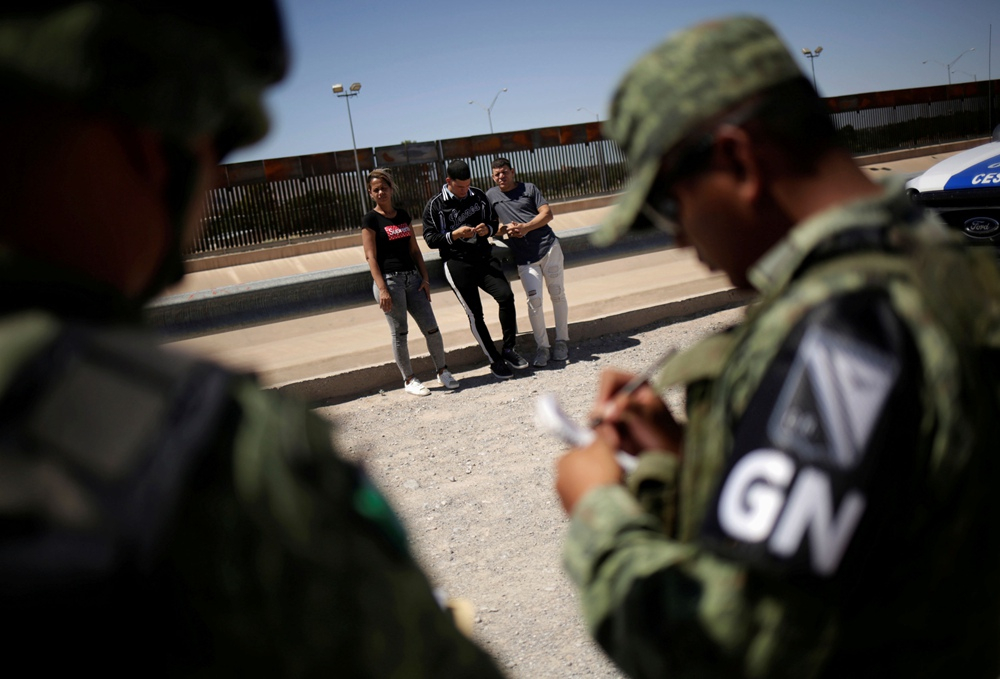
Mexico's National Guard detain Cuban migrants after they were trying to cross illegally the border between the U.S. and Mexico, in Ciudad Juarez, Mexico, June 21, 2019. /Reuters Photo
There has been a large increase in such migrants crossing the U.S.-Mexican border and seeking asylum in recent months. American officials detained 144,000 migrants at the border in May, up 32 percent from April and 278 percent from May 2018. The total included a record 89,000 families.
Trump wants Mexico to do more to reduce that number. Last month, he threatened to impose tariffs on all Mexican goods, extracting a promise from Lopez Obrador's government to reinforce Mexico's southern border and expand its policy of taking back migrants while the U.S. processes their asylum claims. The deal, struck on June 7, gives Mexico 45 days to show results.
(Cover: A member of Mexico's National Guard escorts a woman and her daughter from Nicaragua after detaining them while they were trying to cross illegally the border between the U.S. and Mexico, in Ciudad Juarez, Mexico, June 21, 2019. /VCG Photo)