
 []
[]
Share







Copied
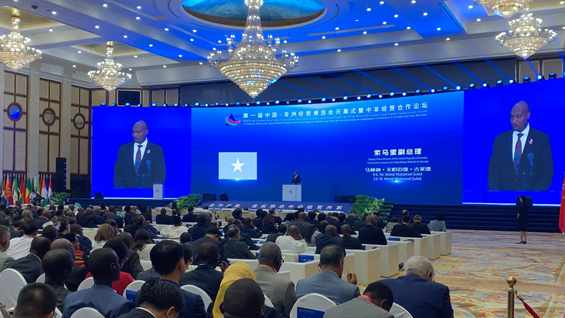
An African leader addresses Chinese and African business representatives at the opening ceremony of CAETE in Changsha, central China's Hunan Province. /CGTN Photo
The very first China-Africa Economic and Trade Expo (CAETE), another big event showcasing a larger African presence in China, is underway in the central Chinese city of Changsha, gathering over 10,000 Chinese and African business representatives as well as officials.
Considered one of the biggest achievements after the Forum on China-Africa Cooperation held last September in Beijing, the exposition has garnered much attention across the globe, especially in Africa and Asia. Walking around the exhibition hall and seminars are business leaders and top officials in various sectors from African countries – all with the same goal, that is signing new deals and finding potential business partners.
At the opening ceremony, Chinese President Xi Jinping sent a congratulatory letter, while he was away for the G20 summit in Japan, calling on "practical cooperation" between China and African countries on the basis of equality and mutual benefit.
With the theme of "Win-Win Cooperation for Closer China-Africa Economic Partnership," the expo holds 14 events and one exhibition to discuss a new path and new measures for China-Africa economic and trade cooperation, including trade and investment promotion, agricultural technology, energy and power, industrial park development, infrastructure, and financing.
Why Hunan?
Hunan Province, located in central China, whose GDP growth is not ranked as one of the tops among Chinese provinces and regions, has been chosen as the eternal venue for the event. The trade volume between Hunan and Africa stood at about three billion U.S. dollars in 2018, accounting for a small portion of the total trade volume between China and Africa in the past year.
So why Hunan Province?
Hunan boasts 10 competitive industrial clusters – namely, construction machinery, electronic information, new materials, and petrochemicals. Chief among them, construction machinery – the most well-known brands include Sany and Zoomlion – is believed to be of vital importance in Africa's infrastructure development.
Besides, Hunan is the home to China's Hybrid rice company – A.K.A the Yuan Longping High-tech Agriculture. Yuan Longping – nicknamed "the father of hybrid rice" – has found his research employed in a variety of African countries, including Liberia, Madagascar, and Southeast Asia.
"Thanks to Chinese hybrid rice, people of Madagascar have basically shaken off hunger," said a Madagascan official.
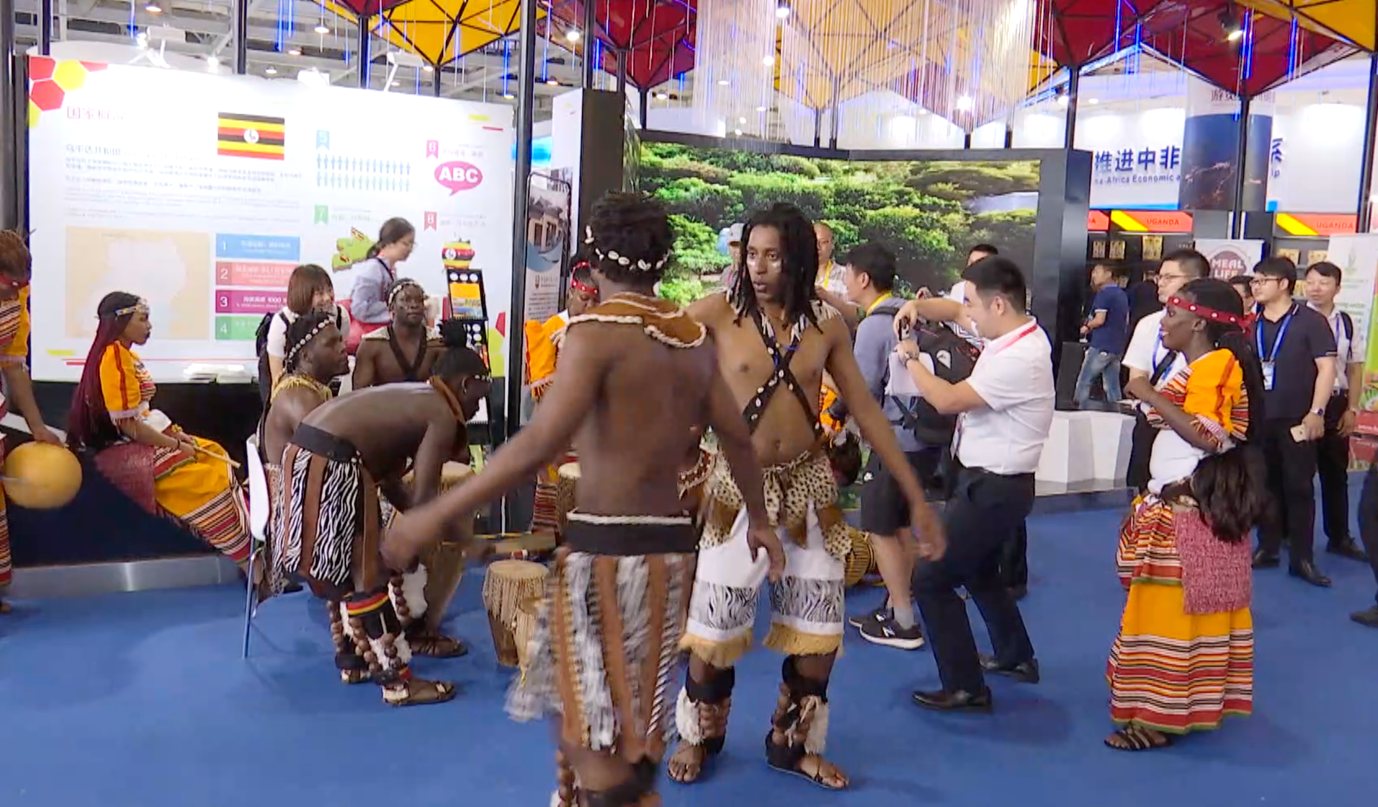
African performers at the exhibition hall of the first CAETE in Changsha, central China's Hunan Province. /CGTN Photo
In addition, Hunan is capable of developing and manufacturing multiple power supply equipment, covering wind, hydro energy, natural gas, solar power and other renewables. These technologies are badly needed in most parts of Africa where power supply is still in short.
On the other hand, the expo is believed to be linking Hunan to the African community and beyond.
"Hunan will take the Expo as an opportunity to promote the entry of Hunan's competitive production capacity, industries and products into Africa, and in-depth technological, economic and trade cooperation with Africa," said He Baoxiang, vice governor of the People's Government of Hunan Province.
Ever closer China-Africa economic ties
Diplomatic relations between China and Africa date back to the 1950s. As China increases its presence in Africa – and vice versa – a tighter relationship has been forged between China and African countries.
Official figures demonstrate that the China-Africa trade volume in 2018 surpassed 200 billion US dollars, with an increase of 20 percent year on year, according to the Chinese Ministry of Commerce. And China saw the foreign trade growth with African countries at a rate of three percent in the first five months of 2019, hitting 84.8 billion US dollars. China's direct investment to the continent has increased by 1.5 billion US dollars over the past five months, up by 20 percent year on year.
By the end of 2018, China has established more than 3,700 enterprises in Africa, and the stock of direct investment in all sectors has exceeded 46 billion U.S. dollars, according to Qian Keming, vice minister of Chinese Ministry of Commerce. In the meantime, eight countries including South Africa have included RMB in their foreign exchange reserves.
Like many other such gatherings, new investments and trade projects are expected to be inked under the principle of "win-win cooperation."
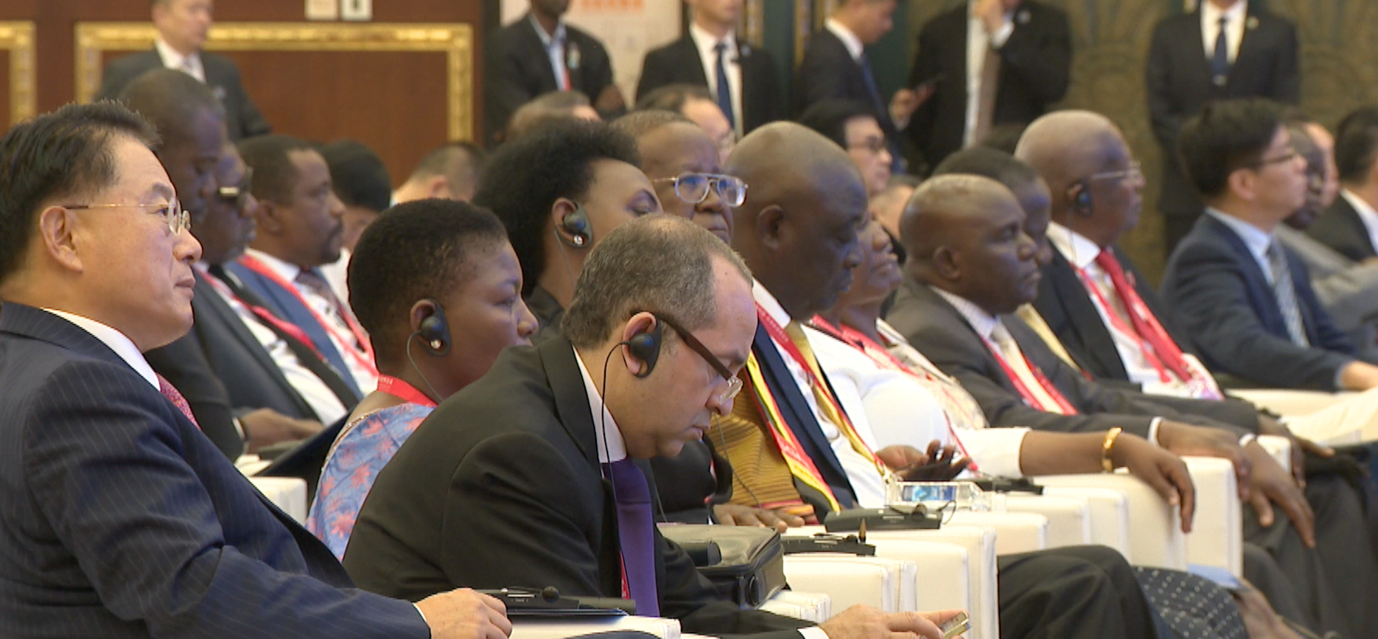
Delegates attend the opening ceremony of the CAETE in Changsha, central China's Hunan Province. /CGTN Photo
"China is the largest developing country in the world, while Africa is the home to the largest number of developing countries. Now China and Africa have many common features in transforming their growth model in improving people's lives and conducting cooperation. We have a strong desire for cooperation," said Chinese Vice Premier Hu Chunhua.
"This first China-Africa trade expo could not have been held at a better time than now. We have the shared vision for the prosperity of both peoples. We all appreciate the industrial development and free trade amongst ourselves," said Ugandan President Yoweri Museveni.
Museveni also pointed out that Africa will boost its productivity and increase exports to the Chinese market to narrow the trade deficit between the two sides.