
 []
[]
Share






Copied
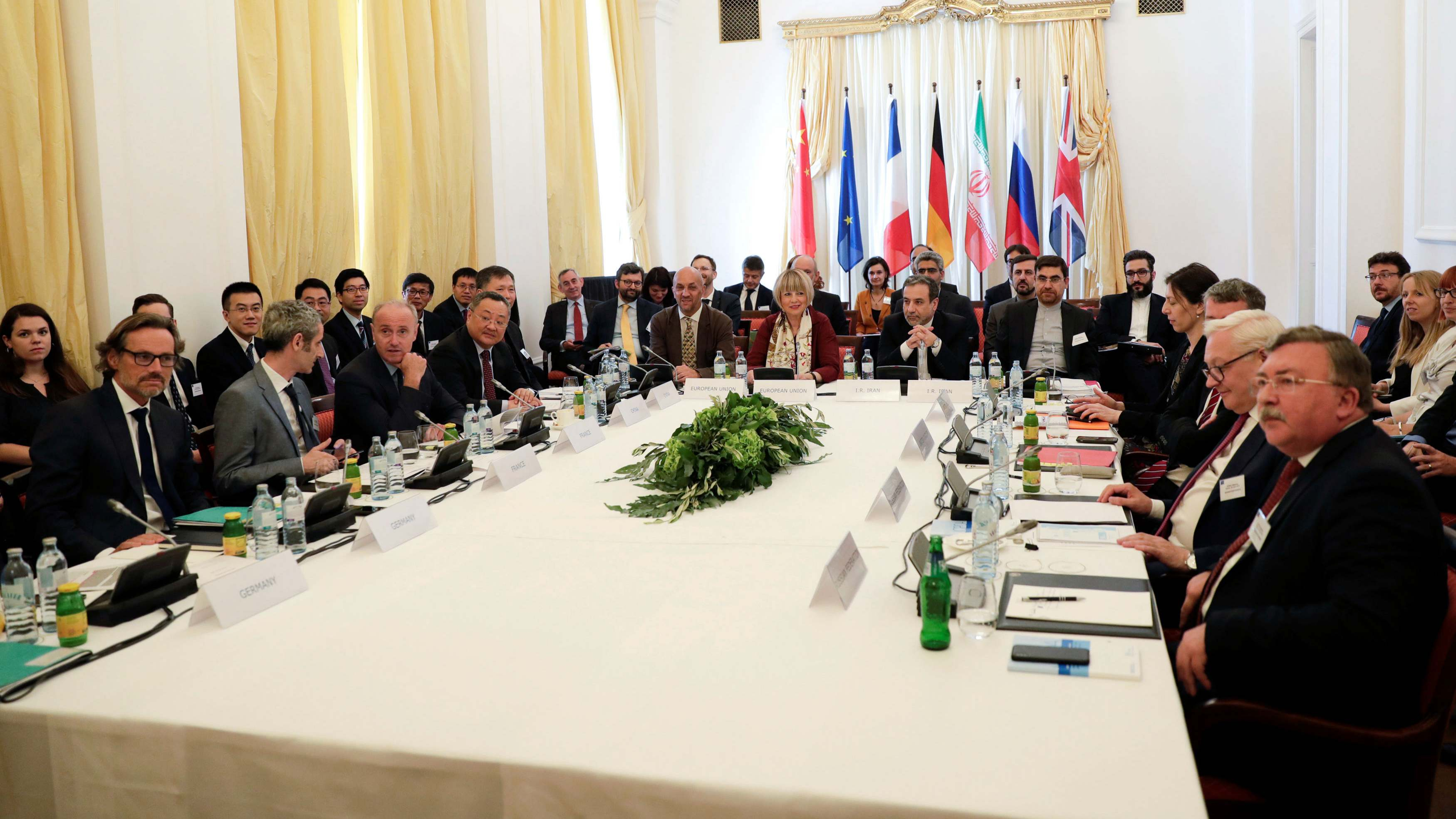
Iran's top nuclear negotiator Abbas Araqchi (C, R) and Secretary General of the European External Action Service (EEAS) Helga Schmit (C, L) attend a meeting of the JCPOA Joint Commission in Vienna, Austria, June 28, 2019. /Reuters Photo
China is fully committed to the Joint Comprehensive Plan of Action (JCPOA), said a Chinese delegate after a three-hour meeting of Iran, Russia, China, Britain, France and Germany on Friday.
Fu Cong, director general of the Department of Arms Control of the Chinese Foreign Ministry, stressed that China categorically rejects U.S. "zero-tolerance policy" on Iran oil sales, and is willing to do everything it can to maintain legitimate economic and trade relations with the country and safeguard economic interests of Chinese companies.
China will also go forward at full speed with respect to the Arak nuclear reactor project, Fu said. The Chinese-led initiative to redesign Iranian heavy water reactor in Arak is aimed at minimizing its plutonium production and avoid production of weapons-grade plutonium.
Delegates expressed sympathies over situations in Iran and condemned U.S. unilateral withdrawal from the agreement, he said, adding that the "maximum pressure" against Iran is the root cause of all tensions surrounding the issue.
A senior Iranian nuclear negotiator said the Friday meeting of the joint commission of the 2015 Iranian nuclear deal in the Austrian capital of Vienna was "a step forward, but it is still not enough and not meeting Iran's expectations."
Iran's envoy, Deputy Foreign Minister Abbas Araqchi, made the remarks after his meeting with the representatives from the remaining signatories of the deal over its implementation.
He said it was ultimately up to his superiors in Tehran to decide whether to call off plans to exceed limits in the nuclear deal, but he did not believe the talks' outcome was likely to change their minds.
"The decision to reduce our commitments has already been made and we will continue unless our expectations are met," he said. "I don't think the progress made today will be enough to stop our process but the decision will be made in Tehran."
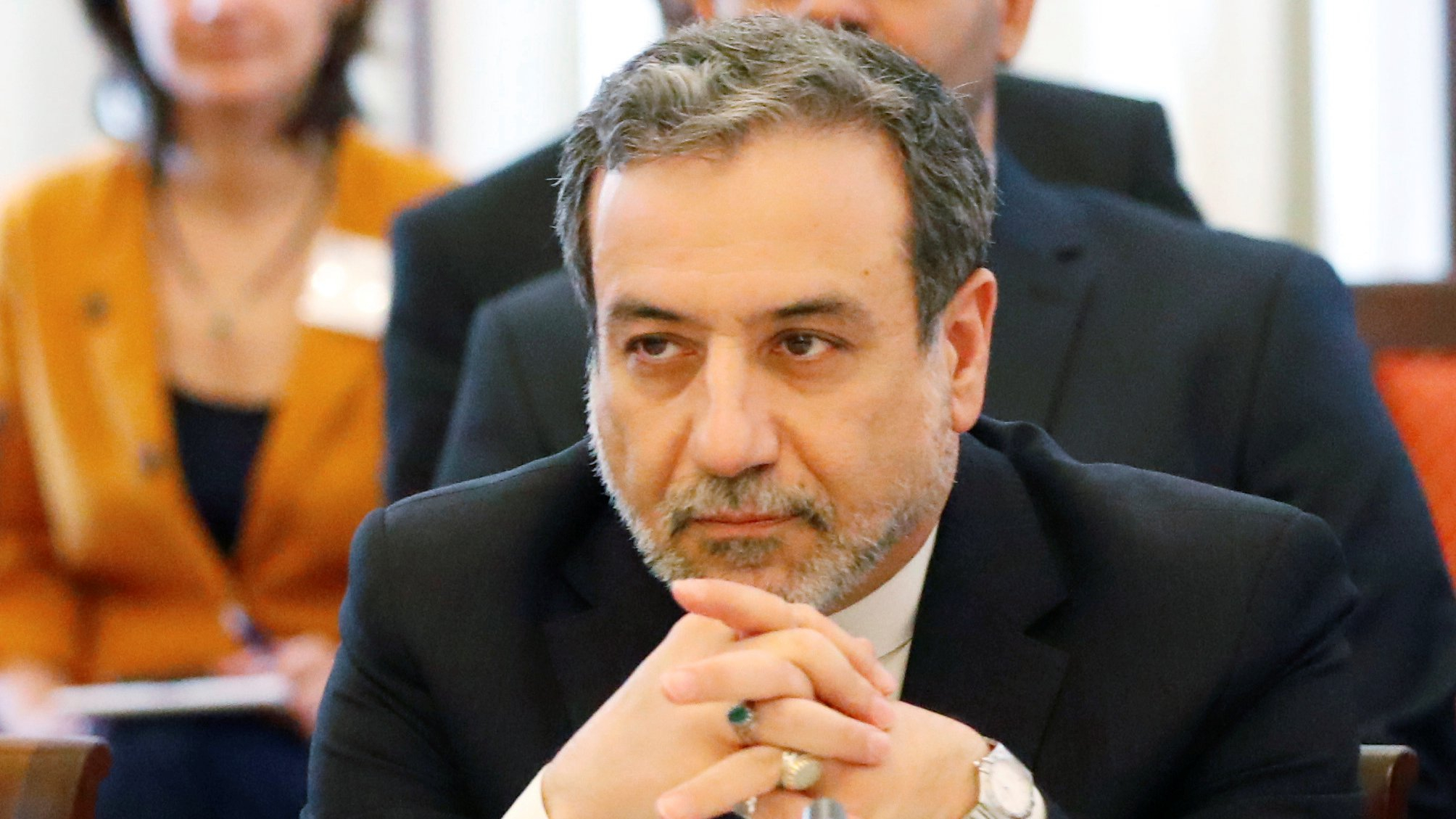
Iran's top nuclear negotiator Abbas Araqchi attends a meeting of the JCPOA Joint Commission in Vienna, Austria, June 28, 2019. /Reuters Photo
Before the meeting, a number of European countries expressed in a joint statement their support for the efforts to implement the European payment channel, known as the Instrument in Support of Trade Exchanges (INSTEX), IRNA said.
INSTEX was designed to secure trade with Iran and skirt U.S. anti-Iran sanctions after Washington pulled out of the 2015 landmark nuke deal in May 2018.
After Friday's talks, Araqchi said he had been informed that INSTEX was now operational.
Araqchi said the new mechanism would help only if it enables Iran to sell its oil. The Europeans say it is likely to be able to handle only small transactions for items such as medicine, already permitted under sanctions.
A spokesperson for the Iranian Foreign Ministry had said earlier the Vienna meeting on the Iranian nuclear deal was the "last chance" to save the accord after the U.S. exit.
Read more:
Iran files complaint to UN about U.S. drone: Tasnim
French President Emmanuel Macron said this week that he would ask U.S. President Donald Trump to ease sanctions to allow negotiations to begin. But the plea seemed to have fallen on deaf ears, with Trump’s Iran envoy saying on Friday sanctions would remain in place to end Iranian oil exports altogether.
So far, European proposals to protect Iran from the impact of U.S. sanctions have failed, with Iran largely shunned in international oil markets and all major companies cancelling plans to invest there for fear of falling afoul of U.S. rules.
Iran has said it is ramping up its nuclear program and has announced dates when this would push it past limits in the deal. The first big deadline passed on Thursday, the day Tehran said it would accumulate more enriched uranium than the deal allows.
Another deadline falls on July 7 when Iran says it will have enriched some uranium to a purity forbidden under the deal. Tehran says it still aims to keep the deal alive and any breaches could be reversed.
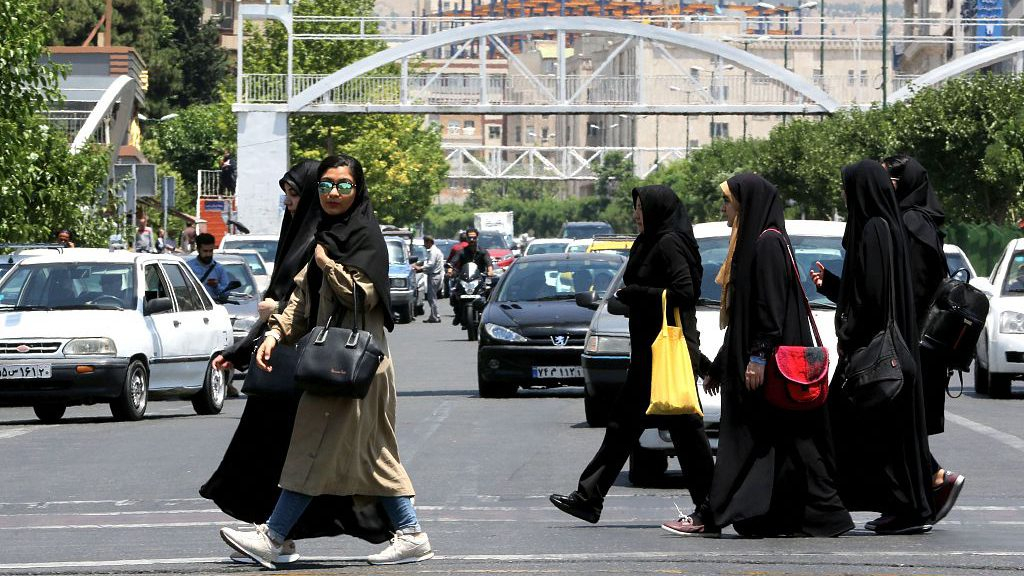
Iranian women cross a road in the Iranian capital Tehran on June 15, 2019. /VCG Photo
The crisis between Iran and the United States that began with Trump's withdrawal from the pact has escalated in recent weeks after Washington sharply tightened its sanctions from the start of May to halt all Iranian oil exports.
Despite abandoning the deal, Washington has demanded European countries ensure Iran comply with it. Iran says it cannot do so unless the Europeans provide it with some way to receive the deal's promised economic benefits.
In particular, it wants its oil exports restored to the level of April 2018, before Trump abandoned the deal and reimposed sanctions.
The Trump administration argues that the 2015 agreement reached under his predecessor Barack Obama was too weak because many terms are temporary and it excludes non-nuclear issues such as missiles and Iran's regional behavior. Washington says the aim of sanctions is to force Tehran to renegotiate.
Tehran says there can be no talks as long as sanctions are in place and Washington is ignoring the deal it already struck.
The confrontation took on a military dimension in recent weeks, with Washington blaming Tehran for attacks on ships in the Gulf, which Iran denies. Iran shot down a U.S. drone last week, saying it had entered its air space. Washington said the drone was in international skies, and Trump ordered, then aborted, retaliatory air strikes on Iranian targets.
(With input from Reuters, Xinhua)