
 []
[]
Share







Copied
Editor's Note: Liu Mingli is deputy director of the Institute of European Studies, China Institutes of Contemporary International Relations. The article reflects the author's opinions and not necessarily the views of CGTN.
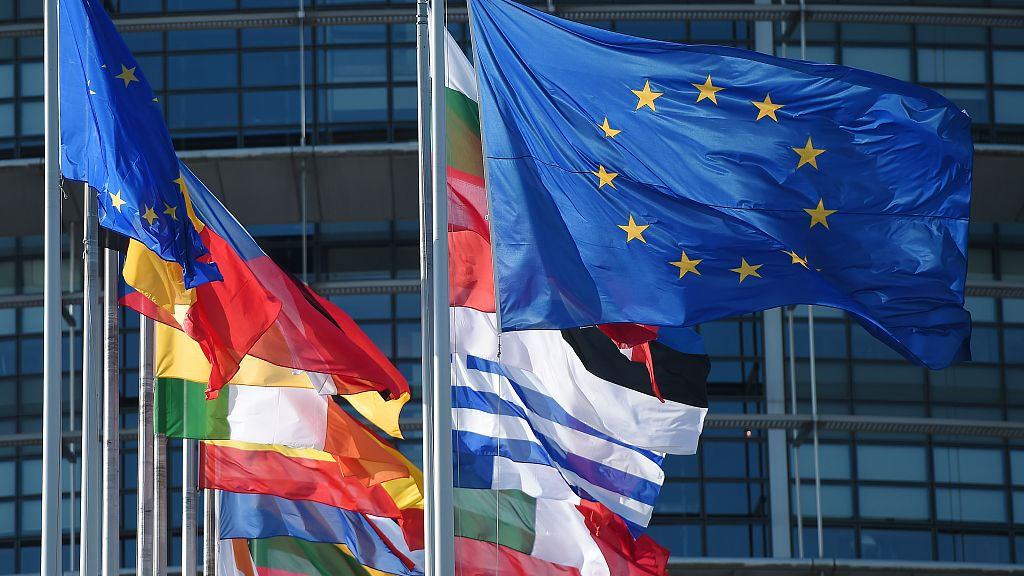
Right after the recent heatwave in Europe, the new term European Parliament was holding the first session in Strasbourg on July 2. A prominent feature of European parliamentary election in May was the unexpected success of the Greens and allied parties, which increased their MEPs to 69 from 52, the largest number in history.
In Germany, the Greens became the second largest party after Chancellor Merker's Christian Democrats (CDU). In France, Les Verts became the third largest party from nowhere. In Britain, the Green Party defeated the ruling Conservatives. So will the Greens' success change the EU's climate policy?
The answer is positive. After the election, the landscape of the European Parliament has undergone a historic change. The Group of the European People's Party (EPP) and Group of the Progressive Alliance of Socialists and Democrats (S&D) lost their majorities, which means they need support from other blocs to pass legislation and appoint key positions of European institutions.
Although populist, far-right, and anti-European parties together hold slightly more seats, it would be more realistic for the two mainstream parties to team up with the Greens. It's believed that the Greens could be the kingmaker in European politics. After the European elections, the leaders of the Greens made it clear that they wanted to translate their values into policies.
At the same time, mainstream parties confessed that they underestimated climate change as an issue, which means they will do more in the future. In fact, in the policy-making at European level, climate concerns have been already on the rise. Finland, which just took over the EU presidency in July, has set two priorities, one of which is climate change.
Across Europe, the Greens are polling strongly among young voters. By the next European Parliament election in 2024, many of the school children out on the streets for climate strikes will be of voting age, which means climate issues will get more attention in the future.
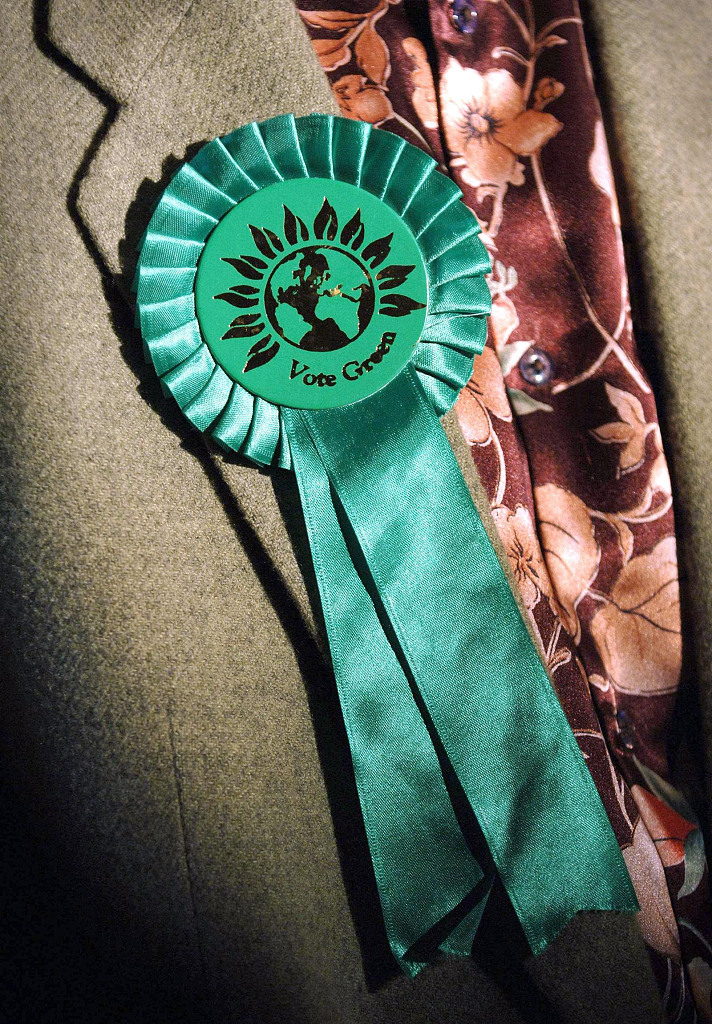
A rosette worn by a Green Party supporter at the launch of the party's local election campaign in London /VCG Photo
EU policy changes are likely to be found in the following areas. The first is agricultural policy. There has been a complaint that the EU's Common Agricultural Policy is largely used to support unsustainable practices as a livestock farm, so the European Parliament should redirect the billions of Euros paid to farmers in subsidies. The second is trade policy. In the future, the EU may consider more environmental standards when signing trade agreements with other economies.
The EU has already adopted a rule that it will agree to full trade deal only with the economy who signs the Paris Agreement. The third is energy policy. The EU has pledged by 2030 to cut greenhouse gas emissions by at least 40 percent below the levels in 1990. To achieve this goal, encouraging the use of clean energy through fiscal policies is an inevitable choice.
However, the EU's climate policy is not about to change dramatically. The Greens currently hold less than 10 percent of seats in the European Parliament, far from dominating decision-making. Climate policy is still largely in the hands of member states, and in some countries, such as the ones in central and Eastern Europe, the Green Party's influence is minimal. In Western Europe, previous climate policy has encountered resistance. In France, months of protests have suspended the fuel tax, and even posed a challenge to President Macron's whole reform plan.
In Germany, where the government has set ambitious targets to use more green energy, the cheating scandal of automaker VW also shows pressure to meet emissions targets. Recently, there has been downward pressure on the European economy again, and the Brexit issue has not been resolved yet. Under such circumstances, the room for more radical climate policies is very limited.
Generally, climate issues will get more attention and discussion in European politics. Policymakers will have to find a new balance between climate and other issues. But it will take time for a major policy change to emerge.
(If you want to contribute and have specific expertise, please contact us at opinions@cgtn.com.)