
 []
[]
Share







Copied
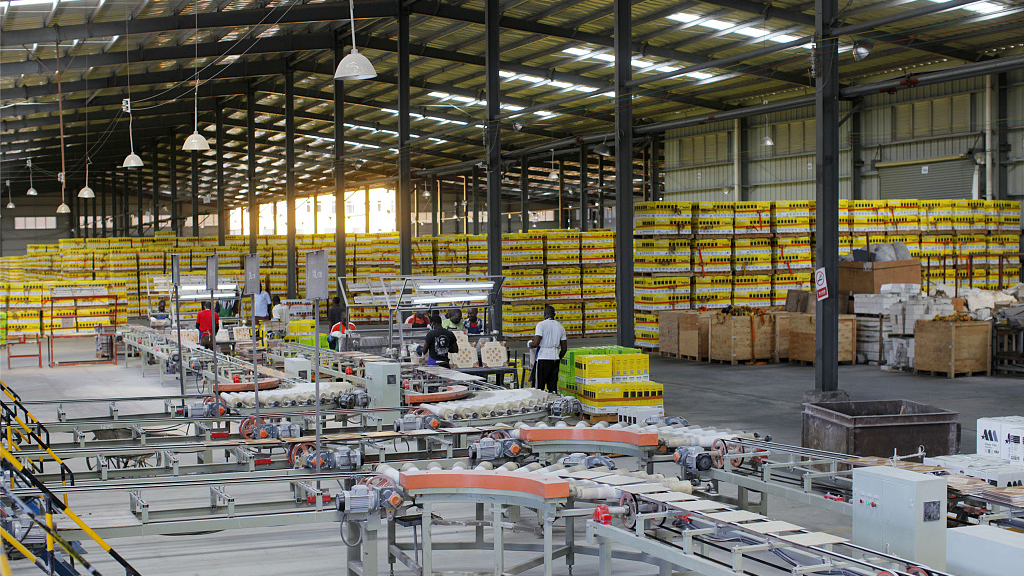
Africa is becoming an important global value play, which means its value potentially exceeds the price being paid by the global investors, and so more and more overseas funds and transnational giants have stepped into the continent to expand their business.
The pillars of support for investments in Africa are simplified to four key aspects: surging GDP, expanding population and middle class, urbanization and digitalization.
GDP with strong growth
African economic development is gaining growing importance in the world stage. According to data from the OECD, Africa's GDP tripled between 2000 and 2018.
Africa's GDP is expected to grow by 6.0 percent in 2019 and at a 5.9 percent compound annual growth rate from 2018 to 2023, compared to 3.5 percent for major advanced economies (G7) and 5.6 percent globally, according to the IMF on a purchasing power parity basis.
Demographic dividends and a growing middle class
Africa enjoys a large, fast-growing and young population. As of 2018, Africa comprised approximately 17 percent of the world's population, according to the United Nations World Population Prospects Report.
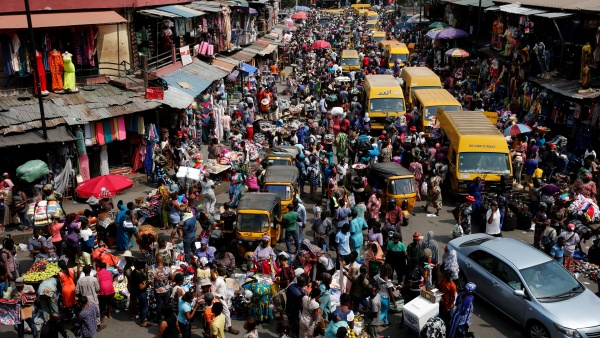
People crowd a street at the central business district in Nigeria's commercial capital Lagos. /Reuters Photo
The same resource indicates that half of the world's population growth between 2015 and 2050 is projected to be driven by Africa. For example, Nigeria is projected to become the third most populated country in the world by 2050, after India and China.
The average age across the continent is 19.4 years in 2015, more than ten years younger than the global average of 30.6 in 2018, according to the United Nations and the CIA World Factbook, respectively.
In 2010, 355 million people, or 34 percent of the population, were considered "middle class" according to the African Development Bank. By 2060 that number is expected to grow to 1.1 billion people or 42 percent of the population, representing an average annual growth of approximately 15 million people, according to McKinsey Global Institute in 2015.
Speeding urbanization
Urban centers play a critical role in driving economic growth. As of 2018, only 43 percent of Africans lived in urban centers, compared to 82 percent in North America and 50 percent in Asia, according to the United Nations.
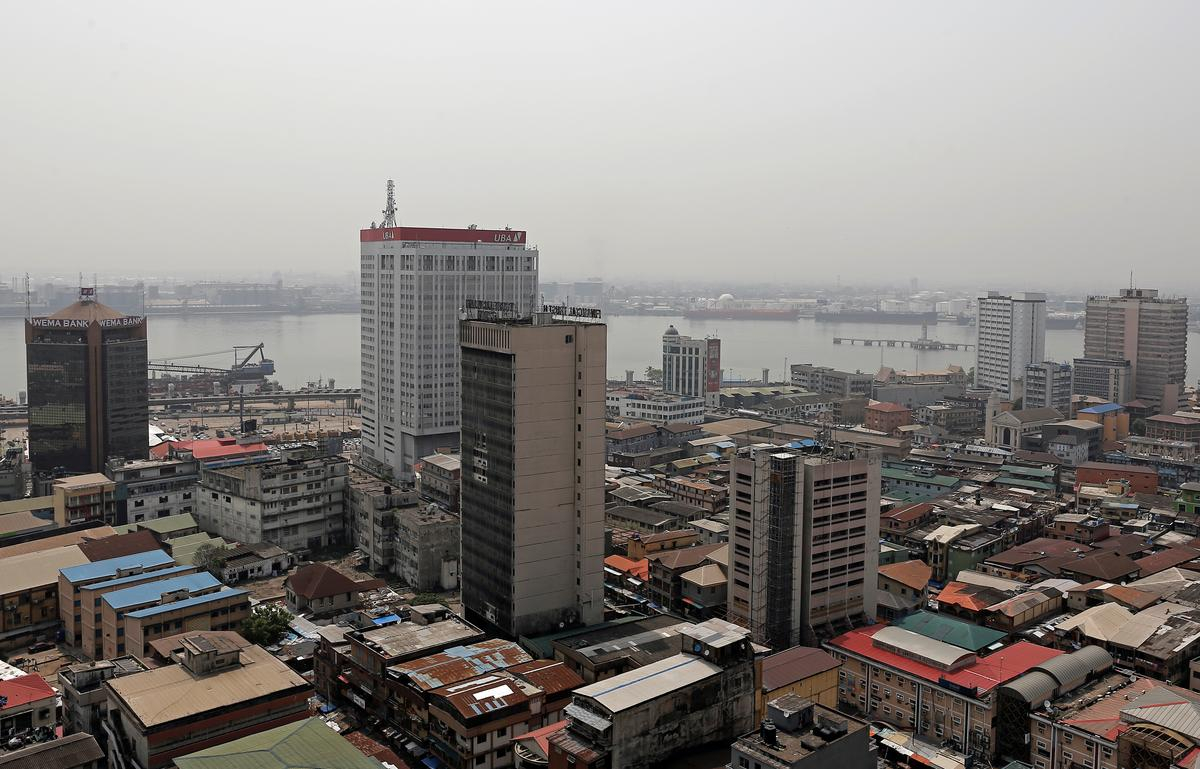
A general view shows the central business district in Nigeria's commercial capital of Lagos, Nigeria. /Reuters Photo
However, 59 percent of Africans are expected to be living in urban areas by 2050, indicating an organic and migration-driven growth of over 970 million people to urban centers during that period.
As infrastructure continues to improve across Africa and urbanization rates increase, increasing the availability of reliable, high-quality and cost effective delivery solutions will contribute to most kinds of business in Africa.
Growing penetration rate of the Internet and smartphones
Africa is rapidly becoming a connected market, representing a large opportunity for internet-based businesses, for example, Alibaba has seen the opportunity and started building their eWTP in Africa.
According to the estimation of Statista, the number of internet users of Africa should be over 440 millions, as of March 2019.
Many consumers in Africa access the internet for the first time using a mobile device. Mobile broadband penetration in Africa, which was 32 percent, or 399 million subscribers in 2017, is expected to increase to 73 percent by 2022, according to the market research firm Ovum. This increase represents approximately 600 million new subscribers.

African young people enjoying smartphones. /VCG Photo
Smartphone penetration as a percentage of total mobile connections is growing. It was 40 percent in 2017, and is expected by Ovum to increase to 77 percent by 2022.
As Africa becomes more affluent and connected, African consumers will increasingly become aware of online shopping, which will hugely leverage the demand of the end customers.
African younger generation, born into an "online" world is increasingly seeking access to a wider choice of food, consumer goods and entertainment options as it becomes increasingly connected to, and aware of, global consumer trends.
Ascendant investments in manufacturing industry
Having benefited from above momentum, the African manufacturing industry became one of the most attractive sectors for Chinese private firms and investors.
Chinese private sectors comprise 70 percent of China's investment to Africa, in terms of the number of investments and investment amount, according to MOFCOM.
African manufacturing industry only accounts for two percent in the global system, seeing a large space to improve. In 2019 China-Africa Private Sector Cooperation Forum concluded last week, African representatives showed their willingness to enhance the development of manufacturing industry in their countries, by collaborating with the Chinese private companies.
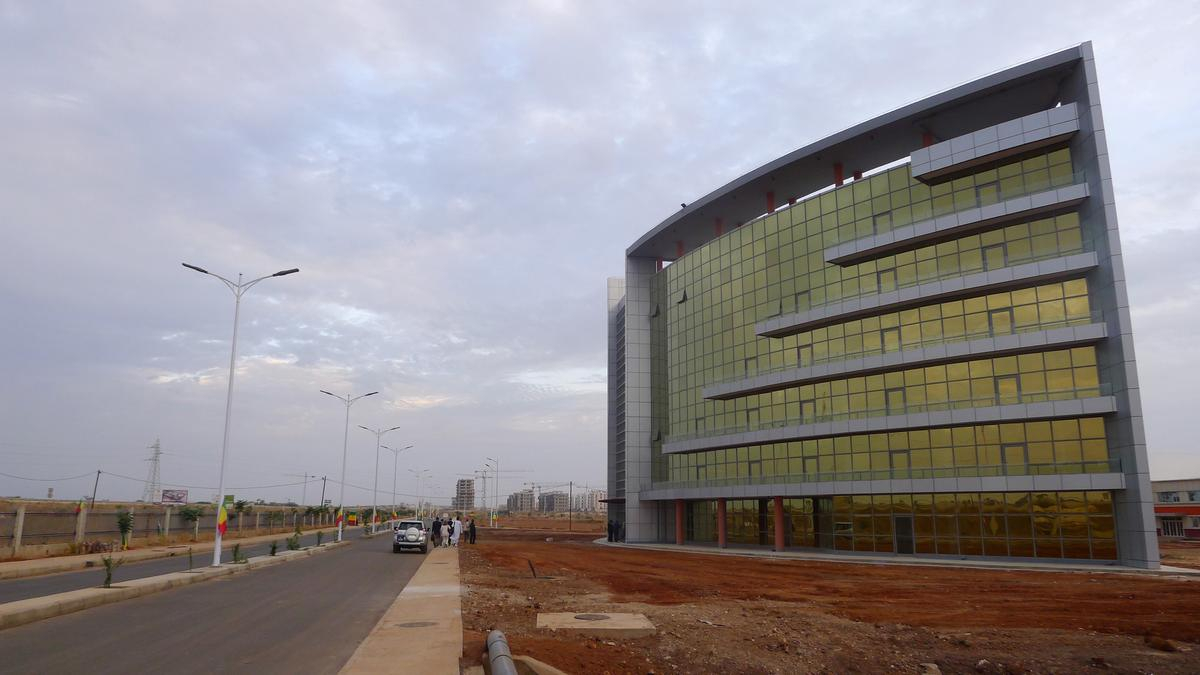
An administrative building at Senegal's new Diamniadio industrial park in Senegal. /Reuters Photo
"We hope to improve the proportion of manufacturing industry in the GDP, from current 8.7 percent to 15 percent in 2022," said Perter Munya, cabinet secretary for the Ministry of Industry, Trade and Cooperatives of Kenya. The manufacturing industry is one of the most substantial driving forces for the country's economic transformation.
"The Belt and Road Initiative has come to the stage where the cooperation between China and Africa go beyond foreign trade and infrastructure construction. The cooperation in developing industrialization, industrial parks and manufacturing industry are also important," said Li Jingjing, the vice president of Sany Heavy Industry Co., Ltd., a Chinese multinational heavy equipment manufacturing company. The company will open factories in Guinea this year and hire locally.