
 []
[]
Share







Copied
A figure of a roaring lion, about the size of a loaf of bread, is the latest step in the fight to preserve culture from conflict.
The sculpture is a replica of a colossal 3,000-year-old statue from the Temple of Ishtar in Nimrud, in what’s now Iraq. The stone statue was one of many artifacts from the Mosul Museum destroyed by ISIL after it overran the city in 2014.
The replica Lion of Mosul was modeled from crowd-sourced photos taken by Mosul Museum visitors in happier times and 3-D printed as part of Google’s digital arts and culture project.
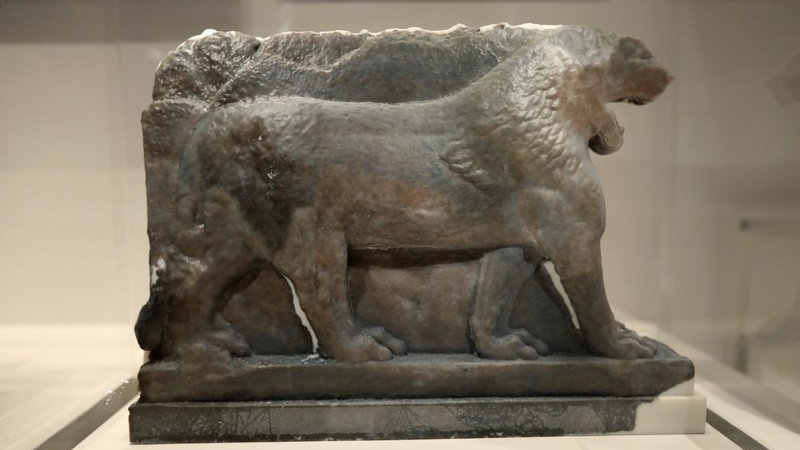
A 3-D printed recreation of the ancient Lion of Mosul, which was destroyed by ISIL at the Mosul Museum in Iraq, is displayed as part of the "What Remains" exhibition at the Imperial War Museum in London, July 3, 2019. /AP Photo
It’s going on display at London’s Imperial War Museum in an exhibition that looks at how war devastates societies’ cultural fabric – and at the ingenious and often heroic steps taken to preserve it.
Chance Coughenour, digital archaeologist at Google Arts and Culture, said the exhibition “highlights the potential of technology – both in terms of digitally preserving culture and telling these amazing stories in engaging new ways.”
It also illustrates a grim truth: culture has long been a casualty of conflict. Museums, monuments and even music are often deliberately targeted by extremist fighters.
“The destruction of culture is sort of an accepted sideline to war,” Imperial War Museum curator Paris Agar said Wednesday. “One of the main reasons for destroying culture is to send a message: We have victory over you. We have power over you. It’s because culture means so much to us; if we didn’t care it wouldn’t be a tool.”

A 3-D printed 2015 recreation titled "Unknown King of Haar" by Morehshin Allahyari is displayed as part of the "What Remains" exhibition at the Imperial War Museum in London, UK, July 3, 2019. /AP Photo
The horror that rippled around the world in April at the sight of Paris’ Notre Dame Cathedral in flames is proof of the powerful attachment we have to buildings and artworks.
Internationally backed projects to train craftspeople and archaeologists in Syria and Iraq may help those countries recreate what has been lost. And the law has made small steps toward bringing cultural vandals to justice. In 2016, Islamic extremist Ahmad Al Faqi Al Mahdi was convicted of destroying World Heritage cultural sites in Timbuktu, Mali – the first war-crimes conviction by the International Criminal Court for cultural destruction.
“It has always been part of warfare,” Agar said. “All that has changed in recent years is the awareness and attempt to stop it.”