
 []
[]
Share







Copied
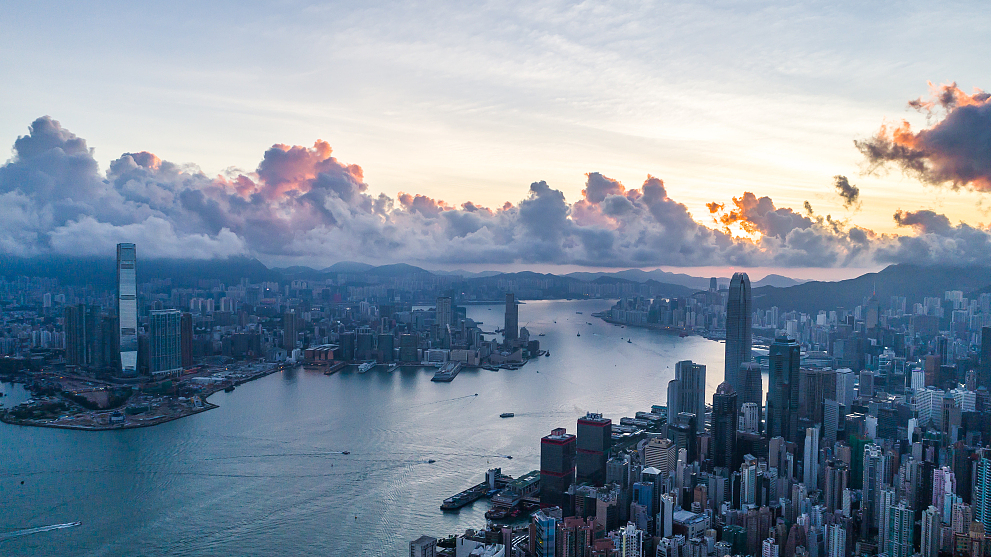
Editor's note: The following article was first published by China Plus on July 5, 2019. The article does not necessarily reflect the views of CGTN.
After the recent violent incidents at the Legislative Council building in Hong Kong, some politicians in the United Kingdom have cited the Sino-British Joint Declaration as the reason for their support of protesters in Hong Kong, and claim that the Hong Kong Special Administrative Region (SAR) Government must not use the violence as an excuse for a crackdown. This blatant support for the illegal acts in the Hong Kong SAR and the gross interference in China's internal affairs will undoubtedly harm the China-UK relations.
The Sino-British Joint Declaration was signed by China and the United Kingdom in 1984. It lays out the arrangements for the resumption of China's sovereignty over Hong Kong and provides details about the transition period. After Hong Kong's return to China on July 1, 1997, the rights and obligations stipulated in the statement related to the British side were fulfilled and the statement became a historical document. To argue otherwise, if not because of ignorance of history and politics, it is an attempt to interfere in China's internal affairs.
It has also been claimed by some people in the United Kingdom that the freedom of the people of Hong Kong was won by the British. British scholar Martin Jacques says this is an example of British hypocrisy. Under colonial rule, Hong Kong “never enjoyed even a semblance of democracy. It was ruled from 6,000 miles away in London," he said. During the colonial period, Hong Kong governors were appointed by Britain, the Hong Kong people never had a right to vote, and the local judiciary was not independent.
After the handover of Hong Kong, China’s government implemented the policies of "One Country, Two Systems" and "Hong Kong people governing Hong Kong with a high degree of autonomy" in accordance with China's Constitution and Hong Kong’s Basic Law. Under this arrangement, the people of Hong Kong have enjoyed unprecedented democratic rights and freedoms. According to data released by the World Bank, Hong Kong's global rule of law ranking jumped from 60th place in 1996 to 11th in 2015. Hong Kong is arguably more free and democratic now than it ever has been.
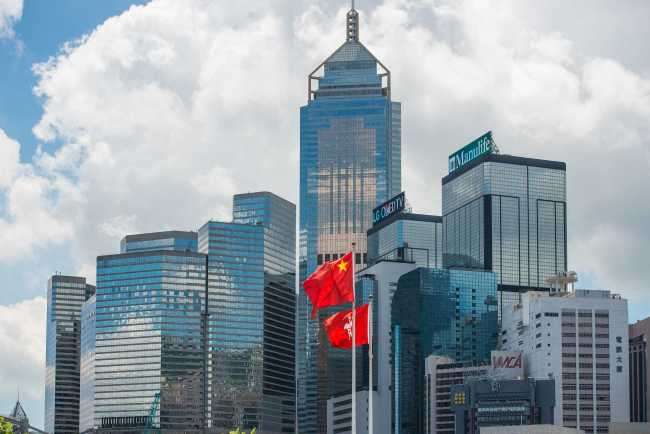
The national flag of China and the flag of the Hong Kong SAR fly in front of the government building in Hong Kong. /File photo of VCG
As for the handling of the recent protests, the government in Hong Kong has addressed the incidents of violence in accordance with the law. The Basic Law does give Hong Kong residents the freedoms of speech, assembly, and demonstration. These freedoms do not, however, negate the need for protesters to respect the rights of others and to ensure that public safety and order are upheld. Nor do these freedoms give protesters the right to break the law, commit acts of violence, or trample on the rule of law.
Twenty-two years have passed since British colonialism in Hong Kong ended. China resumed the exercise of sovereignty over the region, and Hong Kong affairs became an internal matter for China. If the relationship between China and the United Kingdom is to remain healthy, it must be fostered in an atmosphere of mutual respect and the understanding that neither side has the right to interfere in the other’s internal affairs.
(If you want to contribute and have specific expertise, please contact us at opinions@cgtn.com.)