
 []
[]
Share







Copied
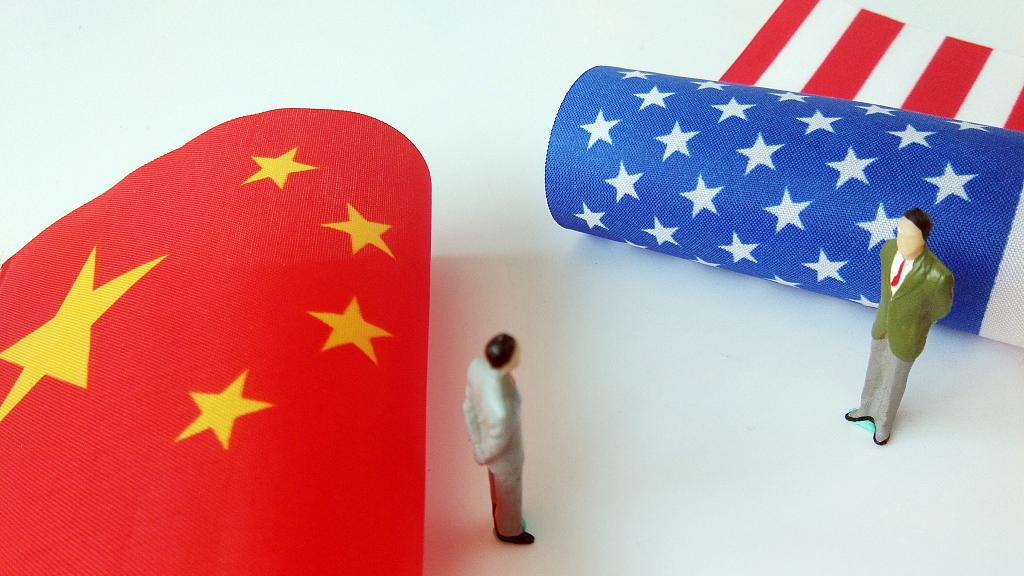
Editor’s Note: The article is based on interviews with Wang Yong, a professor at the School of International Studies, Peking University; Michael Swaine, a senior fellow at the Carnegie Endowment for International Peace, and former Afghanistan president Hamid Karzai. The article reflects the experts’ opinions, and not necessarily the views of CGTN.
Not long after China and the United States agreed to resume stalled trade negotiations, the U.S. State Department approved major arms sales – Abrams tanks and Stinger missiles – to Taiwan. The move immediately triggered strong opposition from China's Defense Ministry.
The issue about Taiwan is not new in China-U.S. relations. For years, anti-China hawks in the White House have been playing the Taiwan card to contain the Chinese mainland. Unwilling to accept China's rapid rise, these so-called American elites have been manipulating every possible means to distract the Chinese government and undermine the country’s fast-paced growth, Wang Yong, a professor at Peking University's School of International Studies and a member of the academic committee of the Pangoal Institution, told CGTN.
The situation deteriorated especially after the influence of anti-Beijing hawks grew in the White House. From National Security Advisor John Bolton to Secretary of State Mike Pompeo, anti-China hawks are exerting increasing influence on Donald Trump's China policy.
A prosperous China is the last thing they want to see. While the world is anticipating a fundamental trade deal between the world's largest two economies, anti-China hawks are attempting to use the Taiwan issue to discourage the upcoming trade negotiations, Wang said.
But these hawks can never represent U.S. President Donald Trump, Wang emphasized. With the clock ticking for the 2020 presidential election, Trump is eager to reach a fundamental trade deal with China. Provocations on the Taiwan issue will only make an agreement harder.
Moreover, Trump, despite his "art of the deal," has the common sense about the Chinese mainland’s determination and capability to safeguard its territorial integrity. Since assuming office, Trump has reiterated Washington’s firm stance on the One-China policy.
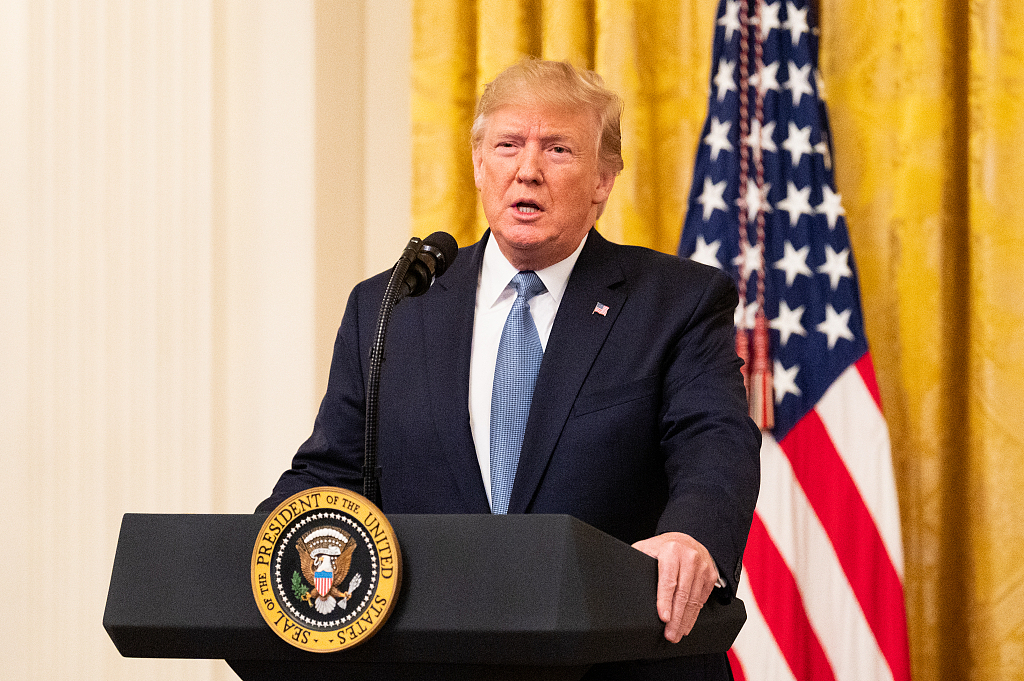
U.S. President Donald Trump speaks in the East Room of the White House in Washington, July 8, 2019. /VCG Photo
Washington’s politics has long been a wrestle among different forces. The arms sale to Taiwan, to a large extent, is a result of the rising influences of the hawks and does not necessarily reflect Trump’s true intention, Wang said.
Despite hawkish provocations, experts believe the sale is unlikely to ruin the China-U.S. relationship. "That [Taiwan] issue alone, I don’t think, is a source of real danger in the relationship between the U.S. and China," Michael Swaine, a senior fellow at the Carnegie Endowment for International Peace, told CGTN on the sidelines of the 8th World Peace Forum held in Beijing this week.
The real danger, according to Swaine, would be, on the one hand, the U.S. "fundamentally modifies the One-China policy" and, on the other, the Chinese central government presses the reunification of Taiwan.
Two elements – Washington's adherence to the One-China policy and China’s commitment to the peaceful resolution of the Taiwan issue – are the foundation of China-U.S. relations. Maintaining that understanding is essential for both countries, Swaine emphasized, warning that to do away with the One-China policy would be "a major disaster”" in China-U.S. ties.
Swaine is not the only speaker at the World Peace Forum who emphasized the importance of the One-China policy. In response to CGTN's question on the arms sale, former Afghan president Hamid Karzai emphasized that Afghanistan stands firmly on the One-China policy. It is an irrefutable fact that Taiwan is an inseparable part of China.
The arms sale, as many experts believe, is to satisfy American hawks' private gain, not for the so-called protection of Taiwan. Provocations on the Taiwan issue will only bring multi-lose results. Taiwan would be the biggest victim, not the winner, of a deterioration in China-U.S. ties, Swaine said.
The Chinese government strives to achieve peaceful reunification with Taiwan, but, in the meantime, reserves the right to unite Taiwan with force. Anti-China hawks should never underestimate China's determination in safeguarding its territorial integrity before any further provocations.
(If you want to contribute and have specific expertise, please contact us at opinions@cgtn.com)