
 []
[]
Share







Copied
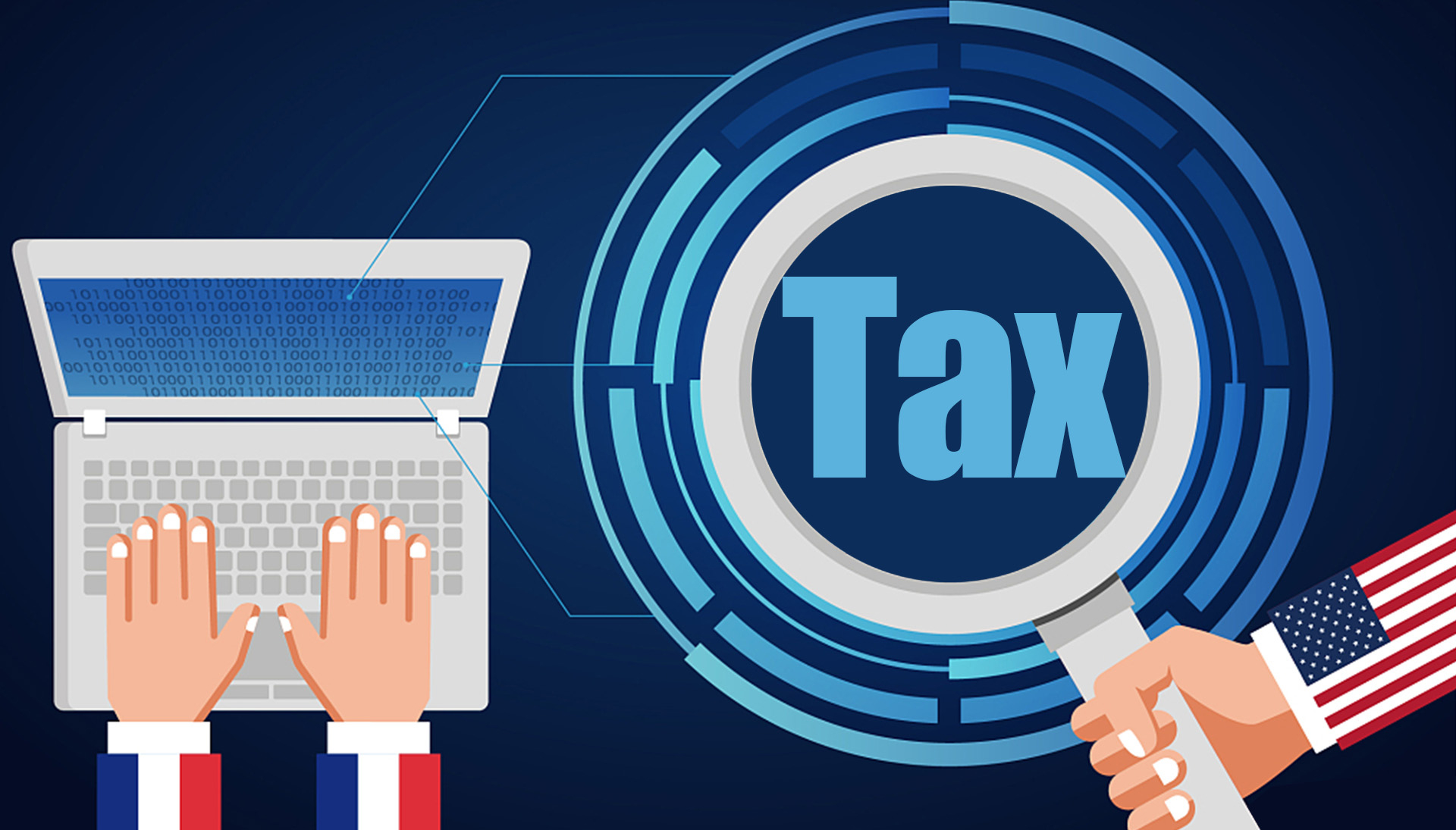
France's parliament on Thursday passed a law making it the first major economy to impose a tax on digital giants, which are mostly U.S.-based. The move drew an angry response from the White House even before the legislation was passed, with President Donald Trump ordering an investigation unprecedented in the history of French-U.S. relations.
The French senate gave the final approval to the tax on big technology companies, including GAFA companies, namely Google, Amazon, Facebook and Apple, with experts saying the move could potentially open a new front in a trade row between Washington and the European Union.
The tax amounts to a 3 percent annual levy on French revenues of digital companies with yearly global sales of more than 750 million euros (845 million U.S. dollars) and French revenue exceeding 25 million euros.
The tax was initially adopted by France's National Assembly, the lower house of Parliament, on July 4. It is expected to collect 400 million euros this year and 650 million euros by 2022.
Trump has ordered an investigation into the tax ahead of its adoption, a step that could lead to the U.S. imposing new tariffs or other trade restrictions on France. The Trump administration said Washington was "very concerned" the French law would "unfairly" target American companies.
Top White House economic adviser Larry Kudlow earlier expressed his concerns, saying "One issue regarding Google and Facebook and other U.S. tech companies is the threat of a digital tax from the government of France, whose Senate passed it last night, as far as I know, three percent digital tax."
Section 301 is part of an outdated U.S. trade law adopted in 1974 that allows the U.S. president to unilaterally impose tariffs or other trade restrictions on foreign countries.
VCG Photo
French Finance Minister Bruno Le Maire rejected the U.S. reaction, saying "threats" were not the way to resolve such disputes.
France pushed ahead with the tax after EU countries failed to agree a levy valid across the bloc in the face of opposition from Ireland, Denmark, Sweden and Finland. Other EU countries including Austria, Britain, Spain and Italy have also announced plans for their own digital taxes.
They say a levy is needed because big, multinational internet companies such as Facebook and Amazon are currently able to book profits in low-tax countries, no matter where the revenue originates.
Le Maire claimed that the best way of dealing with the kind of difficulties between the U.S. and France is neither through threats nor investigation under section 301.
"It is to build a compromise at the G7 level, at the OECD level, so that we can have a concrete and effective solution on the taxation of digital activities," said Le Maire.
(With input from Xinhua)