
 []
[]
Share







Copied
Editor's note: This article is based on an interview with Shen Dingli, a professor from the Institute of International Studies at Fudan University. The article reflects the expert's opinions, and not necessarily those of CGTN.
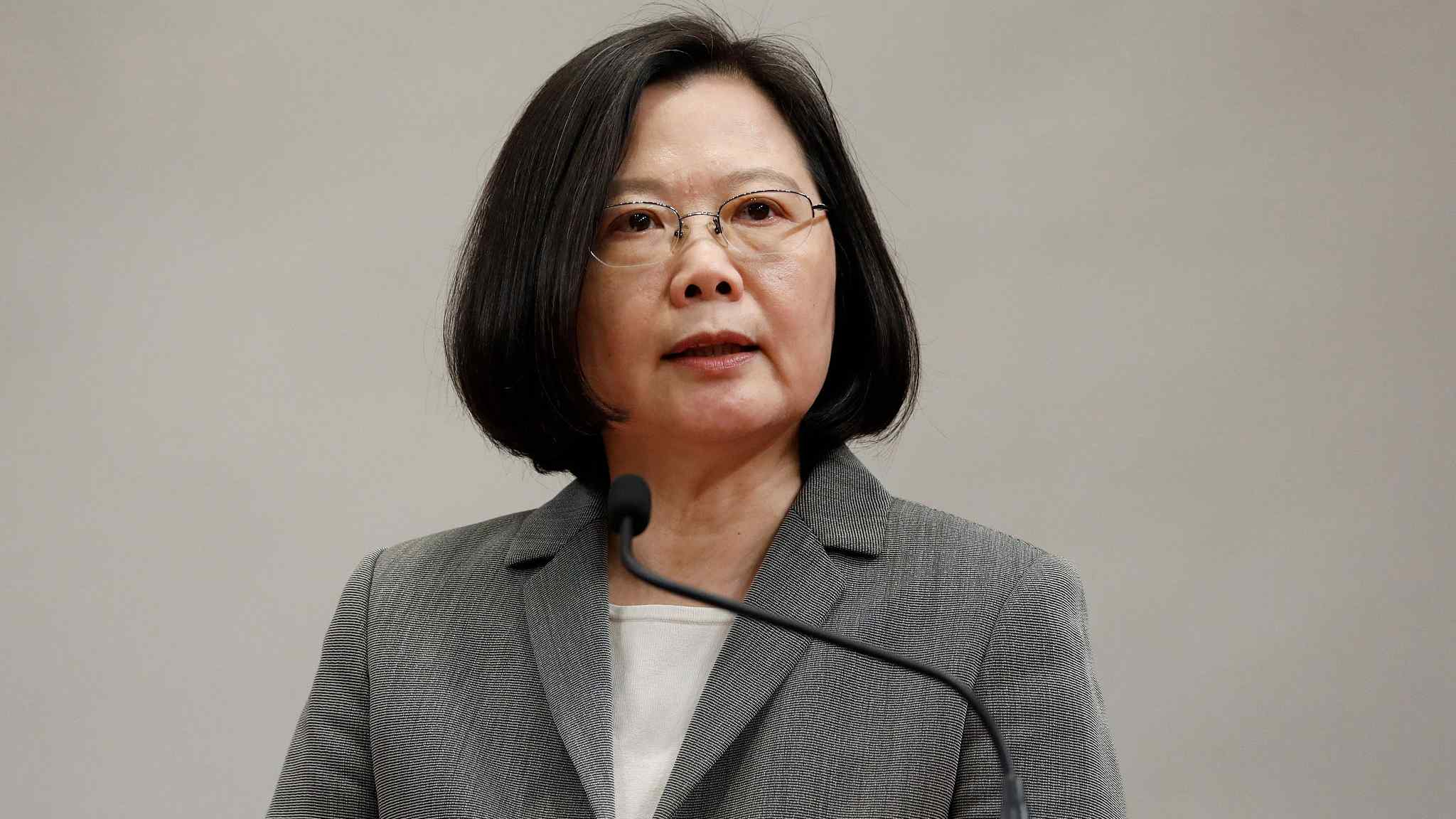
"The U.S. is playing the Taiwan card while Taiwan is actively collaborating with the U.S. strategy, challenging the one-China principle," Shen Dingli, a professor from the Institute of International Studies at Fudan University, said when talking about Taiwan leader Tsai Ing-wen's recent transit in the U.S.
Tsai arrived in New York on July 11 and spent two days there in transit, breaking the routine of a 24-hour transit in the U.S. for a Taiwan leader and invoking strong dissatisfaction from China for violating the one-China principle.
"We urge the U.S. side to abide by the one-China principle and the stipulations of the three China-U.S. joint communiques, not to allow the Taiwan leader to 'transit,' refraining from sending any wrong signal to the 'Taiwan independence' force," Chinese Foreign Ministry spokesperson Geng Shuang said on Friday.
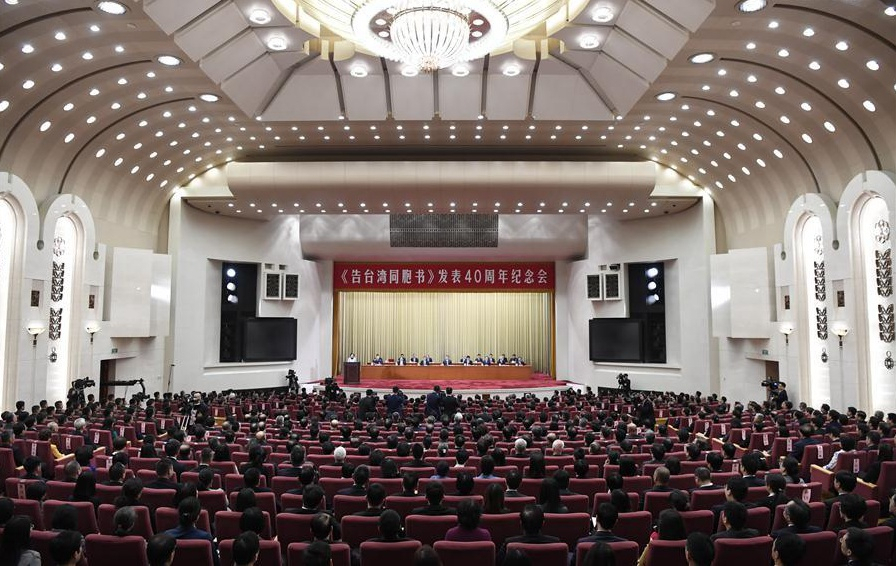
The gathering to commemorate the 40th anniversary of the "Message to Compatriots in Taiwan" held at the Great Hall of the People in Beijing, capital of China, January 2, 2019. /Xinhua Photo
The aims behind the interactions
In Shen's view, the U.S. allowance of Tsai's extended transit can make it seem like Washington thinks highly of Taiwan. And as Tsai is a pro-independence leader, the U.S. support for her signals the country's backing of the pro-independence movement in Taiwan. During her stopover in New York, Tsai again called for global support for her so-called freedom in a speech at Columbia University.
Furthermore, the U.S. is playing the Taiwan card in curbing China's rise. Since implementing the reform and opening-up policy in 1978, China has realized rapid development, becoming the world's second largest economy, while the U.S., trapped in domestic political chaos and economic slowdown, has witnessed waning influence.
With the Sino-U.S. trade negotiations entering a crucial stage, Washington is using the Taiwan card to gain leverage in future talks, which in fact can only intensify its tensions with Beijing, negatively influencing the trade talks.
For Taiwan, the Chinese mainland's development also, to some extent, puts pressure on it with its weakening strength, according to Shen. The Chinese mainland's development boosts its confidence for national unity, while the pro-independence forces in Taiwan, in resisting the trend toward national unity, rely on Washington to contain the Chinese mainland so as to maintain the status quo.
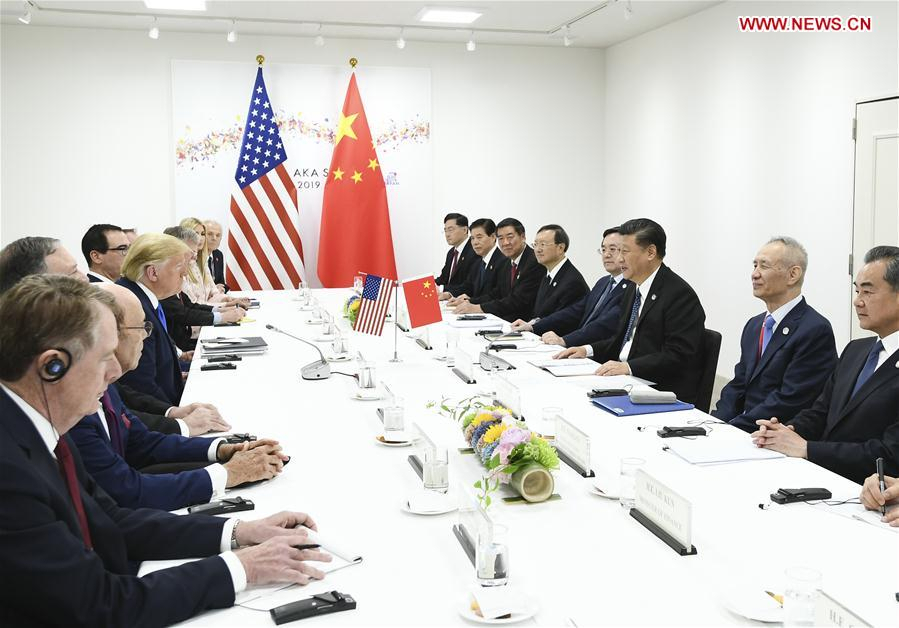
Chinese President Xi Jinping (3rd R) holds talks with U.S. President Donald Trump in Osaka, Japan, June 29, 2019. /Xinhua Photo
An irreversible trend
While the pro-independence forces in Taiwan strive for departure, the ties between the Chinese mainland and Taiwan are getting increasingly closer, especially regarding their economic ties. From 1998 to 2018, the share of Taiwan’s total trade involving the U.S. nearly halved, down from 23 to 12 percent, while the Chinese mainland's share doubled from about 15 to 31 percent. Last year, Taiwan’s export reliance on the Chinese mainland rose up to 41 percent with 130.2 billion U.S. dollars' worth of goods heading to the mainland.
Taiwan's heavy reliance on the Chinese mainland has made it highly vulnerable in any conflict with the mainland, and thus severing ties will be a heavy blow for the region.
"A crisis over Taiwan in which the (Chinese) mainland introduced severe sanctions, imposed an embargo or used military force could threaten the autonomy, safety and economic well-being of the island and its 23 million people," Richard N. Haass, president of the Council on Foreign Relations, admitted in one of his articles.
Shen echoed this, saying that harmony between the Chinese mainland and Taiwan is beneficial for both sides at present. However, in the long term, if national unity is spoiled by the pro-independence forces in Taiwan, China will take whatever measures, including military means, to realize the goal of unity.
"With the rise of China and the decline of the U.S., the historical trend will see the unification of the Chinese mainland and Taiwan," Shen concluded.
(If you want to contribute and have specific expertise, please contact us at opinions@cgtn.com.)