
 []
[]
Share







Copied
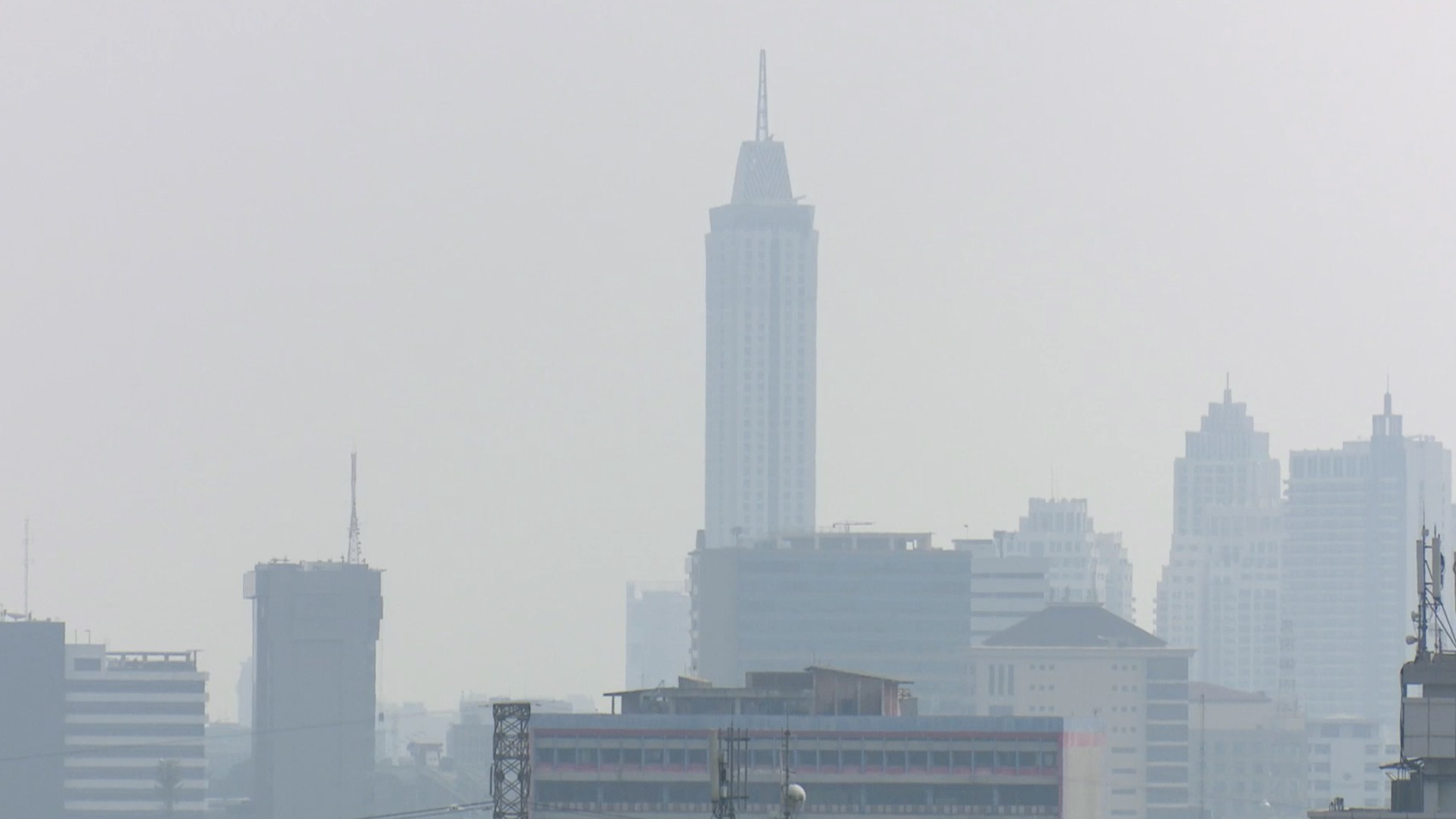
Jakarta's air quality has been one of the worst in the world in recent months. The city is above Russia, Chile, Dubai and Brazil in terms of poor air quality globally.
Based on recent observations, the air quality reached a high level of 194 on the U.S. Air Index Quality (AQI), which strongly indicates that the air in Jakarta is not healthy for its residents.
The Meteorology, Climatology and Geophysics Agency (BMKG) said that the dry season is one of the factors contributing to Jakarta's poor air quality. BMKG stated that when Indonesia enters the dry season, the frequency of rain decreases dramatically, while motor vehicle use increases, releasing a lot of dust and fumes into the air.
Bondan Arinayu is a climate and energy campaigner from Greenpeace Indonesia. He said Indonesia had as many as 250 unhealthy days in 2018.
His argument is that the government should update the way they measure unhealthy air quality.
"We are still using the standard which is out of date. So the standard of air quality is the standard that was used in 1997 to 1999. It's a very old standard and needs to be revised considering the way the government protect the people from breathing unhealthy air. Because if you are going to protect the people, you should have strong standard and strong mitigation," said Arinayu.
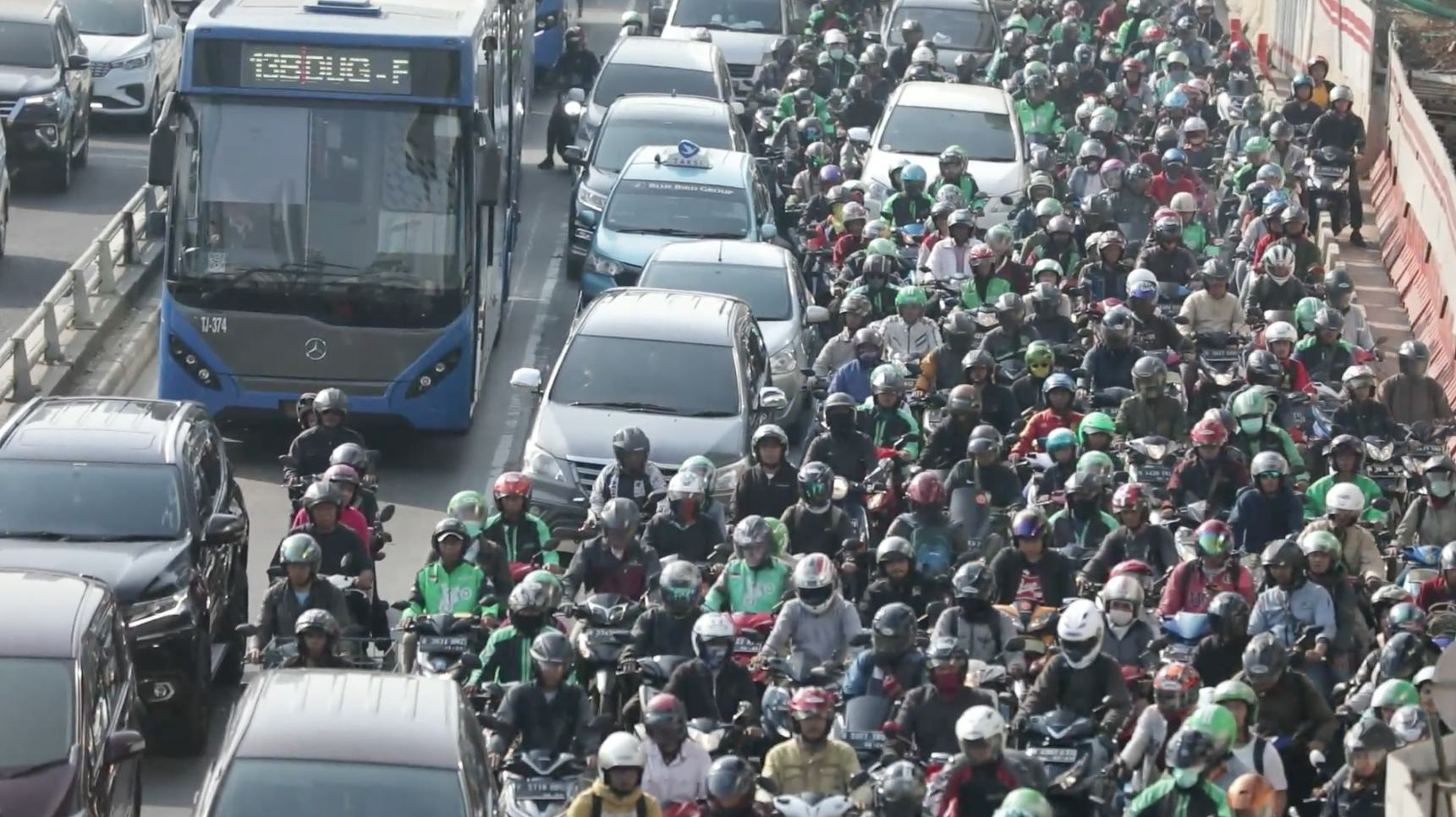
Jakarta's traffic is largely to blame for the city's poor air quality. /CGTN Photo
The Jakarta Environment Agency said that massive private vehicle use in the capital city is the main factor in the city's pollution. Traffic jams and congestion contribute to the hazy skies that residents have been seeing. Aside from that, the increase in infrastructure projects in the city also aggravates pollution.
The agency believes in order to reduce pollution, the local government should continue to encourage the public to reduce their use of private vehicles by getting them to commute using more public transportation.
Dr. Budi Haryanto has been studying the dangerous health effects of poor air quality.

Residents have been complaining of health issues in the past month following the city's poor air quality. /CGTN Photo
"Particles PM10 can enter through our nose into our respiratory systems causing mild illnesses. Particles PM2.5 are the ones that can enter our lungs making us suffer from asthma and pneumonia. Even worst are the gases emitted by vehicles such as nitrogen dioxide. Those can cause heart problems and spread into our bloodstreams causing serious diseases," said Haryanto.
The agency is now focusing on educating people on eco-friendly fuels and adding more green space around the city to absorb the pollutants. But that is a long-term goal and requires plenty of time before it can be done. This way, the agency is calling on all residents, communities and government institutions to help combat this environmental problem.