
 []
[]
Share







Copied
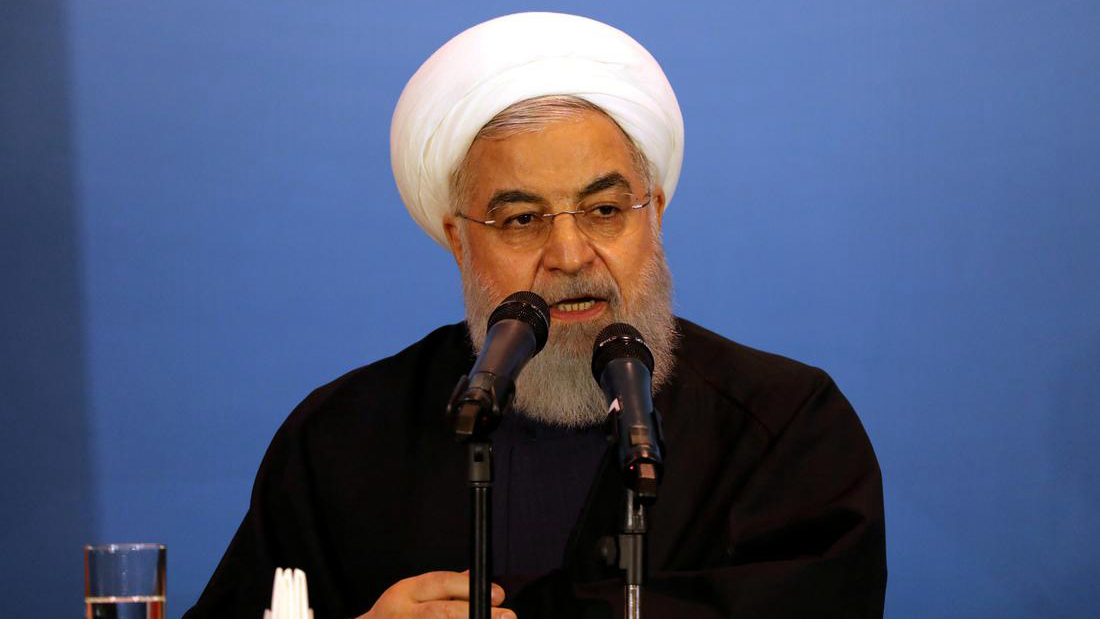
Iranian President Hassan Rouhani said Iran is ready to hold talks with the United States if Washington lifts sanctions and returns to the 2015 nuclear deal it quit last year.
"We have always believed in talks [...] if they lift sanctions, end the imposed economic pressure and return to the deal, we are ready to hold talks with America today, right now and anywhere," Rouhani said in a televised speech on Sunday.
The U.S. side has said it is open to negotiations with Iran on a more far-reaching agreement on nuclear and security issues.
But in an interview with the Washington Post newspaper, U.S. Secretary of State Mike Pompeo dismissed Rouhani's idea as "the same offer that he offered to John F. Kerry and Barack Obama," referring to the former U.S. secretary of state and president.
"President Trump will obviously make the final decision. But this is a path that the previous administration had gone down and it led to the (Iran nuclear deal) which this administration, President Trump and I both believe was a disaster," Pompeo said.
Read more:
Rouhani: U.S. measures against Iran have failed
Rouhani: 'Situation' not suitable for talks, resistance is only choice
Confrontations vs diplomacy
Confrontations between Washington and Tehran have escalated, culminating in an aborted plan for U.S. air strikes on Iran last month after Tehran downed a U.S. drone. Trump called off the retaliatory U.S. air strike at the last minute.
Calling for dialogue among all to resume, France, Britain and Germany – parties to the 2015 pact – said on Sunday they were "extremely concerned" by the escalation of tensions in the Gulf region and the risk the nuclear deal might fall apart.
"We believe that the time has come to act responsibly and to look for ways to stop the escalation of tension and resume dialogue," they said in a joint statement that was released by the French president's office.
Tehran has amassed more low-enriched uranium than permitted and has started to enrich uranium above the 3.67 percent permitted by the agreement.
"The risks are such that it is necessary for all stakeholders to pause, and consider the possible consequences of their actions," France, Britain and Germany, which have been trying to salvage the pact by shielding Tehran's economy from sanctions, said in their statement.
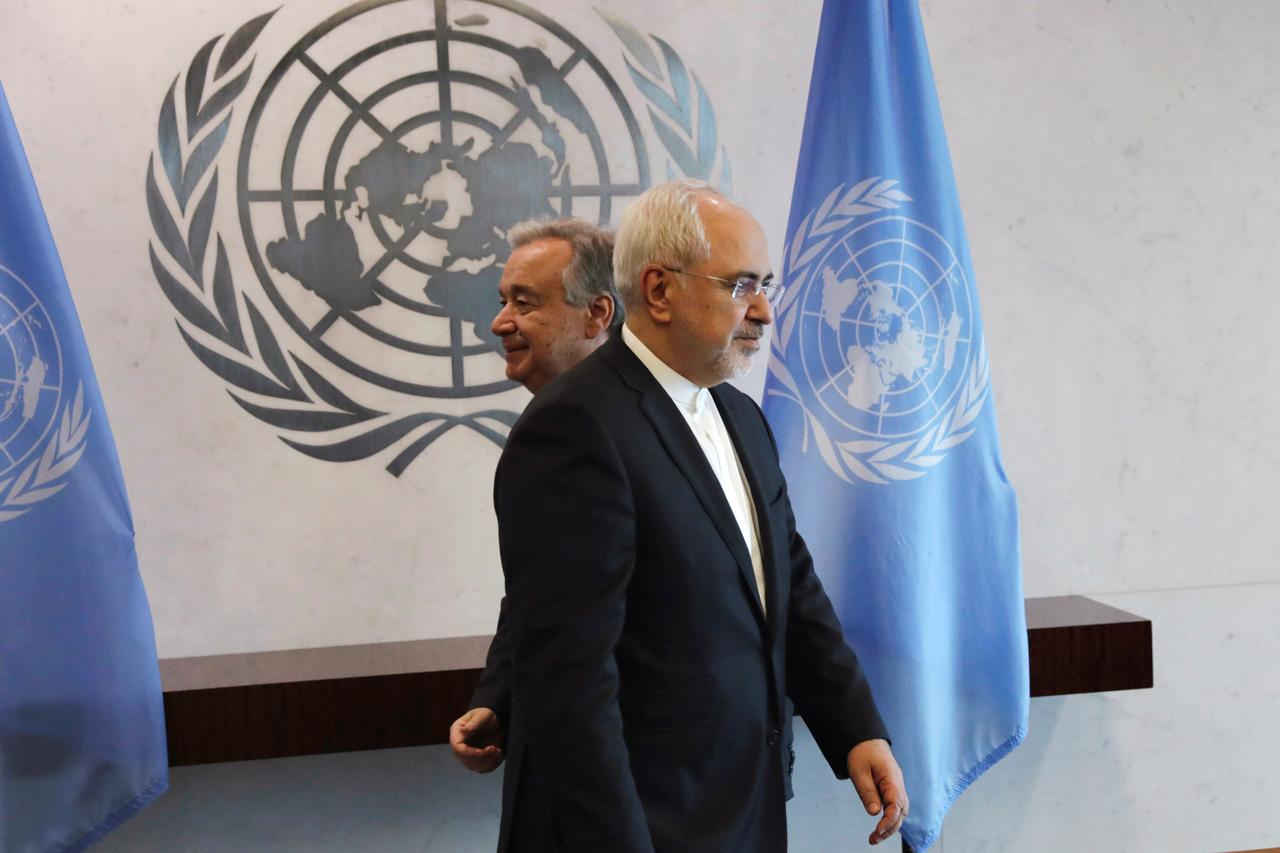
Iran's Foreign Minister Mohammad Javad Zarif walks past United Nations Secretary-General Antonio Guterres at the U.N. headquarters in New York, U.S., on July 17, 2017. /Reuters Photo
Meanwhile, there have been two signs in the past week that the United States may be signaling greater openness to diplomacy, Reuters say.
U.S. officials said on Thursday that Washington had decided for now not to sanction Iranian Foreign Minister Mohammad Javad Zarif despite Treasury Secretary Steven Mnuchin's June 24 statement he would be blacklisted that week.
On Sunday, U.S. officials said they had given Zarif a U.S. visa to attend a U.N. meeting this week. Iran's mission to the United Nations said he had arrived in New York. Pompeo told the Washington Post he had granted the visa but restricted Zarif's movements while in New York, allowing him only to travel between U.N. headquarters and the Iranian mission six blocks away, and to the residence of Iran's U.N. ambassador.
(Cover: Iranian President Hassan Rouhani speaks during a meeting with tribal leaders in Kerbala, Iraq, March 12, 2019. /Reuters Photo)
(With inputs from Reuters and Xinhua)