
 []
[]
Share






Copied
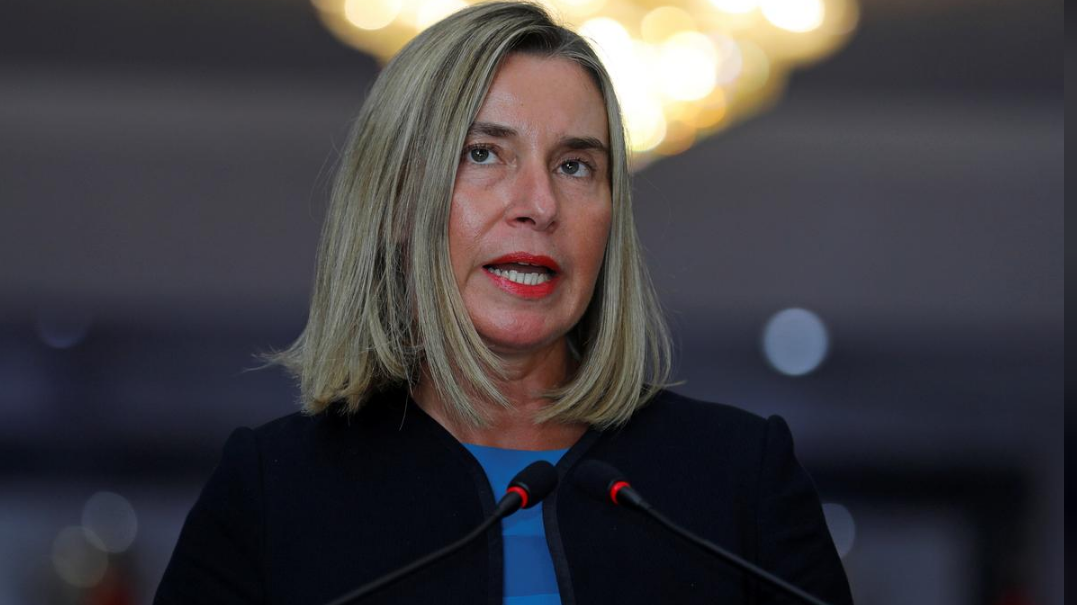
The remaining parties to the Iran nuclear deal do not see Tehran’s breaches as significant non-compliance and have not indicated any intent to trigger the accord’s dispute mechanism, the European Union’s foreign policy chief said on Monday.
The U.N. nuclear watchdog has confirmed that Iran earlier this month violated the accord by enriching uranium to 4.5% fissile purity, above the 3.67% limit set by the 2015 deal, and exceeding limits on its stock of low-enriched uranium.
"For the time being, none of the parties to the agreement has signaled their intention to invoke this article,” Federica Mogherini told in a news conference in Brussels. “(It) means that none of them for the moment, for the time being with the current data we have had, in particular from the IAEA, that the non-compliance is considered to be significant non-compliance.”
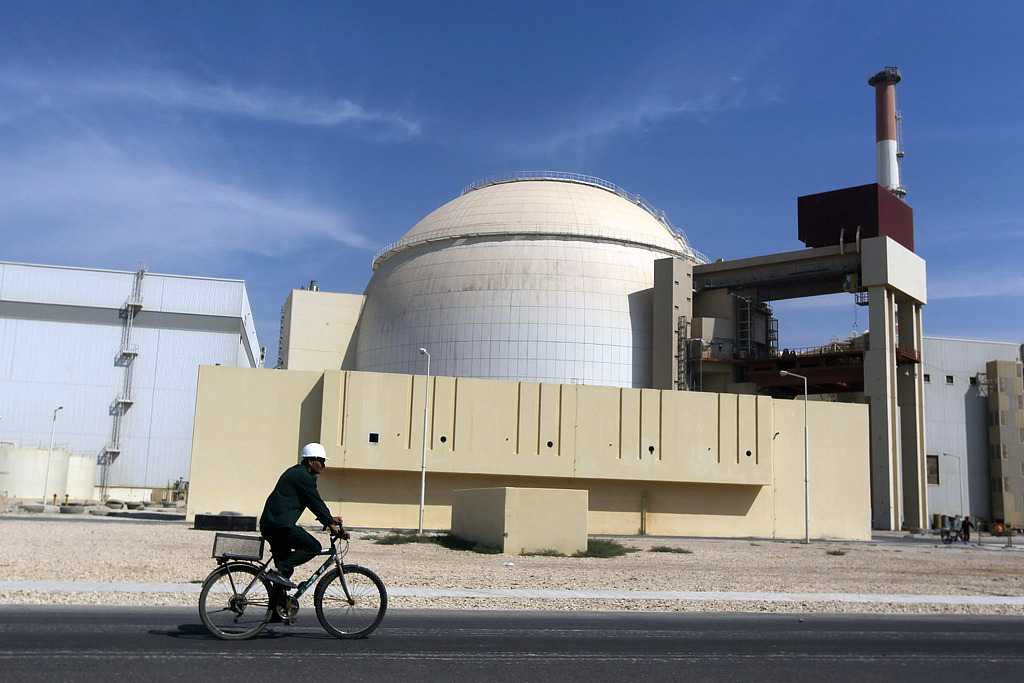
The Bushehr nuclear power plant, October 26, 2010. /VCG Photo
Under the terms of the deal, if any party believes another is not upholding their commitments they can refer the issue to a Joint Commission, whose members are Iran, Russia, China, the three European powers, and the European Union.
This begins a process that can eventually end with the restoration of global, United Nations sanctions on Iran. Mogherini said a joint commission meeting was possible, although when and at what level had yet to be decided.
Speaking after an EU foreign ministers meeting that was largely focused on Iran, Mogherini played down those prospects, suggesting that for now the bloc would focus on diplomatic efforts to defuse the crisis.
"The deal is not in good health, but it’s still alive,” Mogherini said. “We hope and we invite Iran to reverse these steps and go back to full compliance with the agreement,” she said, pointing out that they were all reversible.
Mogherini also said the shareholders of a barter-based trade conduit with Iran that now includes 10 EU members were considering whether to include oil, something that until now has been ruled out given the threat of U.S. sanctions.
"Even if I think this is the most dramatic and difficult time, I also think that today everybody realizes that not having the JCPOA (Iran nuclear deal) in place anymore would be a terrible option for everybody,” Mogherini said.
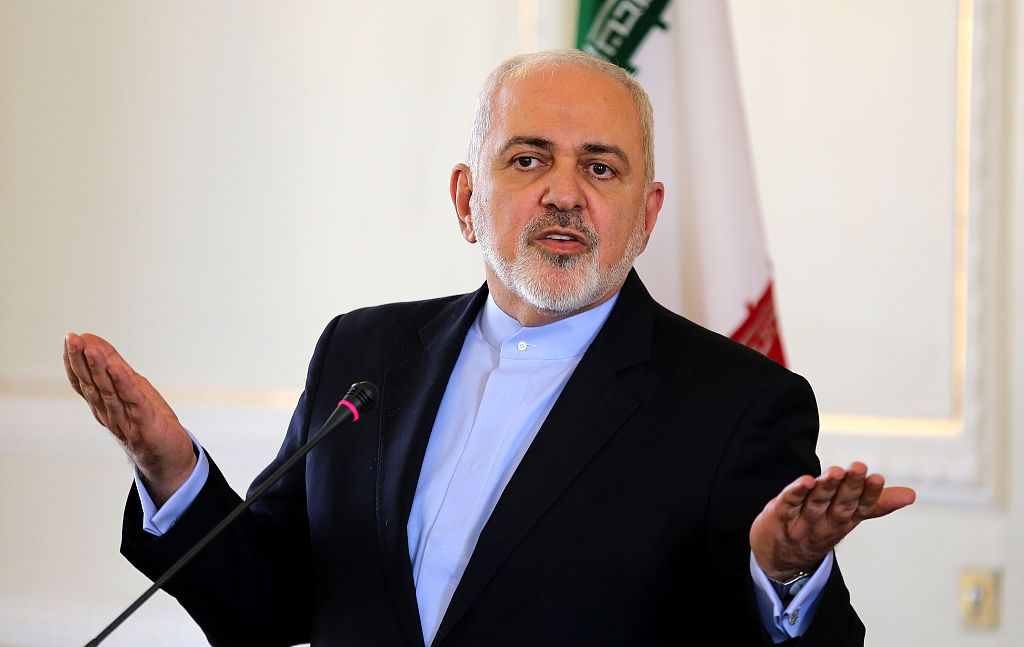
Iran's Foreign Minister Mohammad Javad Zarif at a press conference in Tehran, February 13, 2019. /VCG Photo
UN concerned at U.S. limits on Iran FM's access
The United Nations voiced concern Monday after the United States imposed unusually harsh restrictions on the movements of Iran's foreign minister, who was visiting the world body and also speaking on the soaring tensions between the countries.
Weeks after the United States threatened sanctions against Zarif, Secretary of State Mike Pompeo said that Washington issued him a visa but forbade him from moving beyond six blocks of Iran's UN mission in Midtown Manhattan.
"U.S. diplomats don't roam around Tehran, so we don't see any reason for Iranian diplomats to roam freely around New York City, either," Pompeo told The Washington Post.
"Foreign Minister Zarif, he uses the freedoms of the United States to come here and spread malign propaganda," he said.
UN spokesman Farhan Haq told reporters that the UN Secretariat was in contact with the U.S. and Iranian missions about Zarif's travel restrictions and "has conveyed its concerns to the host country."
The United States, as host of the United Nations, has an agreement to issue visas promptly to foreign diplomats on UN business and only rarely declines.
Washington generally bars diplomats of hostile nations from traveling outside a 40-kilometer radius of New York's Columbus Circle.
Zarif is scheduled to speak Wednesday at the UN Economic and Social Council, which is holding a high-level meeting on sustainable development.