
 []
[]
Share






Copied
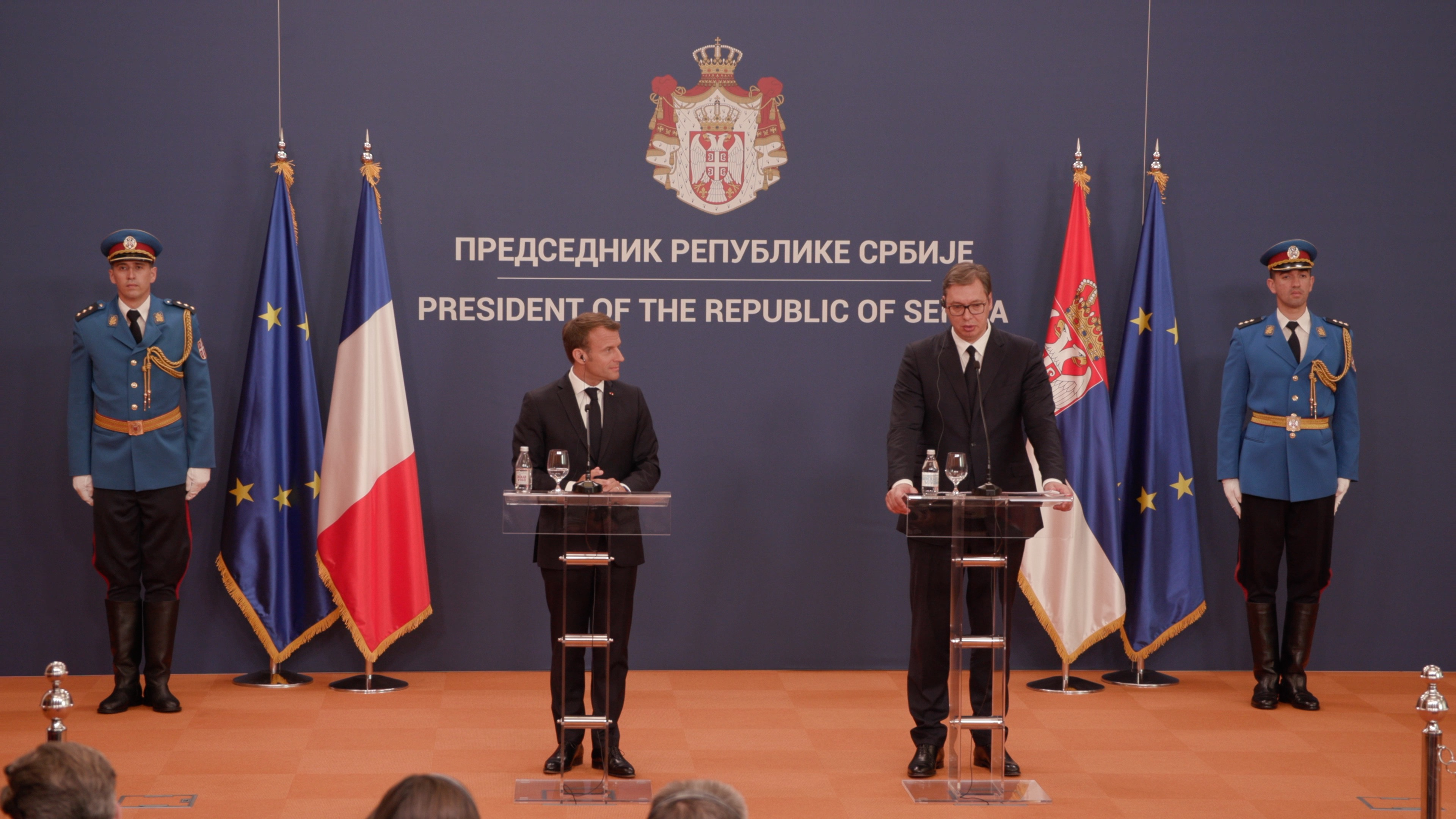
At the beginning of the week, French President Emmanuel Macron was in Serbia for an official two-day visit. It came just days after he told countries in the Balkan region seeking European Union (EU) membership that they would have to wait until EU reforms were implemented.
But yet, those reforms seem nowhere near in sight. So, no one expects that Macron’s visit to the country will bring radical news in that field, but Serbian President Aleksandar Vucic organized a spectacular reception for the French president.
At the Belgrade airport, Macron was greeted by the Serbian president himself. A French company now runs this very same airport, after winning a 25-year concession. So far, France has just signed one deal with Serbia, but it's aiming to have much more like that.
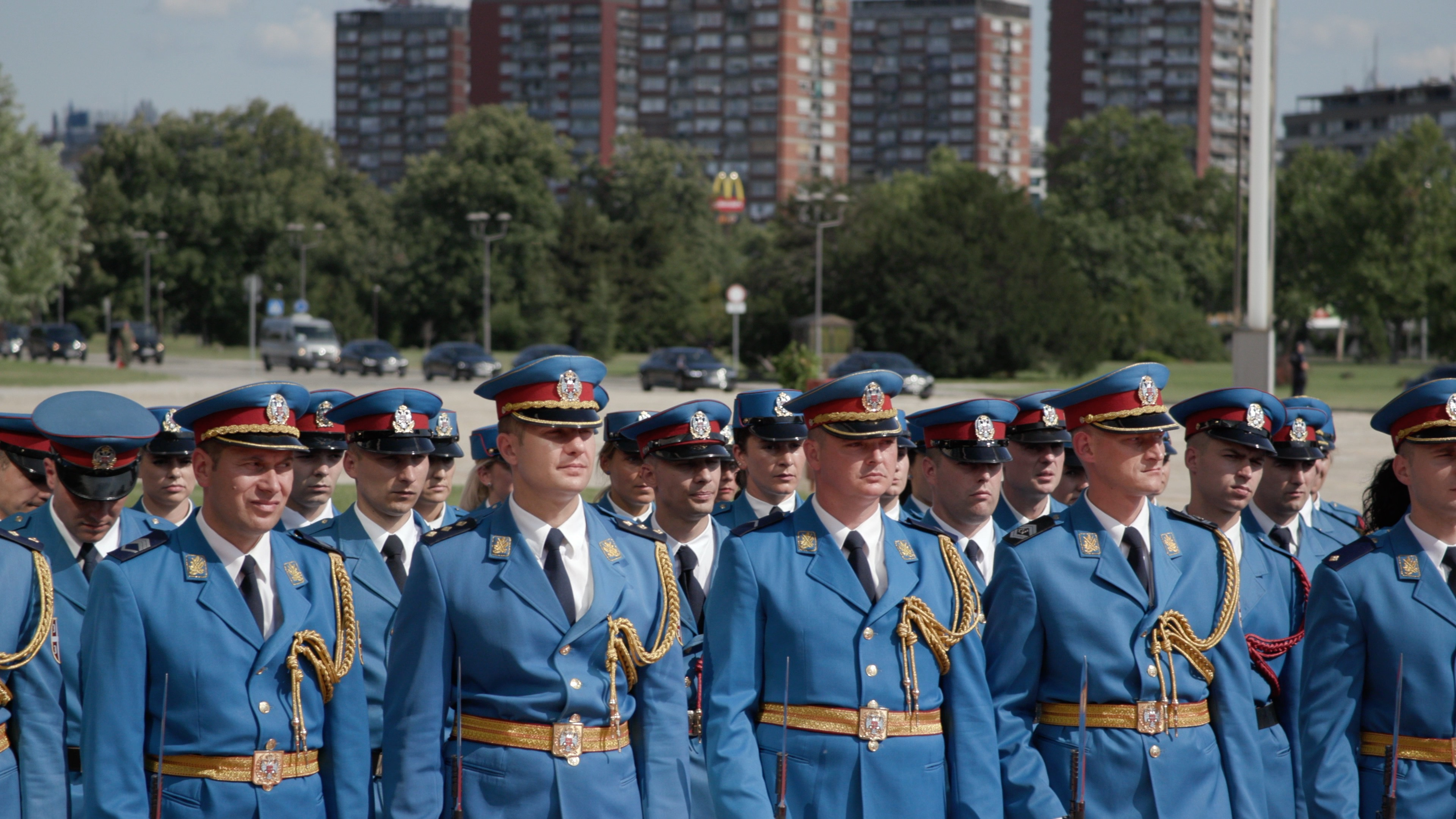
Serbian guards of honor await the French presidential motorcade's arrival in Belgrade, Serbia, July 15, 2019. /CGTN Photo
In that light, some opposition figures expressed skepticism about Macron's visit, saying he was not there to advance Serbia's dream of joining the EU, but to make lucrative business deals for French companies.
Djordje Vukadinovic, an independent MP in Serbia’s parliament, is one of them: "It is absolutely clear that he is coming here as a traveling salesman for the metro and not to deal with EU integration. Of course the media will emphasize Euro-integration and the friendship between the two countries, but in fact, it's vice versa," Vukadinovic said.
One of the major deals that France is eyeing is Belgrade's multi-billion-dollar underground metro project.
France was considered a front-runner in that race but on Monday there was an extra step taken, as both parts signed a letter of intent. According to Reuters, citing an official statement, the letter envisages negotiations on the possibility of concluding an intergovernmental agreement on the financing of the French part of the project's first phase.
But the deals wish list doesn’t end there. Recently, Serbia bought anti-aircraft missile systems from France and, at the joint press conference with the French counterpart, Serbian President Aleksandar Vucic expressed the desire for Serbia to buy more French weapons.
Kosovo, the EU and WWI
Yet, despite all the praise and public show of respect and affection, the issues of Kosovo’s "independence" and Serbia’s accession to the EU, were something unavoidable for both leaders.
Macron's visit was believed by some analysts to have another object, which was to rectify any rifts caused by the reported cool treatment of the Serbian president during a Paris event marking the 100th anniversary of the end of World War I.
In Belgrade, Macron visited several World War I related monuments and addressed the people gathered at Kalemegdan Park by reading a speech written in Serbian.
In WWI almost one-third of the entire population of Serbia was killed. Some historians hold that it was the final push of the Serbian army at the Salonica Front that broke the spine of the Central Powers and led to an end of the Great War.
Yet Serbia feels that it’s significant and heroic role in the conflict has not been fully recognized. This sentiment was quite visible after the anniversary in Paris when the Serbian president was arranged to be seated in the back rows of the secondary stand. Serbians regarded it as a slap in the face.
After his Belgrade visit and his PR offensive, the question that remains is whether Macron’s attitude on Monday can help move beyond the Paris event.
Serbia’s EU accession is another painful stumbling block which both Macron and Vucic tried to address.
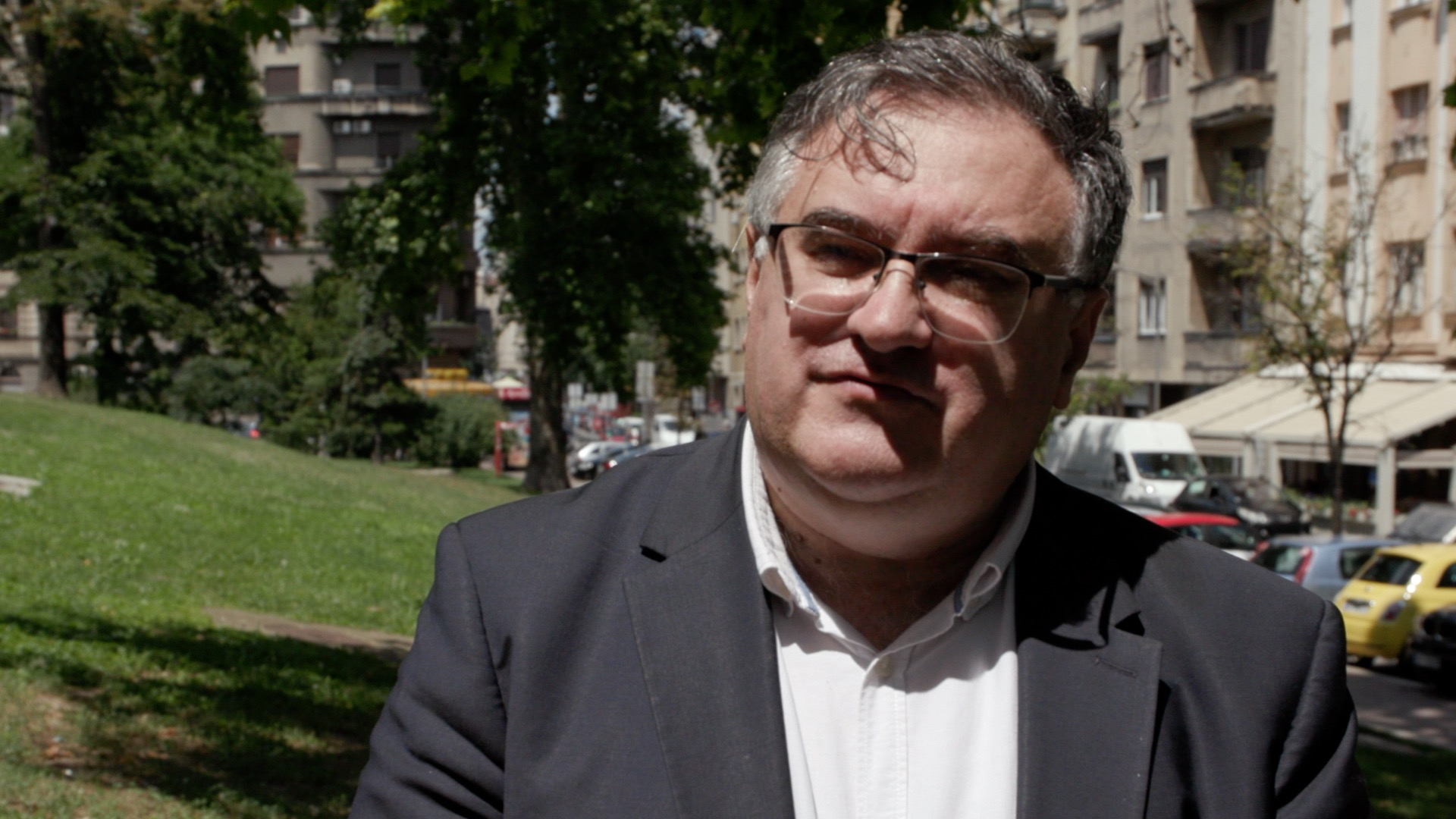
Djordje Vukadinovic, Independent MP. /CGTN Photo
"Regarding what people told us about EU membership in 2025. Well, they told us. They also told us in 1999 that they were bombarding us because of the 'humanitarian catastrophe', only to appear that they had ulterior motives. In 2003, they told us that Kosovo needed to fulfill standards before it was given the status, and they’ve lied to us and gave them status in 2008 without those standards," said Vucic at a joint press conference, with some bitterness in his voice.
Macron responded by emphasizing the need for EU reform first: "There is no date given and we shouldn’t confine ourselves in such a schedule. If we define the date and at the end we are saying whether we’ve succeeded or failed. Then because of those reforms which weren’t completed we’re erasing all those successful ones. This is a process which closes the EU to Serbia, a process with a number of reforms, and only after those are finished, we can say that now we are ready."
After Macron left Serbia, there were some mixed feelings in the country. Some insisted in Belgrade that Kosovo is an independent and neighboring country to Serbia, and that he again insulted the host nation.
Others were ecstatic with the PR strategy and charm that the French president employed to keep Serbia as close as possible to the EU - and maybe as far as possible from Russia and China.
(Cover: French President Emmanuel Macron and Serbian President Aleksandar Vucic at a joint press conference in Belgrade, Serbia, July 15, 2019. /CGTN Photo)