
 []
[]
Share







Copied
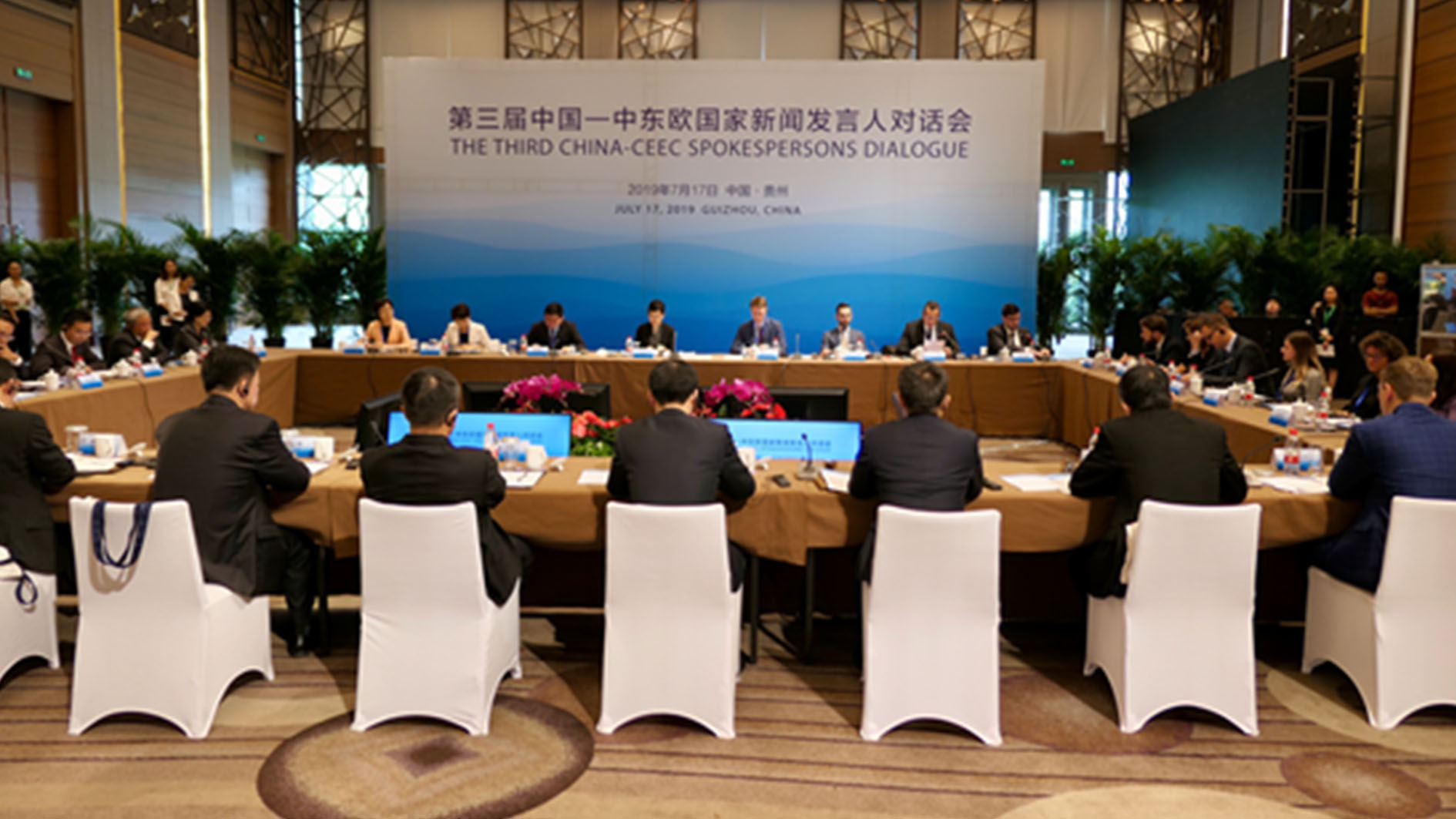
More than 30 government spokespersons from China and Central and Eastern European countries (CEEC) gathered in the southwestern Chinese city of Guiyang on Wednesday to share their experiences in public communication and discuss future cooperation.
The participants included 12 spokespersons from 11 CEE countries and 17 spokespersons from ministries and provincial governments in China.
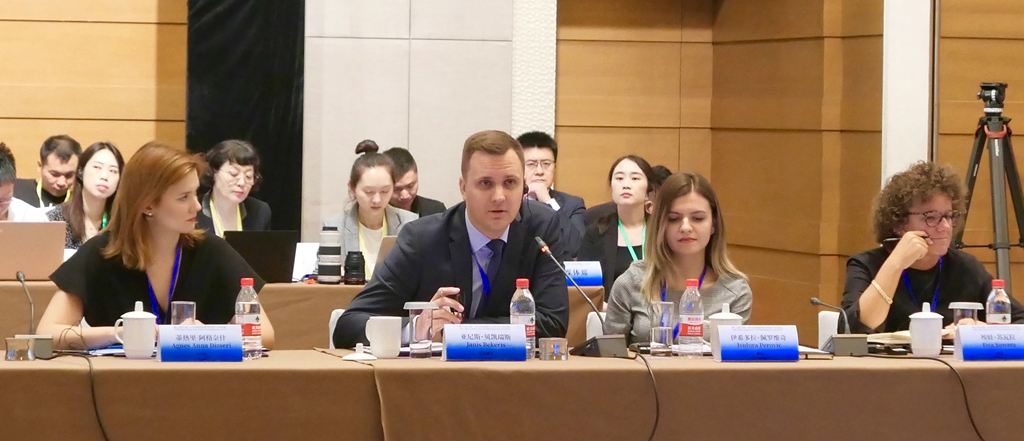
Participants share their opinions on a series of topics at the dialogue. /CGTN Photo
Guo Weimin, Vice Minister of the State Council Information Office of China, underlined the importance of the talks as the event began. Dubbing them as a bridge that communicates between government and the public, and their own countries and the rest of the world, he said spokespeople are important participants and promoters of people-to-people exchanges.
"Though China and CEE countries have different political systems and are at different levels of development, they share many similarities in the work spokespersons do and the roles they play. Enhancing communication in this sphere is conducive to promoting mutual understanding and friendship," Guo said.
Launched in 2017, the annual dialogue is an integral part of the "17+1" cooperation mechanism between China and CEE countries. It seeks more common ground from both sides.
"Our relationship is founded on a shared commitment to openness, inclusiveness and dialogue. It nurtures trust, understanding and respect. If we do not understand each other, do not appreciate the differences in our culture, if we cannot communicate successfully, then our trade, our cooperation will not succeed," Sandris Sabajevs, press secretary to the Prime Minister of Latvia, said at the dialogue.
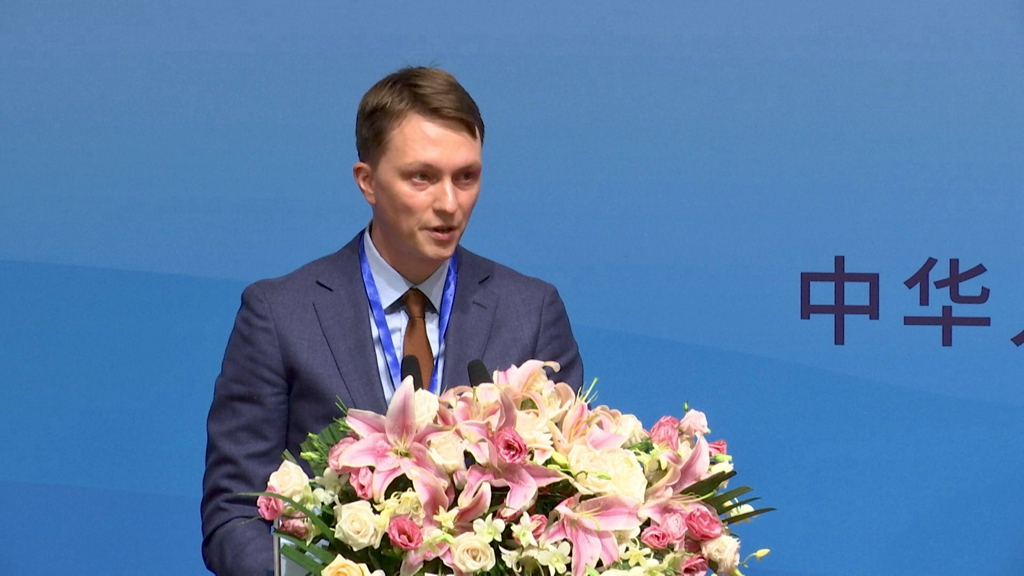
Sandris Sabajevs, press secretary to Prime Minister of Latvia, gives a speech at the dialogue. /CGTN Photo
An important topic of the meeting is how fast-evolving technologies are impacting public communication. The guests strategized on how to take advantage of new technologies like 5G and emerging new media platforms to improve the effectiveness of their work.
Lyu Jing, spokesperson for China's Ministry of Science and Technology, called for closer technological collaboration to diversify how authoritative information is released. She also noted that the application of new technologies faces challenges.
"We also hope that we can work with different countries, CEE ones included, to strengthen the global governance of technology. This would include establishing science and technology ethics and safeguarding internet security to prevent the abuse of some new technologies in the communication sphere," Lyu told CGTN.
The CEE countries are active participants of the Belt and Road Initiative. In recent years, both parties have witnessed a series of achievements in trade, infrastructure and other fields. During the meeting, the attendees also discussed what role they could play in advancing the initiative to benefit more people.
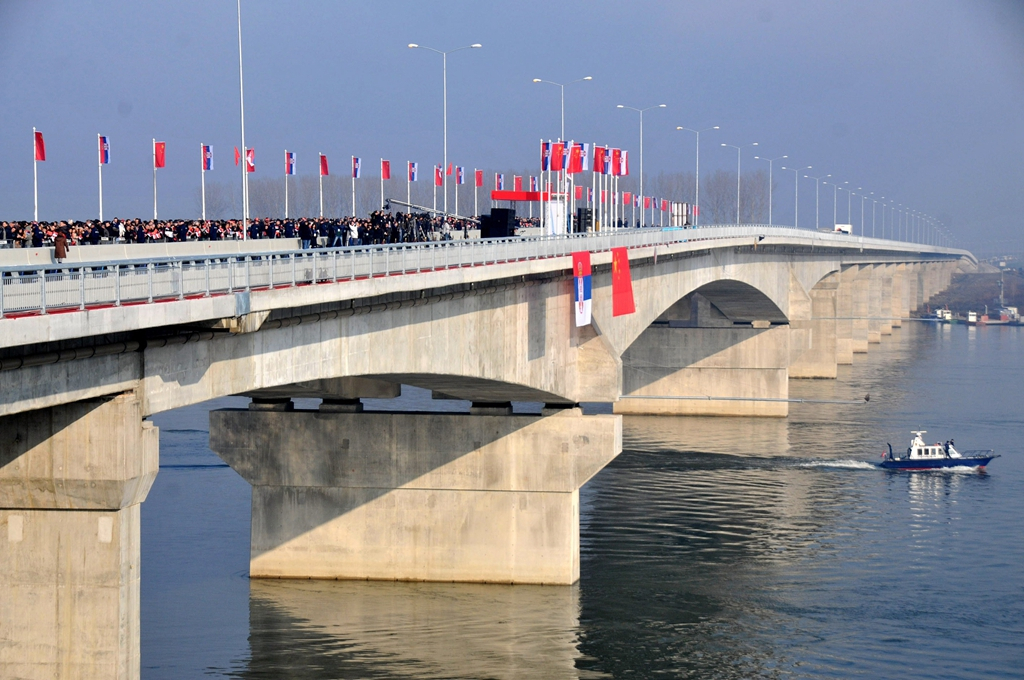
The Mihajlo Pupin Bridge in Serbia. It is the first bridge that Chinese enterprises constructed in Europe. /VCG Photo
Marko Milic, spokesperson for the government of Croatia, told CGTN that spokespeople can actively "promote good projects and key achievements" through various channels and make clarifications in response to related negative information.
"We have to bring the new added value to this initiative and to explain to our people to better understand China, to better understand the perspective of this initiative and avoid any fears or any doubts about China's intention in Europe," said Milic.
The participants said they expect more such people-to-people exchanges between the two sides in the future.
"We should seize every opportunity to let people discover the beauty of each other's landscapes and ways of life. We should look for possibilities to immerse in other cultures, learn each other's stories and avoid stereotypes and misconceptions that divide us," said Sabajevs from Latvia.