
 []
[]
Share







Copied
Editor's note: Zehra Servet is an Istanbul-based political analyst and a political consultant. The article reflects the author's opinions, and not necessarily the views of CGTN.
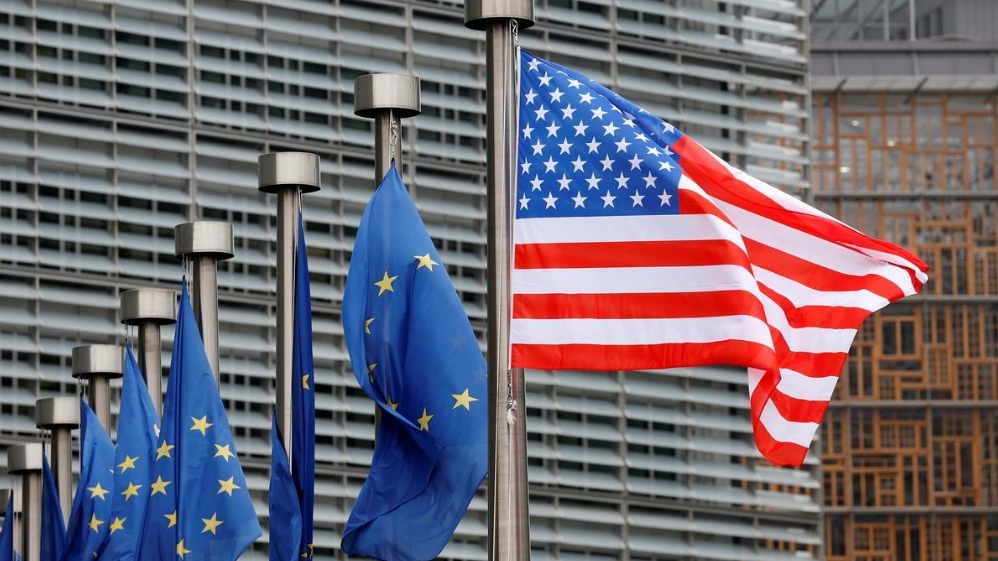
The Office of the United States Trade Representative announced a proposed four billion U.S. dollars in tariffs on a variety of products originating in the EU on July 1, 2019 in addition to 21 billion U.S. dollars in tariffs already announced in April. The EU has in turn responded with tariffs on a variety of U.S. products, with an estimated worth of 13 billion U.S. dollars.
What on the surface may appear to be the beginning of a trade war is in fact the latest exchange in a continuing battle over a WTO dispute between the two entities which began nearly two decades ago.
The origin of the dispute dates back to 2004, when the U.S. launched a claim with the WTO alleging that EU nations were unfairly subsidizing loans and grants for Airbus, the then world's second-largest manufacturer of commercial aircraft. Airbus would soon surpass the previous leader, U.S. manufacturer Boeing, for the top spot.
In 2005, the EU filed a counter claim, alleging Boeing was also a beneficiary of similar subsidies, demanding legal relief and compensation as well. It is a poorly held secret within the aircraft manufacturing industry that governments across the globe provide a variety of aid and benefits to their nation's manufacturers, which in fact would fall afoul of WTO rules if a complaint was to be lodged.
These practices allow such companies to remain competitive, as well as to avoid devastating losses in a plane program, which can amount to several billion U.S. dollars. It becomes in effect an insurance policy against failure, paid for by the nation which hosts such a company.
So, if everyone is cheating, and everyone knows it, how can one nation cry foul against another entity, especially while conducting the exact same practice?
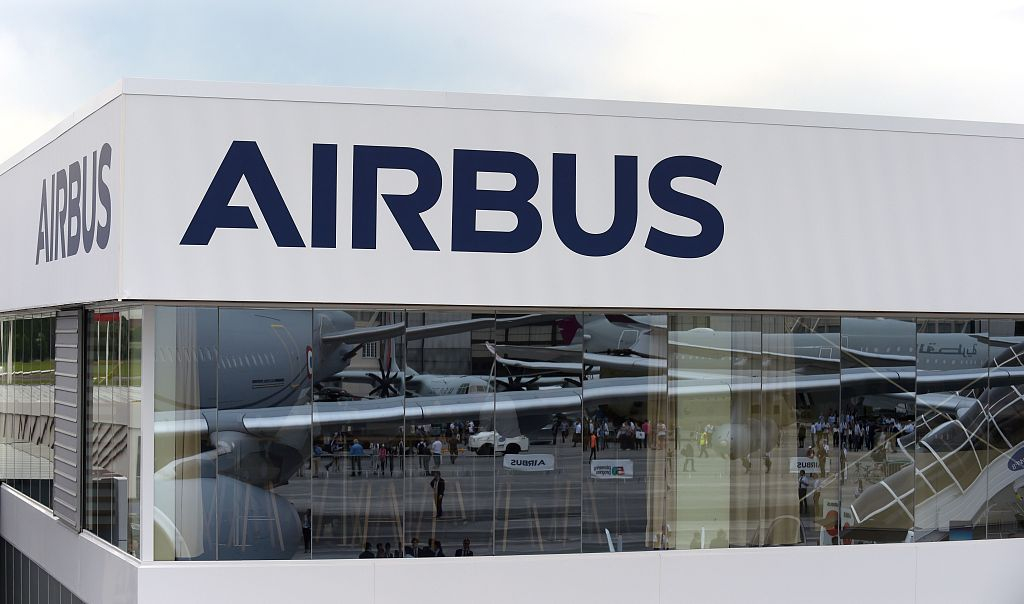
The Airbus pavillon at the International Paris Air Show at Le Bourget Airport near Paris, France, June 18, 2019. /VCG Photo
When Boeing began to lose a vast amount of market share to EU rival Airbus, the calculations in the U.S. changed. Boeing had made a high-dollar purchase in 1997 of another manufacturer, McDonnell-Douglas to dominate this extremely lucrative sector.
When the returns on that investment began to diminish and a foreign competitor surpassed them in market share, handsomely paid lobbyists marched on Washington, and the government attempted to intervene on their behalf.
The WTO eventually ruled in their favor, and these tariffs will in fact have to be approved by a WTO arbitrator before taking effect.
However, even after knowing all of this, it is still reasonable to ask, why is this the economic hill which the U.S. government wants to plant their flag and fight on? The tribulations of Boeing, even with all of their military contracts and financial might, aren't worth waging an increasingly broadening international trade war over, are they?
This is an increasingly valid question given the deepening damage this dispute is now doing to the broader U.S. economy as a whole. However, this question has a far more troubling answer than one might imagine at first glance.
As with any dispute, some battles are actually fought to win ground, while others are fought more as a show of force and intent to the opponent. This dispute is the latter.
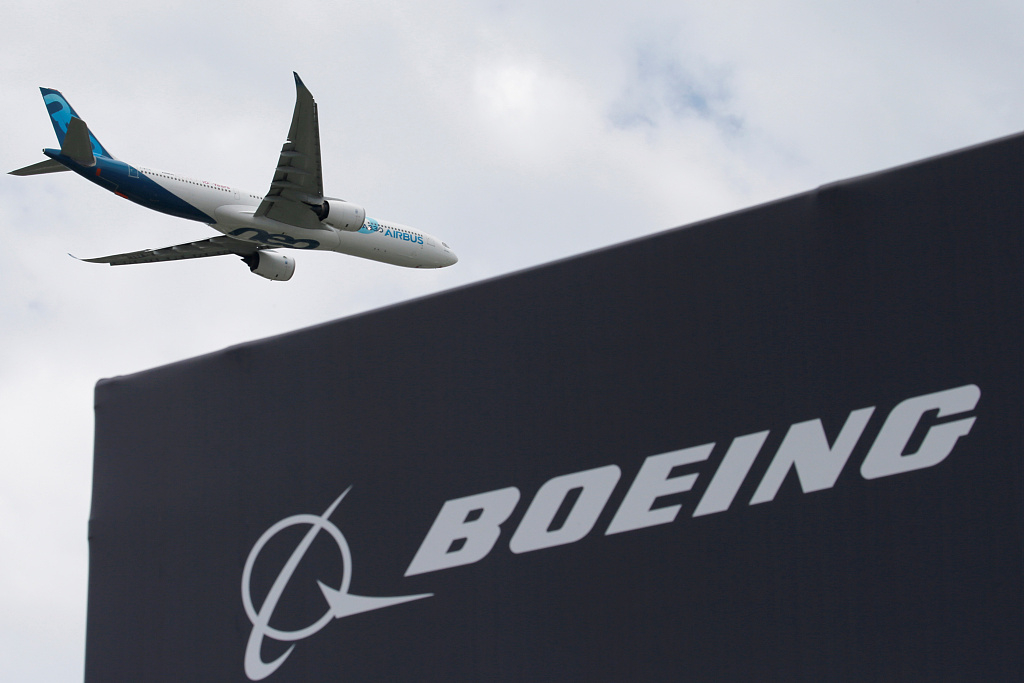
An Airbus A330 NEO performs at the 53rd International Paris Air Show at Le Bourget Airport near Paris, France, June 19, 2019. /VCG Photo
Boeing is still a multi-billion-dollar corporation with vast profits and numerous contracts. They face no real financial danger. The tariffs under consideration value around 20 billion U.S. dollars, a relatively trivial amount given the vast trade between the EU and the United States.
But the U.S. has begun to set a very troubling precedent regarding fair trade practice and competition in today's global marketplace.
Whenever a U.S. company begins to fall behind foreign competitors, whenever profits are seriously threatened or market share is significantly eroded, the U.S. government has shown itself willing to step in and throw as much economic muscle around as possible to destroy or hinder the adversaries.
This form of economic warfare could easily be considered actual conflict, given the potential ramifications it has for global trade and the vast amounts of money at stake, especially in emerging economies. There is a reason WTO bylaws strictly prohibit such actions and intervention.
And yet the U.S. has shown itself willing and able to ignore these restrictions, accepting the risk of a costly loss in a court of arbitration in exchange for destroying a competing foreign corporation.
Various recent cases and claims, including those against Chinese tech giant Huawei, illustrate the willingness of the U.S. government to try to create an unbalanced playing field, a surface where no one else can possibly win through creativity and ingenuity, the hallmarks of fair competitive business practice.
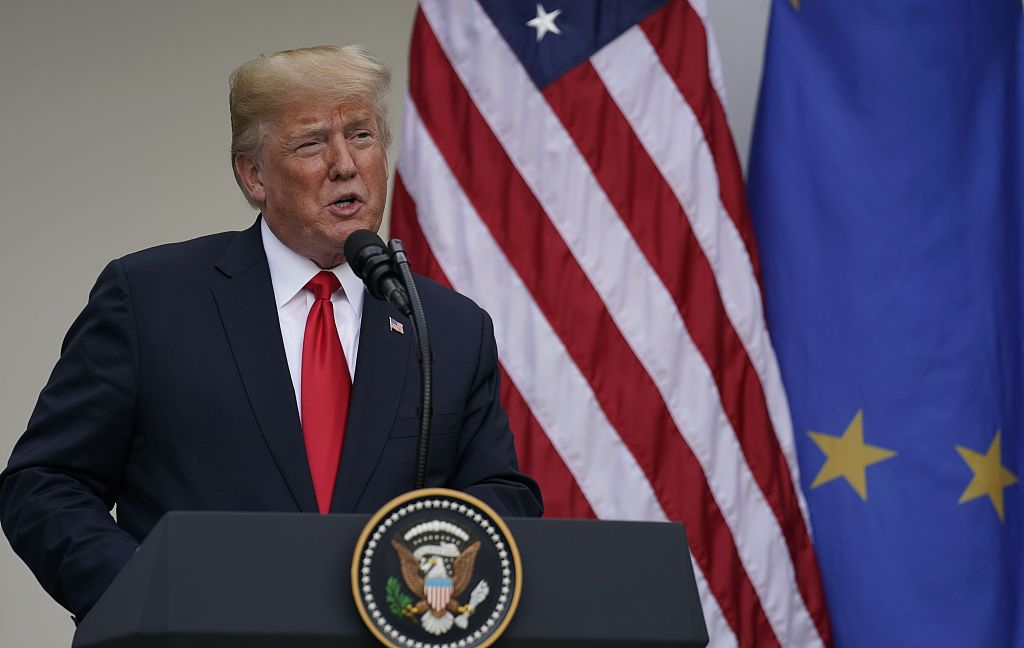
U.S. President Donald Trump speaks at a press conference in the Rose Garden of the White House in Washington, DC, U.S., July 25, 2018. /VCG Photo
Business in the U.S. has now become overly interwoven with politics, and politicians' decision to ruin foreign businesses is sometimes the only way to ensure U.S. corporations to win and survive.
Not only is this unfair and illegal, but it demonstrates a recurring theme within the current Trump administration. This overt corruption threatens to upset the entire balance of global trade and plunging economies into a very uncertain and unstable future.
Something must clearly be done to ensure state-sponsored attacks. Airbus was cheating the WTO rules but they were simply managing to keep up with all the others rather than trying to gain some unfair advantage.
This dispute is the equivalent of one soccer player throwing himself onto the floor and crying for a red card to be issued by the referee against the other team, right after his own has committed numerous sketchy fouls out of sight.
In the case of this trade dispute between the U.S. and the EU, Trump has been intensifying the tariff and trade war. This action has very real, large, and incredibly broad significance, threatening to throw the entire global economic structure into chaos by creating a new environment of insecurity.
(If you want to contribute and have specific expertise, please contact us at opinions@cgtn.com.)