
 []
[]
Share







Copied
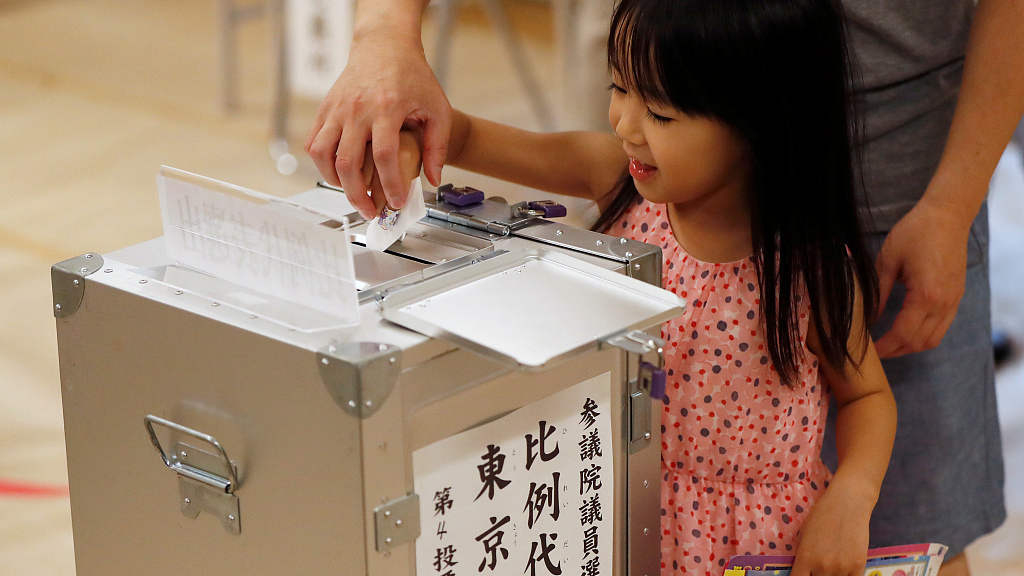
Japanese voters cast ballots on Sunday in an upper house election, with Shinzo Abe's ruling bloc looking to protect its majority.
Media surveys show Abe's Liberal Democratic Party (LDP) and its junior coalition partner on track to win more than half the 124 seats up for grabs in the election, possibly strengthening their majority in the chamber.
Up in the air, however, is whether the ruling bloc and its allies will keep the two-thirds "super majority" needed to begin the process of revising the constitution's pacifist Article 9 to further legitimize the military, a controversial step.
"If they lost it (the two-thirds majority), constitutional revision would be impossible," said Steven Reed, an emeritus professor at Chuo University.
The charter has never been amended since it was enacted in 1947 and changing it would be hugely symbolic, underscoring a shift away from post-war pacifism already under way.
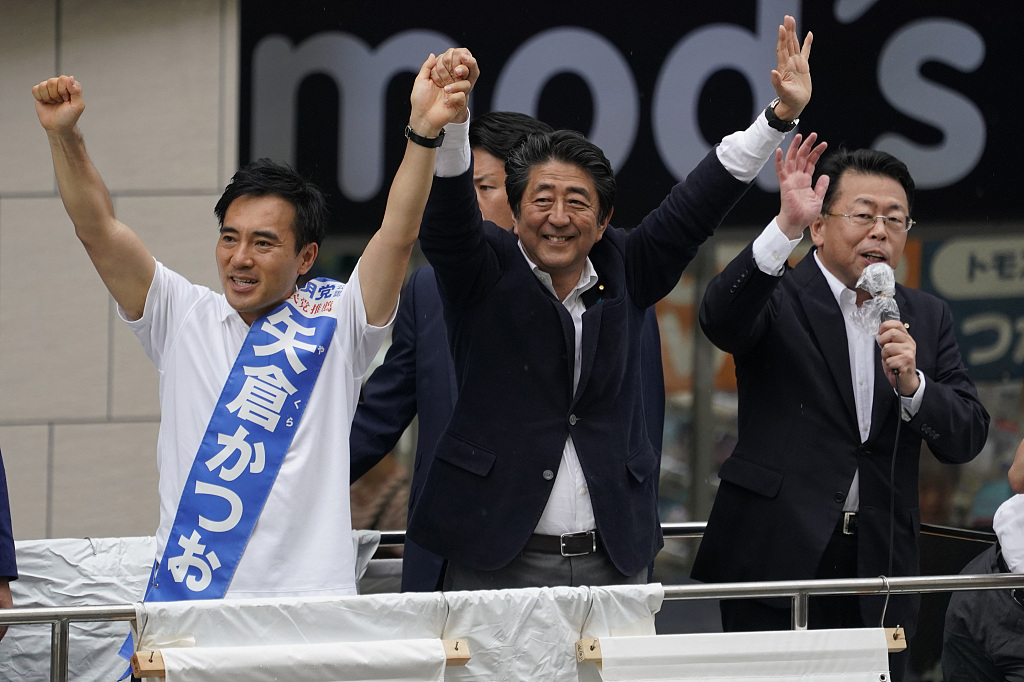
Shinzo Abe, Japan's prime minister and president of the Liberal Democratic Party (LDP) raises his fists with party candidate during a campaign event in Omiya, Japan, July 20, 2019. /VCG Photo
Amend constitution
Article 9, if taken literally, bans maintenance of a military but has been stretched to allow armed forces for self-defense. Surveys show voters are divided over changing it, with opponents worried doing so would increase the risk of Japan getting entangled in U.S.-led conflicts.
Voting ends at 8:00 p.m. (1100 GMT) with media likely to call the outcome late at night or early on Monday morning. Official results are not expected until Monday.
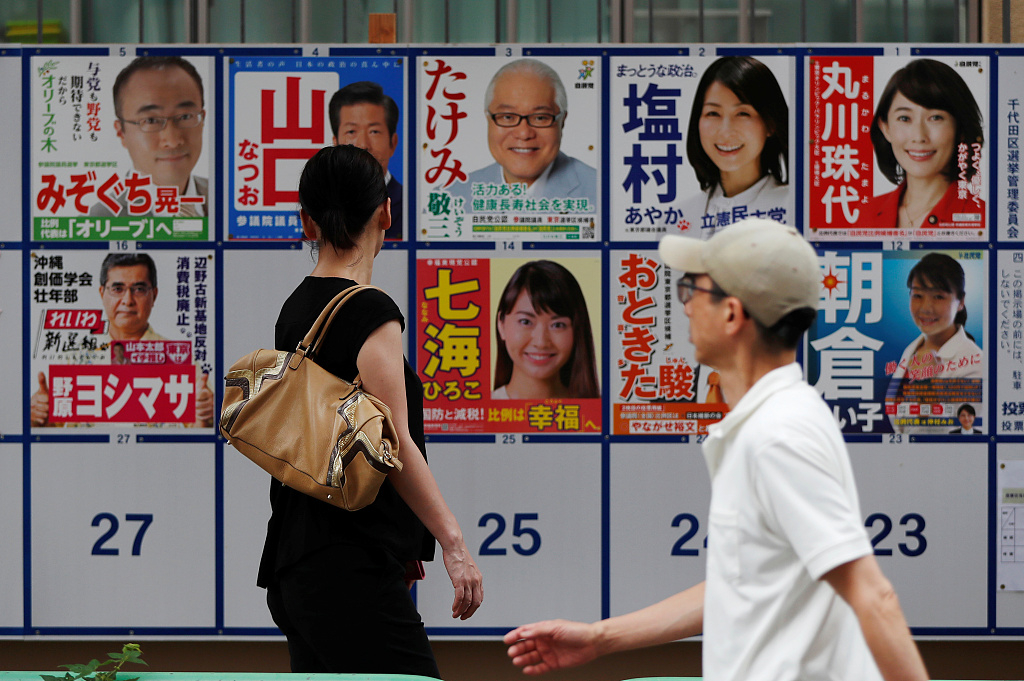
People walk past election campaign posters outside a voting station during Japan's upper house election in Tokyo, Japan, July 21, 2019. /VCG Photo
Low turnout
Abe, who took office in December 2012 pledging to restart the economy and bolster defense, is pushing his LDP-led coalition as the best bet for political stability.
Opposition parties have focused on what they call a threat to voter finances, including a potential hit on spending from an October rise in the sales tax to 10 percent and strains in the public pension system in the shrinking, fast-ageing population.
Abe has led his party to victory in five national elections since returning as LDP leader in 2012, and is on track to become Japan's longest-serving premier if he stays in office until November. But the victories have been aided by a fragmented opposition and low turnout.
Voter interest in the poll has been tepid and turnout could fall below the 54.7 percent in the last upper house poll in 2016.
The main opposition Constitutional Democratic Party of Japan was expected to increase its seats but remain dwarfed by the LDP.
(Cover: A girl with her parent casts a ballot at a voting station during Japan's upper house election in Tokyo, Japan, July 21, 2019. /VCG Photo)