
 []
[]
Share







Copied
Editor's note: Sultan M Hali is a Pakistani writer and security analyst. The article reflects the author's opinions, and not necessarily the views of CGTN.
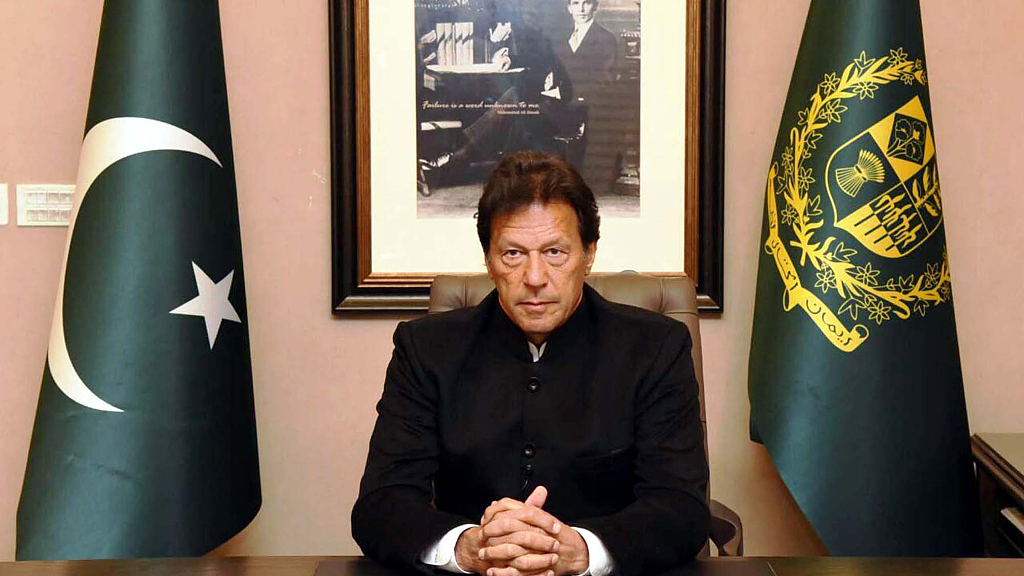
Pakistani Prime Minister Imran Khan will meet U.S. President Donald Trump in Washington, D.C. on July 22.
Relations between the two have been strained after a series of acrimonious tweets between them over allegations by the U.S. that Pakistan is playing a double game, with the Pakistani leader retorting in kind.
The Trump administration also tried to block International Monetary Fund (IMF) loans to Pakistan, arguing the credit will be used to pay off loans obtained for the China-Pakistan Economic Corridor (CPEC), a flagship project of China's Belt and Road Initiative (BRI). One of the causes of U.S. ire against Pakistan is Donald Trump's perception of Pakistan as a staunch ally of China, with which the U.S. is engaged in a trade war.
Despite this background, there are a number of positives, which can be projected prudently by the Pakistani leader during his meeting with the U.S. president on July 22.
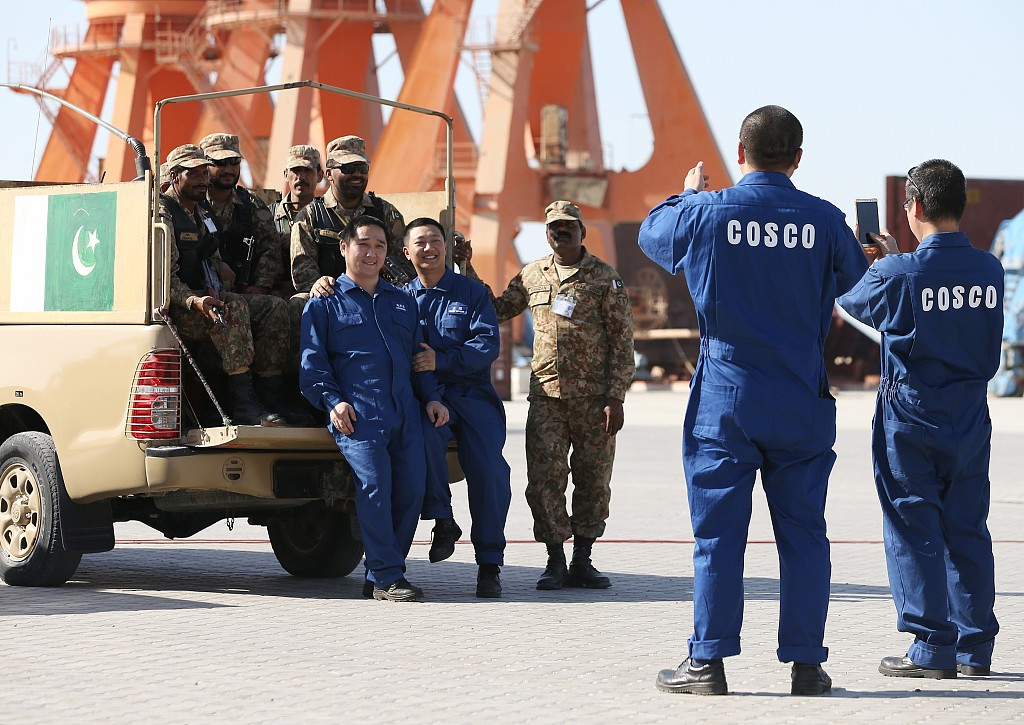
Pakistani army members and Chinese staff pose for a photo together during the opening of a trade project in Gwadar port, west of Karachi, Pakistan, November 13, 2016. /VCG Photo
Imran Khan has his work cut out, the U.S. has been a traditional ally of Pakistan and the fresh Indo-U.S. alliance must not be viewed as a zero-sum game. Pakistan must recalibrate its ties with the U.S. vis-à-vis India. To allay Trump's suspicions, Pakistan's prime minister must also endeavor to present the BRI in its correct perspective to the U.S., impressing upon Trump that Washington's interests will be better served by being on board the mega project. Imran Khan must reiterate that the BRI is not a hegemonistic scheme but a development venture for shared humanitarian interests.
The new Free and Open Indo-Pacific Strategy led by the U.S. necessitates a positive role played by Pakistan. Many international analysts opine that India is not a protagonist in the Pacific Ocean developments, but the U.S. insists on promoting India as a bulwark against China. Perhaps Imran Khan can offer to come on board and help balance the equation.
After all, the Association of Southeast Asian Nations (ASEAN) is an important grouping where Pakistan is still a sectorial dialogue partner and is destined to play an important part. Imran Khan must share Pakistan's aspirations for harmony with his U.S. counterpart and emphasize the strategic value Pakistan can bring for stability in this part of the world.
The main subject under discussion will be the situation in Afghanistan. Recent overtures by Pakistan to bring the warring Afghan Taliban to the table for direct peace talks with the U.S. as well as the Afghan government have earned Pakistan brownie points with the Trump administration.
After 18 years of war, the loss of thousands of lives and the U.S. spending trillions of U.S. dollars to train Afghan National Forces, the Taliban still have the upper hand. Donald Trump now desires to withdraw his troops from Afghanistan and cut his losses. China, Russia and Pakistan have all offered mediation with the Taliban and made some progress. U.S. special envoy to Afghanistan Zalmay Khalilzad recently visited Beijing seeking support but he has also made numerous diplomatic shuttles to Islamabad.
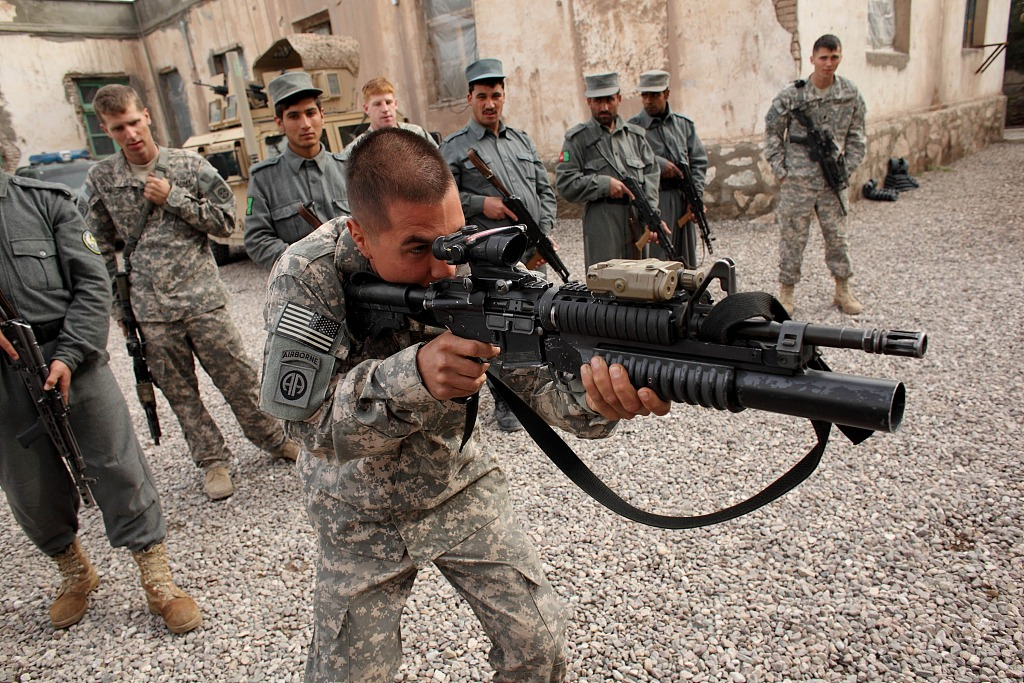
U.S. Army soldiers lead a military training exercise for Afghan National Police (ANP) officers in Herat, Afghanistan, March 9, 2010. /VCG Photo
Pakistan has a strong incentive for harmony to prevail in Afghanistan and is a significant stakeholder, since its own development projects are stalled until peace returns. According to the UN, there are 1.4 million Afghan refugees still residing in Pakistan who need to return home. Pakistan is facing an economic crunch, while there have been a number of terror incidents emanating from Afghan refugee camps. The sooner the Afghan refugees go back, the better it will be for both the guests and the hosts. The Pakistani establishment still has some leverage with the Taliban and can help broker peace in the region and enable the U.S. to withdraw with saving grace.
History beckons Imran Khan and he must play his cards prudently. When Imran Khan meets Donald Trump in Washington, D.C., hopefully there will be no fireworks. After all, the historic summit between Kim Jong Un and Trump ended on a positive note despite their past history of angry exchanges.
While Imran Khan may apprise Trump of his government's development plans, he must desist from asking the U.S. president for financial assistance. Pakistan's dignity must be maintained, as any aid coming from Donald Trump will be with strings and will bring a loss of face to the nation.
The Pakistani delegation, which also comprises the army chief and director-general of Inter-Services Intelligence (DG ISI) besides key ministers, must be fully prepared with its narrative at this important summit depicting a clear perception of major issues and civil-military bonhomie. I think Imran Khan should not be negotiating with Trump for any concessions or favors, so he need not be intimidated by his counterpart since he only seeks credibility and mutual respect. After all, the former cricket captain has looked many an opponent in the eye and won matches with the strength of his belief in the capabilities of his team.
(If you want to contribute and have specific expertise, please contact us at opinions@cgtn.com)