
 []
[]
Share







Copied
Editor's note: Yang Wang is a senior researcher at the Institute of Financial Technology, Renmin University of China. The article reflects the author's opinion, and not necessarily the views of CGTN.
On Monday, the first batch of 25 companies effectively registered in the Sci-Tech Innovation board (STAR Market) were officially listed to realize the first round of financing of science and technology start-ups, marking a new historical stage for China's capital market. The STAR Market is an equity market established for financing high-tech industries, especially strategic emerging industries. Its participants, trading methods, design ideas and impact on the capital market are unprecedented.
Sci-tech enterprises focus on the new generation of information technology, high-end equipment, new materials, new energy, energy conservation and environmental protection, as well as biomedical and other high-tech industries and strategic emerging industries, of which electronic information, internet and other new generation of information technology account for 40 percent.
Actually, China's high-tech enterprises have encountered bottlenecks in financing.
First of all, the STAR Market can increase the proportion of direct financing and broaden the financing channels of technical enterprises. At present, bank loans are the main form of enterprise financing in China. According to the central bank's social financing statistics, the proportion of indirect financing is as high as 68 percent. However, due to the large scale of investment, long return cycle and high uncertainty, high-tech enterprises are not conducive to obtaining sufficient funds from banks.
At the same time, the Growth Enterprise Market (GEM) cannot serve high-tech enterprises well. Although the financing targets of GEM in China's capital market are start-ups and high-tech industry companies, one of the criteria for listing is to make profits for two consecutive years and accumulate net profits of not less than 10 million yuan (about 1.45 million U.S dollars), or to make profits and earn revenues of not less than 50 million yuan (about 7.27 million U.S dollars) a year. Most enterprises with hard technology as the core can’t achieve a higher level of profitability in the initial stage, so they cannot get financed and development is stagnant.
In addition, New Over the Counter (OTC) Market is also not conducive to the development of high-tech enterprises. The New OTC Market has too high of an access threshold for investors, which results in inactive internal trading. According to Hengda Research Institute, the turnover of the New OTC Market decreased 61 percent year on year in 2018, with a turnover rate of only 5.31 percent, and the liquidity of funds obtained by listed companies is insufficient.
Besides, the overseas listing of high-tech enterprises in China has also encountered difficulties. According to the Institute of Economics of the Chinese Academy of Social Sciences, the valuation of China's "late" technology start-ups has fallen by 20 to 30 percent this year from the peak in the first half of last year, and the share prices of listed companies are not optimistic either. For example, the stock price of Amateur Corps has fallen by about 20 percent compared with the issue price, and the share price of millet has fallen by 30 percent.
VCG Photo
The foundation of the STAR Market aims to improve the financing environment of technology start-ups and make up for the vacancies in the financing objects of the capital market.
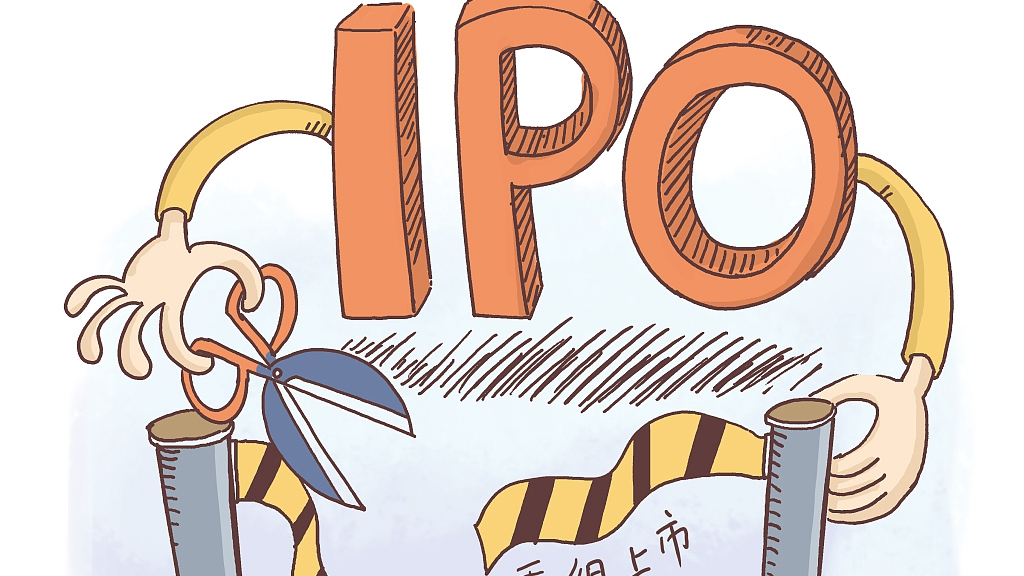
If we focus on the listing system, the STAR Market is the first board to adopt the registration system. The competent authority is only responsible for ensuring the realization of the obligation of disclosing enterprise information, which has already changed the content examination system of documents used to meet the standards under the previous approval system. The registration system is conducive to lowering the threshold requirements for entering the market, opening the door for more enterprises with financing needs, and improving the efficiency of listing in the process of censorship.
However, lowering listing standards does not mean not guaranteeing the quality of listed enterprises. While developing STAR Market, we no longer stick to individual indicators to examine the financial ability of enterprises, but put forward a combination of several types of financial indicators, which can be judged flexibly according to the business situation. In addition, the technology input and R&D income of the sci-tech innovation enterprises are also required to follow more stringent restrictions.
In addition to the listing rules, it emphasizes the construction of supporting systems such as information disclosure, going private, anti-fraud mechanism and protecting the investors’ rights and interests. Although the registration system exempts enterprises from the approval procedure, it is more strict and transparent for the rules of censoring enterprises in fact.
Reviewing the first half of the year, 92 companies had disclosed 223 audits. The large amount of multi-round inquiries and publicly disclosed details of listed companies have reflected the strength of information disclosure regime and returned the role of evaluating the value of enterprises to the market. In addition, judicial departments, the Securities Regulatory Commission and other departments are still working on introducing regulatory systems to prevent and severely punish dishonesty in the capital market.
The STAR Market strengthens the degree of the marketization of China's capital market and be in line with the international capital markets' rules. In addition to deepening the market-oriented degree in the qualified-examination of listed companies, the issuing price has also broken the top limit determining the true value of ventures through a period of self-adjustment of the market.
The establishment of the STAR Market is also helpful to complete the structure of China's capital market and clarify the functional division among different sectors. Comparing with NASDAQ's multi-level capital market, it sets up different sectors meeting the needs of investors and listed companies according to the diverse qualifications and abilities of enterprises, which is conducive to hierarchical management and risk isolation. The setup of the STAR Market followed exactly the same logic. It will distinguish the high-tech industry related to the national strategy from other start-up companies, and create a financing channel for technological progress, so as to fully realize the purpose of directional service of the capital market to the real economy.
The establishment of the STAR Market marks a great step forward for China's capital market towards international standards. The board can effectively support the process of domestic technology development, give great encouragement and financial support to scientific researchers, and return the growth dividend of technological innovation enterprises to the domestic market. With the gradual improvement of the various systems serving for the newly-opened market, the STAR Market will also attract foreign excellent Sci-Tech enterprises to join and contribute to the opening up of China's capital market.
(If you want to contribute and have specific expertise, please contact us at opinions@cgtn.com.)