
 []
[]
Share







Copied
Washington is ready to roll out the red carpet for Pakistani Prime Minister Imran Khan, who is expected to have his first face-to-face talks with U.S. President Donald Trump on Monday during his maiden trip to the U.S.
Khan, the 66-year-old cricketer-turned-politician, is expected to try to refresh bilateral ties, which have been bumpy during Trump's tenure, and attract investment in exchange for working with Washington to find a formula for a U.S. exit of neighboring Afghanistan.
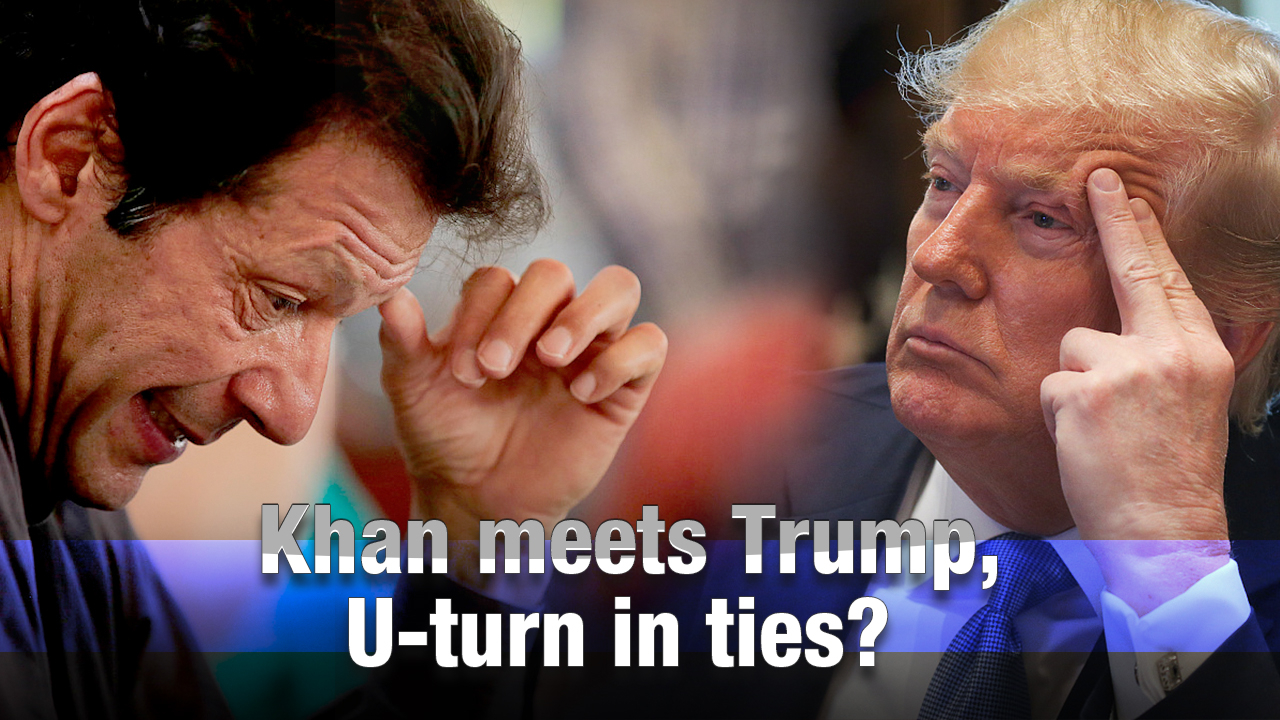
"From isolation, we have moved toward invitation," said Pakistani Foreign Minister Shah Mahmood Qureshi at a conference in Islamabad on U.S.-Pakistan ties last Tuesday. "We see [the] invitation as acknowledgement of the inherent importance of the relationship for both sides."
Frosty bilateral ties
Pakistan and the U.S. are officially allies in fighting terrorism but their relationship is strained by allegations that Pakistan offers safe havens to the Afghan Taliban, which Islamabad denies.
Pakistan has given Washington "nothing but lies & deceit, thinking of our leaders as fools," Trump wrote on Twitter at the start of 2018.
"They give safe haven to the terrorists we hunt in Afghanistan, with little help. No more!"
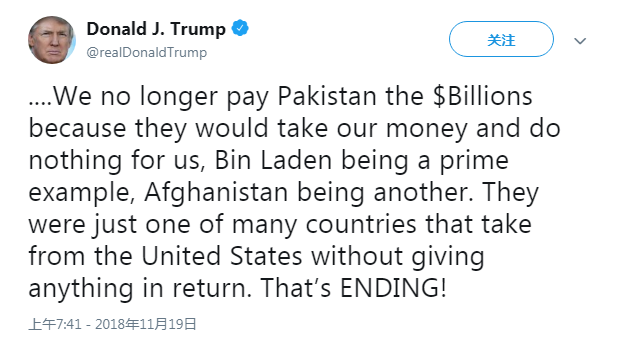
"We no longer pay Pakistan the $Billions because they would take our money and do nothing for us, Bin Laden being a prime example, Afghanistan being another. They were just one of many countries that take from the United States without giving anything in return. That's ENDING!"
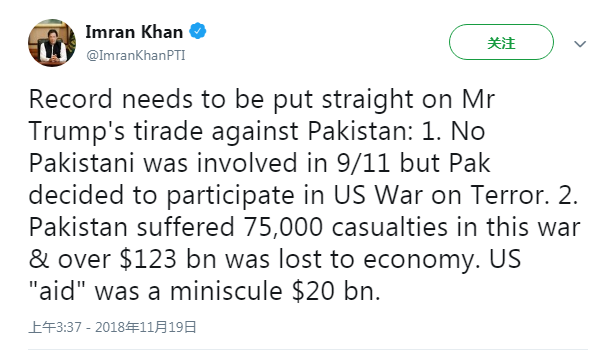
Khan responded in a series of tweets, accusing Trump "of making Pakistan a scapegoat" for the failures of the U.S. in Afghanistan and recalling the Pakistani lives lost during the "war on terror."
The U.S. announced last year that it had cancelled hundreds of millions dollars in aid to Pakistan. Khan once described a potential meeting with the U.S. president as a "bitter pill."
Bargaining chips: Afghanistan, Hafiz Saeed
Khan's bargaining chips for talks with Trump might be Pakistan's key role in supporting the U.S. peace talks with the Taliban and the arrest of Hafiz Saeed, the alleged mastermind of a four-day militant attack on the Indian city of Mumbai in 2008.
Trump is eager to end the 18-year war in Afghanistan that began after the September 11 terrorist attacks in 2001. The U.S. depends on Pakistan to supply its forces in neighboring Afghanistan, where 14,000 U.S. troops are deployed.
Khan has argued for decades that Washington should talk to the Taliban and after Trump and Khan's Twitter spat last November, Trump asked Pakistan to pressure the Afghan Taliban to continue with the negotiations in a personal letter to Khan.

Pakistani Prime Minister Imran Khan (R) speaks with U.S. special envoy Zalmay Khalilzad (3rd L) during a meeting at the prime minister's office in Islamabad, Pakistan, in this handout photo released January 18, 2018. /Reuters Photo
U.S. envoy to Afghanistan, Zalmay Khalilzad, previously a stern critic of Pakistan, has visited Islamabad eight times since being appointed in September.
Secretary of State Mike Pompeo said he hopes the peace talks will conclude by September 1.
Ahead of Khan's U.S. trip, Pakistan on July 17 arrested Saeed, a radical cleric and U.S.-wanted terror suspect implicated in the 2008 Mumbai attacks.
Saeed founded the Lashkar-e-Taiba group, which was blamed for the Mumbai attacks that killed 166 people.
The U.S. has offered a reward worth 10 million U.S. dollars for Saeed's arrest and Washington recently stepped up pressure on Islamabad to crack down on terror groups.
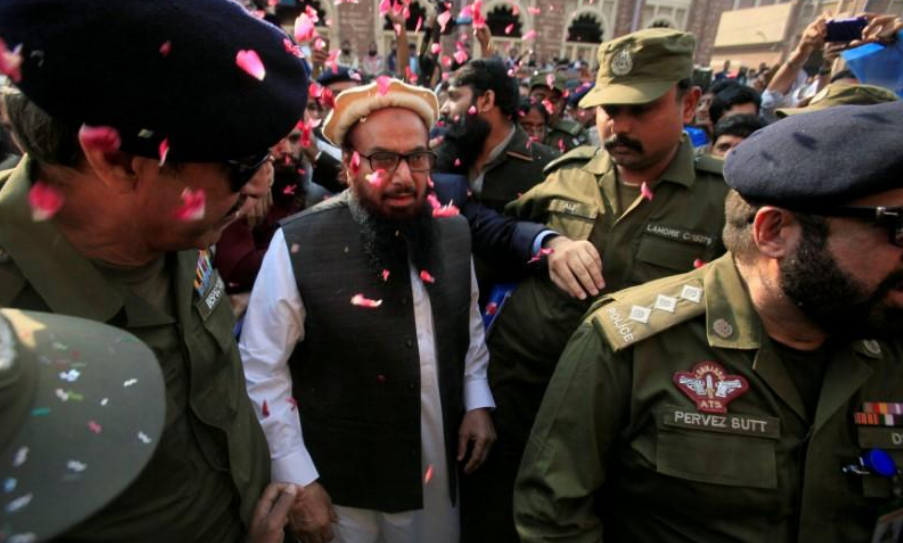
Hafiz Saeed is showered with flower petals as he walks to court before a Pakistani court ordered his release from house arrest in Lahore, Pakistan, November 22, 2017. /Reuters Photo
The arrest of the global terrorist might please Trump, who has already welcomed the news on Twitter.
"After a ten year search, the so-called 'mastermind' of the Mumbai Terror attacks has been arrested in Pakistan," Trump tweeted last week. "Great pressure has been exerted over the last two years to find him!"
Pakistan is also expected to ask the U.S. to help remove Pakistan from the Financial Action Task Force's gray list, an intergovernmental anti-terrorism financing group, and in accessing more loans to boost Pakistan's troubled economy.
A U-turn in ties?
Experts are optimistic about the Khan-Trump meeting, saying it might change bilateral ties.
"Well, the United States seems to be doing a timely U-turn on their relations with Pakistan, which is primarily Afghanistan-driven. President Trump badly needs a foreign policy triumph for his reelection next year," Mushahid Hussain, who heads the Pakistani Senate's foreign affairs committee, told VOA.
"The U.S. now realized that for peace in Afghanistan, normalization with Pakistan is a sine qua non, hence, the overtures to Pakistan and its government," Hussain observed.
Raoof Hussan, chief executive of Islamabad-based Regional Peace Institute, was optimistic that if the U.S. and the Taliban "are able to strike a chord, and there is ample likelihood that they would, it could effectively mean a turnaround of the U.S.-Pakistan relations."