
 []
[]
Share







Copied
After Guatemala dropped out of a safe third country agreement with the United States, President Donald Trump took to Twitter on Monday to accuse the country of “forming Caravans and sending large numbers of people, some with criminal records to the United States” – undermining his own argument for classifying the country as “safe.”
Mexico has similarly rejected signing a safe third country (STC) agreement with the United States.
The two failed agreements are a blow to the U.S.’ asylum rule announced last week which severely restricts the ability of migrants seeking asylum to apply for protection at the country’s southern border. The agreements would have allowed the U.S. to deny migrants from applying for asylum, as demanded by international and national legislation, on the grounds that they had passed through a “safe” third country.
Rights groups filed a lawsuit against the legality of the rule less than 36 hours after it was announced on July 15. Immigration experts have also called into question the credibility of designating countries such as Guatemala, where many of the migrants seeking protection are coming from, as an STC.
In practice, the STC principle has often been used as justification for countries to refuse asylum seekers protection. As the U.S. rule makes its way through the courts, it calls into question the definition of a safe third country. But how do other countries define it?
What is the ‘safe third country’ principle?
The “safe third country” principle targets countries that receive asylum seekers or refugees who have already found protection elsewhere. The UN Refugee Agency’s executive committee conclusion published in 1989 which addresses people who move “in an irregular manner from countries in which they have already found protection, in order to seek asylum or permanent resettlement elsewhere.”
Under this system, the second country can return the person to the place that already granted them protection – the “safe third country.”
The logic is that if people fleeing persecution find protection in a given country, they’ve been given access to basic human standards and the international obligation toward refugees and asylum seekers has been fulfilled.
However, before a return can take place, countries are responsible for ensuring that anyone being returned is safe from persecution. The “safe third country” also needs to have an asylum system in place to process the claims for protection and agree to accept that person.
Designating a country as “safe” therefore becomes critical to interpreting the concept, as well as ensuring that any STC agreement is legal.
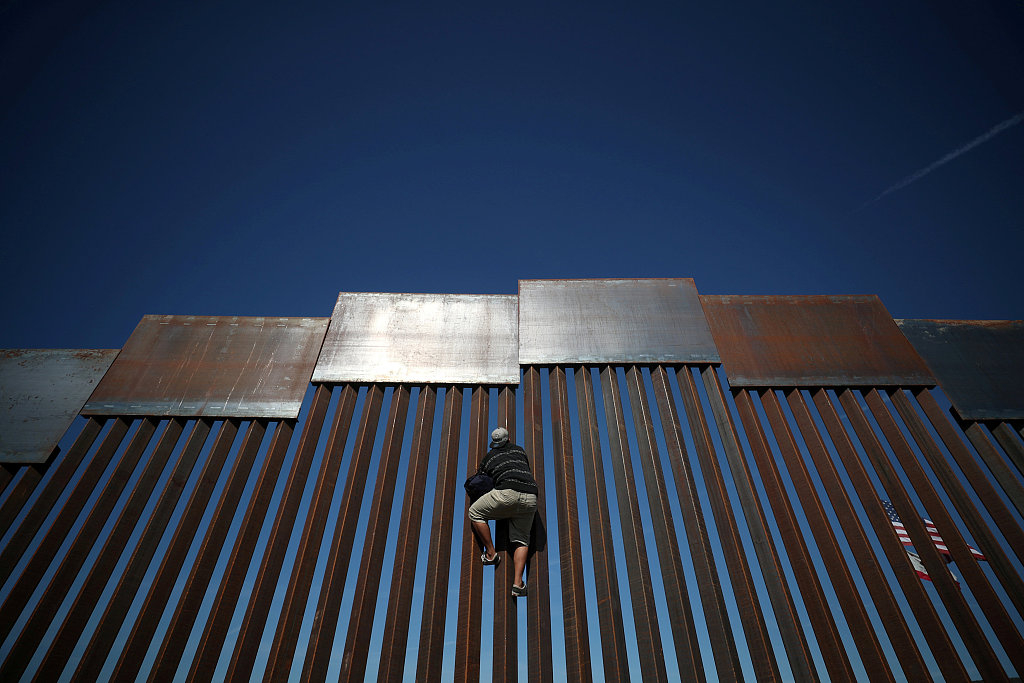
A migrant climbs the fence at the U.S.-Mexico border, Tijuana, Mexico, November 25, 2018. / VCG photo
European Union
The EU's Dublin III Regulation effectively designates every EU country an STC because it allows EU member states to examine asylum applications on behalf of all other member states.
However, some countries have put it into practice with non-EU members. The UK has applied the concept to Canada and the U.S., while Spain has cited the concept as grounds to return migrants to some Latin American and African countries.
Generally, the region has four conditions for designating a country as an STC:
1. The person’s life and liberty aren’t threatened due to their race, religion, nationality or membership in a social group or political opinion
2. The principle of non-refoulement in accordance with the Geneva Convention is respected, which prevents countries from returning someone to a place where there’s risk of persecution
3. A return doesn’t risk torture or inhuman treatment
4. There is a possibility for the person to request refugee status
Collectively, these four conditions make sure any STC country designation is in line with international law and ensures that the rights of refugees and asylum seekers are protected.
Turkey
In 2016, the European Union signed an agreement with Turkey designating it as a safe third country, creating intense criticism about whether Turkey was safe for the return of Syrian asylum seekers.
At the time, Turkey was deemed as having a developing asylum system. Although a signatory to the 1951 UN Refugee Convention, Turkey had not signed the 1967 Protocol which extends international refugee rights to people fleeing conflict anywhere in the world. Given this limitation, the agreement was criticized for not satisfying the condition that migrants could credibly claim and receive asylum in the third country.
In addition to the legal challenges, there were practical barriers. In the three years after the deal was signed in March 2016, only 2,441 people were returned from Greece to Turkey.
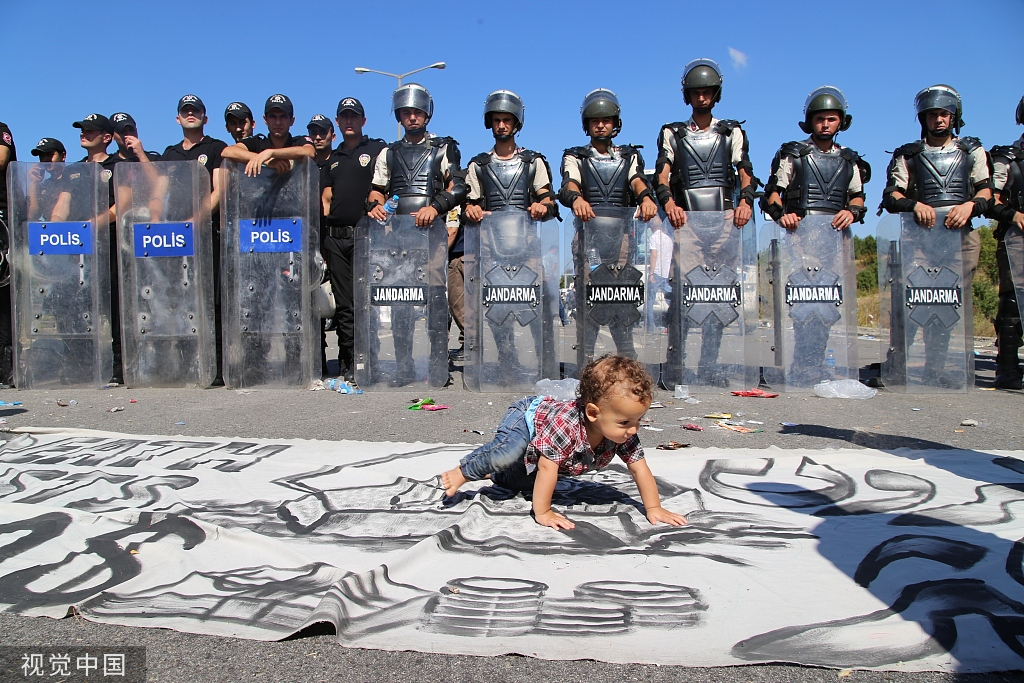
A refugee baby crawls in front of the Turkish police on September 19, 2015. / VCG photo
South Africa
South Africa receives some of the highest numbers of asylum applications in Africa, yet in the last decade, less than one out of every six asylum seeker is granted protection.
In the past 10 years, the Department of Home Affairs has granted protection to 99,624 people out of 633,395 applications.
These numbers only reflect those who can claim asylum in the country. Though the STC concept is not formally incorporated into its national legislation, South Africa has cited the principle as grounds for rejecting asylum claims.
Somalian refugees were refused entry to South Africa in 2011 on the grounds that they passed through safe third countries before arriving at the South African border. Earlier that year, the Minister of Home Affairs said in a parliamentary discussion that “[T]here is a longstanding first country of asylum principle in international law by which countries are expected to take refugees fleeing from persecution in a neighboring state, South Africa has not been strictly applying this principle.”
The implication in this statement is that only neighboring countries have obligations toward refugees, professor Dr. María-Teresa Gil-Bazo said in a 2015 paper on the safe third country concept. Within this interpretation, any country that a person travels through before requesting asylum can be deemed an STC.
When this is implemented without formal state agreements, Gil-Bazo argues that it acts “as automatic tools to bar asylum applications by individuals who do not enter South Africa directly from the country of origin (effectively limiting access to asylum to applicants from neighboring countries).”
The United States runs the risk of similarly acting unilaterally without the agreements from Mexico, Guatemala and other transit countries.