
 []
[]
Share







Copied
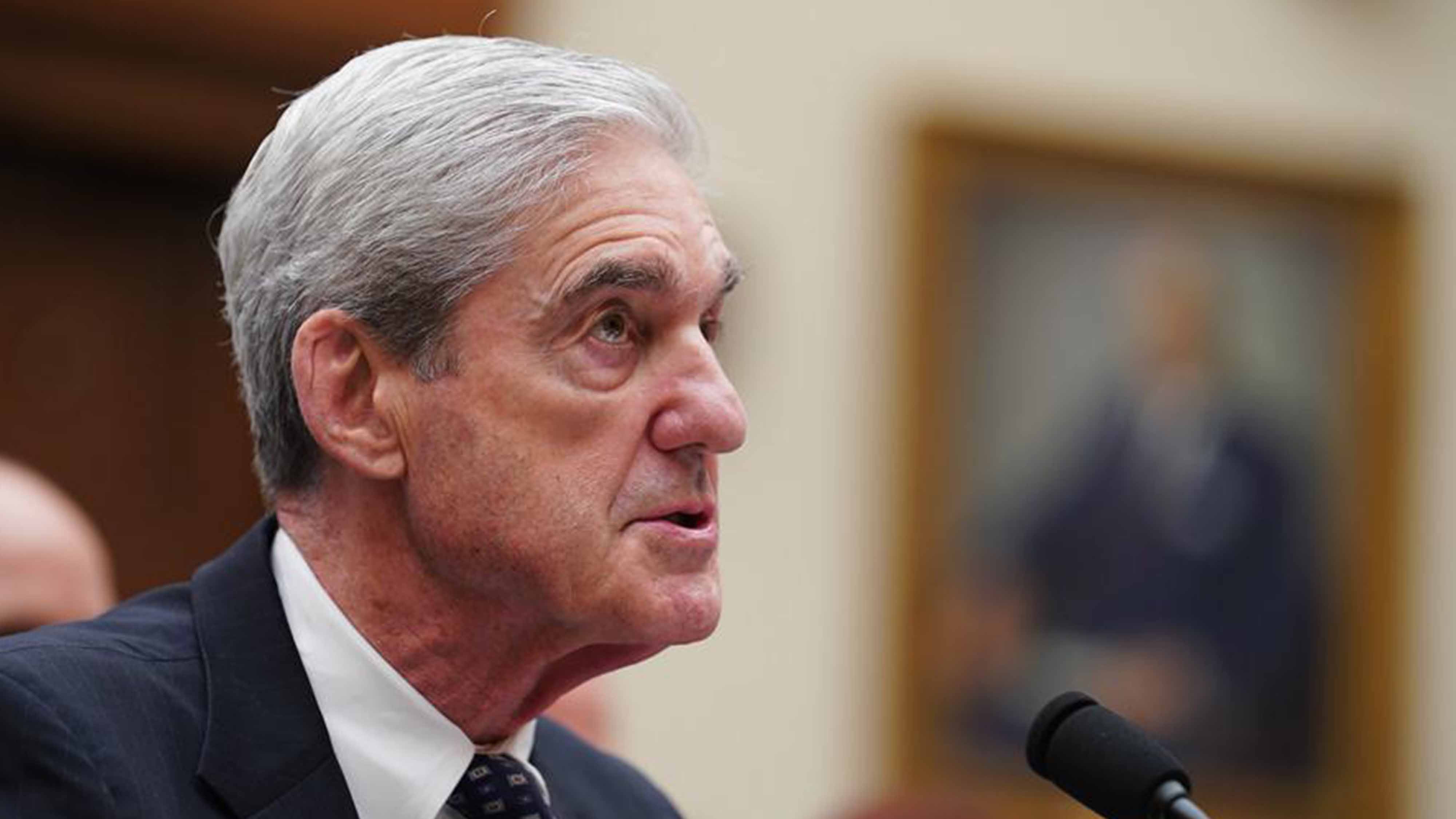
Former special counsel Robert Mueller said on Wednesday that his investigative report on the Russia probe did not exonerate U.S. President Donald Trump of obstructing justice.
"The president was not exculpated for the acts that he allegedly committed," Mueller said in a hearing before the House Judiciary Committee about the investigation into alleged Russian interference in the 2016 U.S. presidential election and whether Trump had obstructed justice. Mueller led the investigation for nearly two years.
He told lawmakers that he would not say if the president had committed a crime.
"Based on Justice Department policy and principles of fairness, we decided we would not make a determination as to whether the president committed a crime. That was our decision then and it remains our decision today," Mueller said during the hearing.
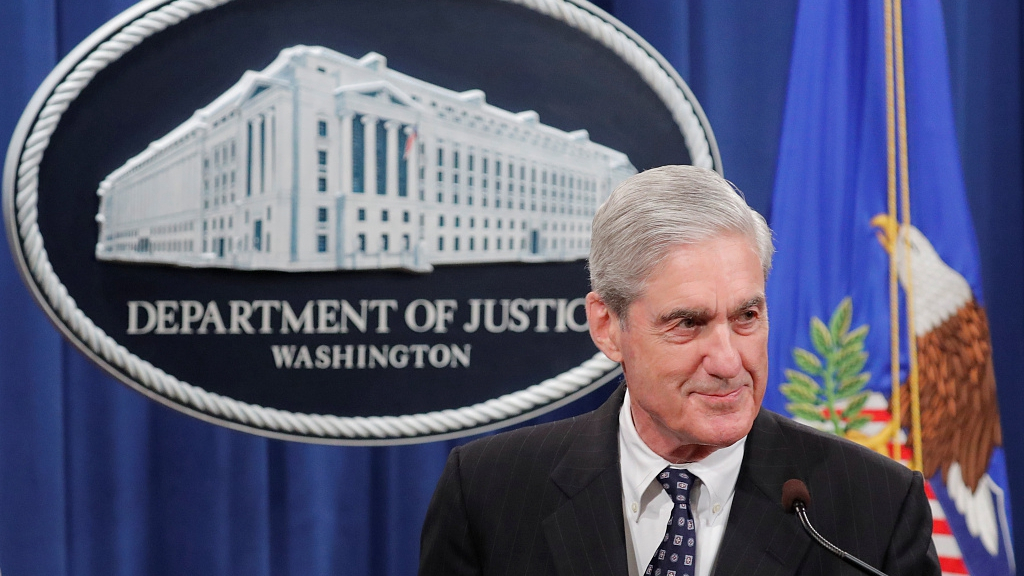
Robert Mueller delivers a statement on his investigation into the 2016 U.S. presidential election at the Justice Department in Washington, May 29, 2019. /VCG Photo
He also cited the Department of Justice rules that he could not prosecute a sitting president, while suggesting that Trump could face legal hurdles after leaving the White House.
Trump spent Wednesday morning retweeting critical comments from others on Mueller, his investigation, and the hearing.
In an afternoon tweet by his own, Trump wrote "Robert Mueller has to subject himself to #ShiftySchiff - an Embarrassment to our Country!"
Jay Sekulow, the president's lawyer, claimed in a statement that Mueller's testimony "revealed that this probe was conducted by a small group of politically-biased prosecutors who, as hard as tried, were unable to establish either obstruction, conspiracy, or collusion between the Trump campaign and Russia."
Mueller testified before the House Intelligence Committee on Wednesday afternoon. He reiterated earlier in the day that he will not go beyond what had already been revealed in his report.
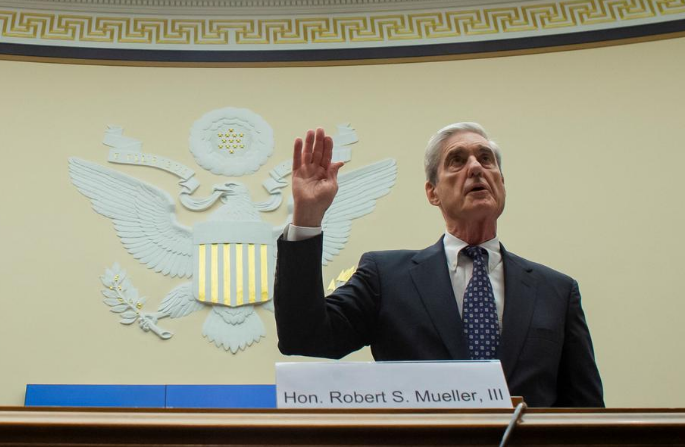
Robert Mueller testifies before the House Intelligence Committee hearing on his report on Russian election interference, on Capitol Hill, in Washington DC, U.S. July 24, 2019. /Reuters Photo
Appointed by the Department of Justice in May 2017 to take over the Russia probe, Mueller concluded the investigation in March by submitting a 448-page, confidential report to Attorney General William Barr, who was sworn in about a month earlier.
A public version of the report stated that there was no evidence that Trump's campaign conspired with the Russian government during the 2016 election but didn't conclude if the president had obstructed justice.
Instead, Mueller recounted 10 episodes involving Trump and discussed potential legal theories for connecting these actions to elements of an obstruction offense.
It was the Department of Justice that concluded that Mueller did not have "sufficient" evidence to support a charge in the obstruction case, a decision that has drawn scrutiny from Democrats, who have called for more investigations and the former special counsel's congressional appearance.
The Russia investigation, which Trump has repeatedly called a "witch hunt," led to criminal charges against 34 individuals, including several former Trump campaign associates, and three Russian entities.
Russia has repeatedly denied meddling in the election.