
 []
[]
Share







Copied
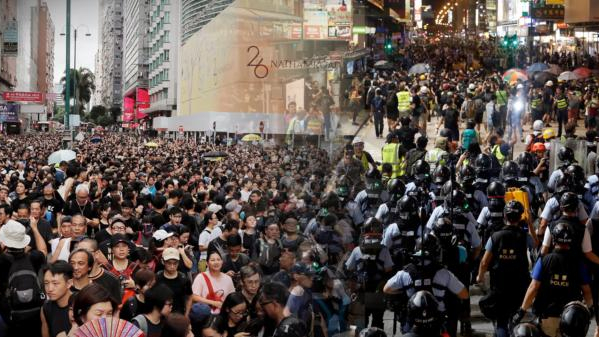
Editor's Note: Adam Garrie is director of the UK-based global policy and analysis think tank Eurasia Future and co-host of a talk show "The History Boys." The article reflects the author's opinions, and not necessarily views of CGTN.
This summer, protests in the Hong Kong Special Administrative Region of the People's Republic of China began as a response to the so-called judicial fugitive bill that Hong Kong's legislative authorities were in the process of deliberating.
The proposals were designed to close a loophole in which criminals from other parts of China could evade justice by illegally sheltering in Hong Kong and abusing the "One Country, Two Systems" political model.
To give one perspective, such a bill would allow for the kind of inter-jurisdictional justice that occurs on a daily basis in the United States when a criminal flees from one U.S. state to another. Likewise, the EU's controversial European Arrest Warrant (EAW) allows for the extradition of suspects between sovereign states without any significant judicial review available.
The Hong Kong bill was to be far more reduced in its scope in comparison to the realities in the United States and European Union. Transferring a criminal taking refuge in Hong Kong after committing a criminal act elsewhere in China would only have taken place if the offence in question was considered a crime in Hong Kong.
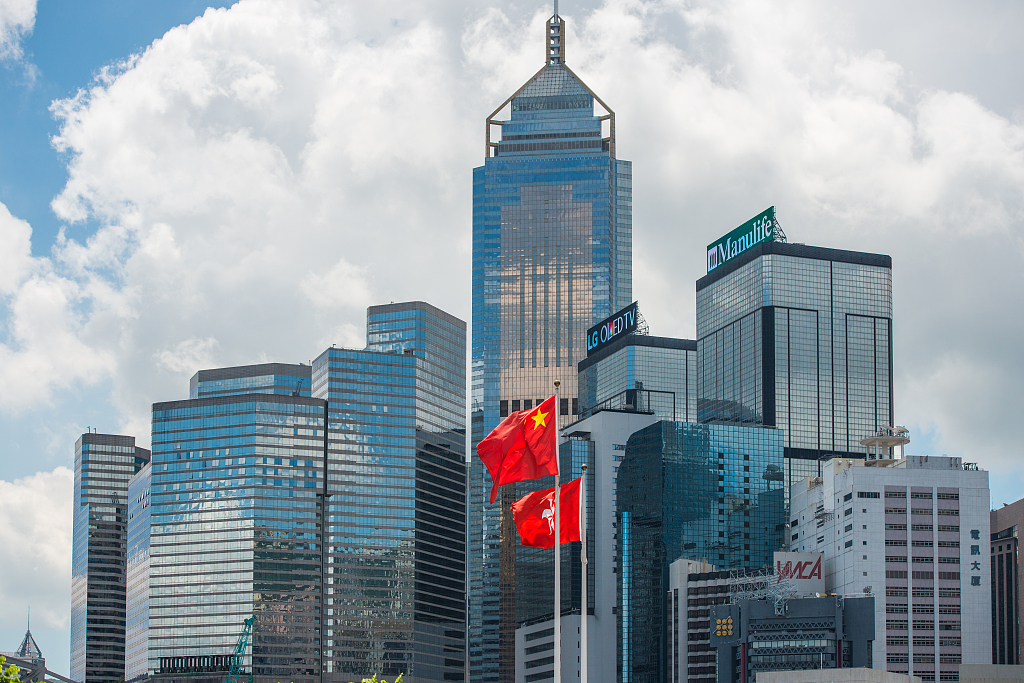
Hong Kong, China. /VCG Photo
Secondly, a thorough process of judicial review was to be available and the provisions were to be highly limited in their overall scope.
In spite of the rather anodyne nature of the bill when compared with the realities in major Western countries, protesters successfully convinced the legislative authorities to suspend the bill.
Under normal circumstances, this would have been the end of the protests but self-evidently sinister elements sought not to achieve a goal but instead they sought to sow supreme chaos.
Since the protesters ostensibly got what they wanted after the fugitive bill was shelved, the demonstrations have metamorphosed into overt provocations against ordinary people, against businesses and against lawful authorities.
A video of young thugs assaulting a very elderly man at a train station like rabid gangsters is now emblematic of the brutal atmosphere caused by the provocateurs. Equally emblematic is the extreme vandalism of Hong Kong's legislative chamber, the defacing of national symbols and the erection of a colonial flag on modern Chinese soil.
Many have called such acts treasonous. Certainly, if violent thugs broke into the U.S. Congress and erected a foreign flag before a defaced symbol of the U.S. government, most Americans would correctly label this as treason.
At a human level, the events are sad and infuriating. At a legal level, it is curious as to why the police have used so little force against the provocateurs whilst in countries like France, protesters are dealt with in an extremely brutal fashion even if the protests remain non-destructive.

Violent protesters stain Chinese national emblem at the Liaison Office of the Central People's Government in the HKSAR, July 21, 2019. /Reuters Photo
But the most important development in the medium and perhaps in the long term is that the provocations have changed the international image of Hong Kong.
Hong Kong has traditionally been known as a prosperous, open, business and trade oriented and cosmopolitan Chinese region. Now, Hong Kong looks dangerous; it looks tense, chaotic and as such, the international business community will take notice.
The authorities themselves must be aware of this, which is why a minimal amount of force has been used against the provocateurs when compared, for example, with the French response to the "yellow vest" protesters.
And yet the other side of this equation is that far from exercising reason and taking to their senses, the provocateurs continue their war against their own region. It is not the rest of China that is suffering this summer. China as a whole remains a totally peaceful and prosperous country.
But Hong Kong which has maintained unique characteristics under the "One Country, Two Systems" model has descended to a level of hitherto unknown chaos that could potentially affect the future of all Hong Kong people.
The protests themselves are therefore totally self-destructive. Whilst the authorities have dropped proposals for the so-called fugitive bill and whilst normal democratic institutions continue to function according to the rule of law, the streets are rejecting law and order, the streets are rejecting the overwhelming will of ordinary people for peace and order and the streets are sending negative messages to the international business community as well as to tourists.
When the history books record the story of Hong Kong's 2019 summer of despair, they may not be kind to the young and violent elements who have transformed Hong Kong from a place of tranquility and robust commerce to one of violence, thuggery, banditry and gangsterism. This is a mark of shame that will forever taint those responsible for these self-harming crimes.
(Cover photo: Demonstrators joined a rally in Chater Garden, Hong Kong, July 28, 2019. /Courtesy of Global Times)
(If you want to contribute and have specific expertise, please contact us at opinions@cgtn.com)