
 []
[]
Share







Copied
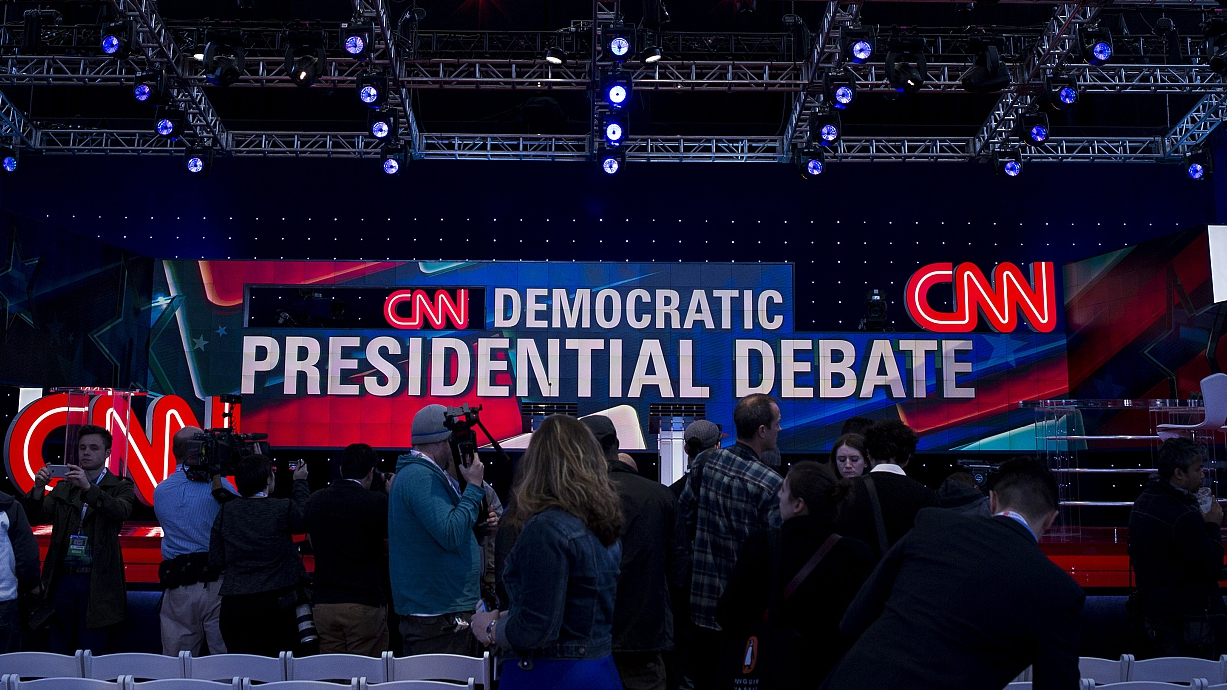
Six months ahead of the Iowa caucuses and 15 months before the next U.S. presidential election, Democrats debate in Detroit this week as part of the process to whittle down a 24-person field and find a nominee to take on Donald Trump for the White House.
A top tier of potential challengers to Trump has emerged over the past months of campaigning – Joe Biden, Bernie Sanders, Elizabeth Warren, Kamala Harris and Pete Buttigieg – and, while the 19 others in the race are still in with a shot, for one or two of the candidates, the debates on Tuesday and Wednesday will be their last chance for a breakthrough.
Twenty candidates who have passed the qualification threshold of 65,000 unique donors and a one percent rating in three approved polls will line up in two groups of 10 over the two evenings – looking to boost their profiles, knock down rivals and appeal to donors.
Biden leads the pack
Top of the average polling table is former vice president Joe Biden, who has rebounded after a tough encounter with California Senator Kamala Harris in the first debates. The 76-year-old had a flat first outing, and despite his poll lead will be under pressure to show he is capable of standing toe-to-toe with his rivals in the spotlight.
Biden's third try at the presidency – after failed attempts in 1988 and 2008 – has been marked by caution and a "general election strategy." He has tried to avoid mudslinging with other Democrats and instead focused on Trump, but that hasn't stopped his party rivals from taking shots at him. In the first debate it was Harris, in the second it could be #MeToo campaigner and New York Senator Kirsten Gillibrand.
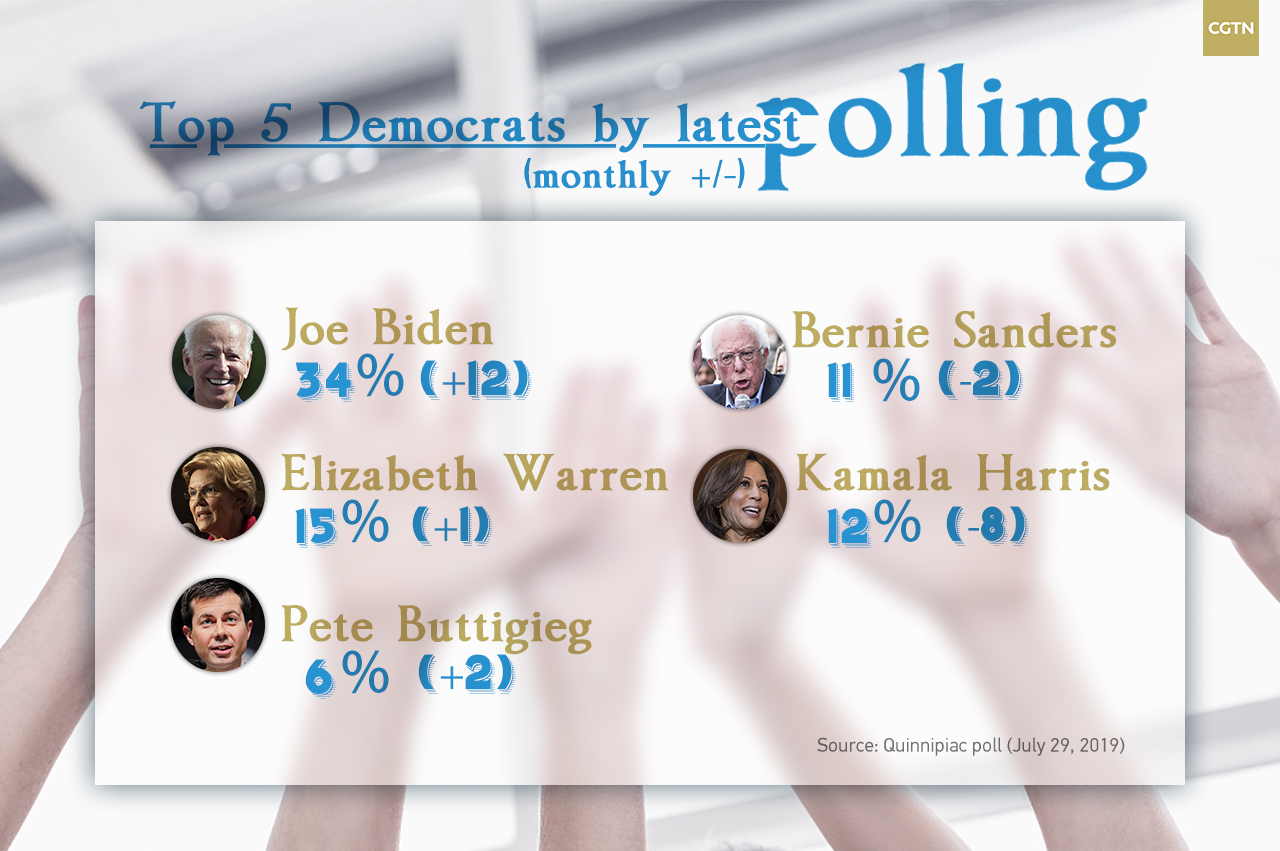
Harris' "I do not believe you are a racist, but…" line was the defining moment of the first debates, but after an initial slump for Biden and bounce for Harris, Biden has regained some of his loss and Harris lost some of her gain in the latest poll, published by Quinnipiac on Monday.
The sparring duo will be reunited on stage on Wednesday, along with Gillibrand, New Jersey Senator Cory Booker and former Houston mayor Julian Castro among others.
An underlying trend over the past few weeks that could be a more reliable indicator than a post-debate bounce is the gradual uptick in support for Massachusetts Senator Elizabeth Warren and slow decline in backing for Vermont Senator Bernie Sanders, two candidates generally seen as targeting the same pool of voters.
Sanders must decide whether to attack his old friend Warren when they share the stage on Tuesday, alongside South Bend Mayor Pete Buttigieg, former Texas congressman Beto O'Rourke and Minnesota Senator Amy Klobuchar.
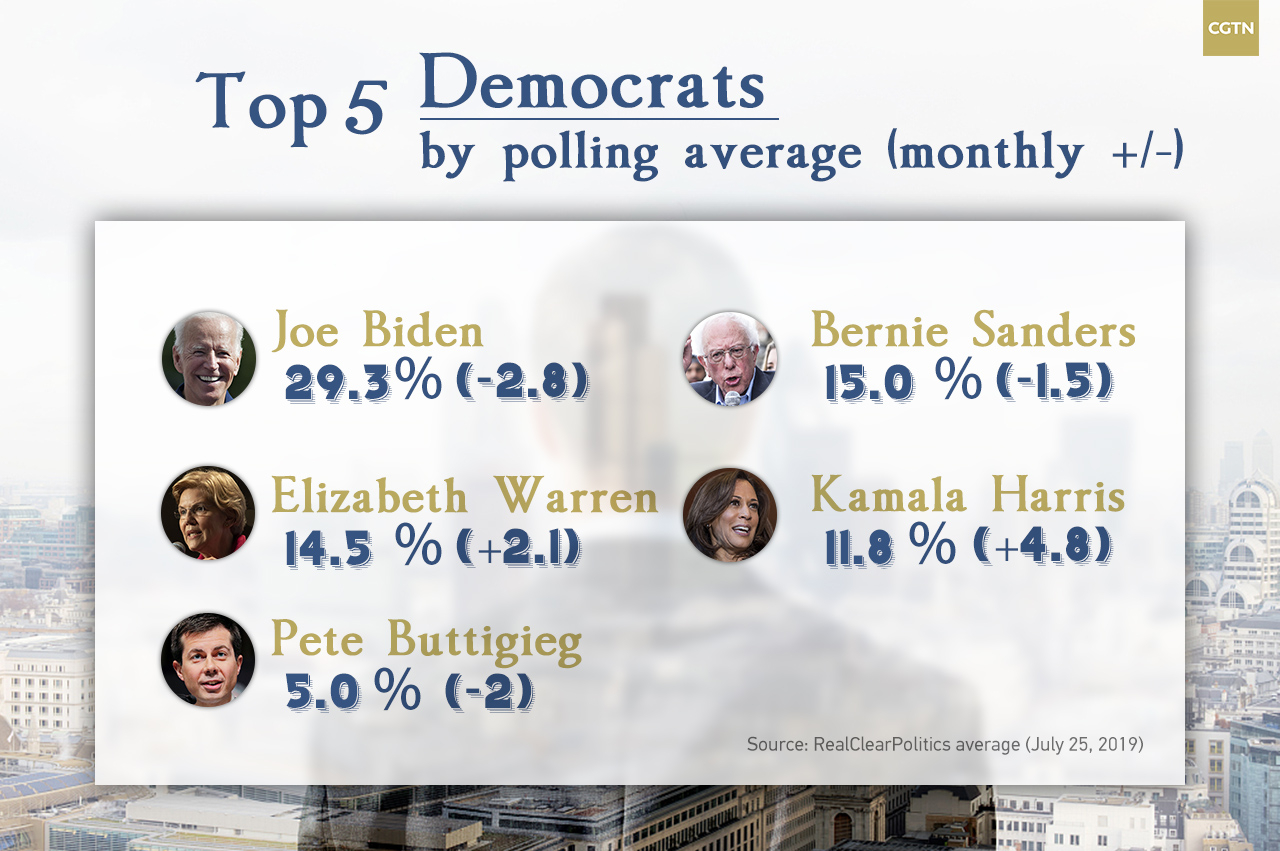
The movement in the polls, particularly big swings such as that enjoyed by Harris after the first debates in June, suggests many voters aren't yet committed to a particular candidate. That soft support, plus the 25 percent planning to vote for a candidate currently outside the top tier, indicates there is time for major changes.
For the other candidates involved in the debates the main challenge will be to have at least one breakout moment that will boost their campaigns and their hopes of appearing in the next debates.
To qualify for the third and fourth debates the thresholds have doubled: Only eight candidates currently make the grade, and the campaign of anyone who doesn't make the cut will be as good as over. That could mean some spectacular exchanges, as candidates make desperate attempts to be noticed.
Buttigieg the cash winner
Money and U.S. elections go together like a hand in a glove, and the surprise fundraising winner in the second quarter of 2019 was Buttigieg. The multilingual 37-year-old was a near-unknown at the beginning of the race, but his thoughtfulness and unique backstory has made him the breakout media star.
However, that has not yet carried through to momentum in the polls and a good debate performance might be the spark he needs. Federal Election Commission (FEC) data shows Buttigieg has cash on hand of over 22 million U.S. dollars, money which could see him climb, if spent well.
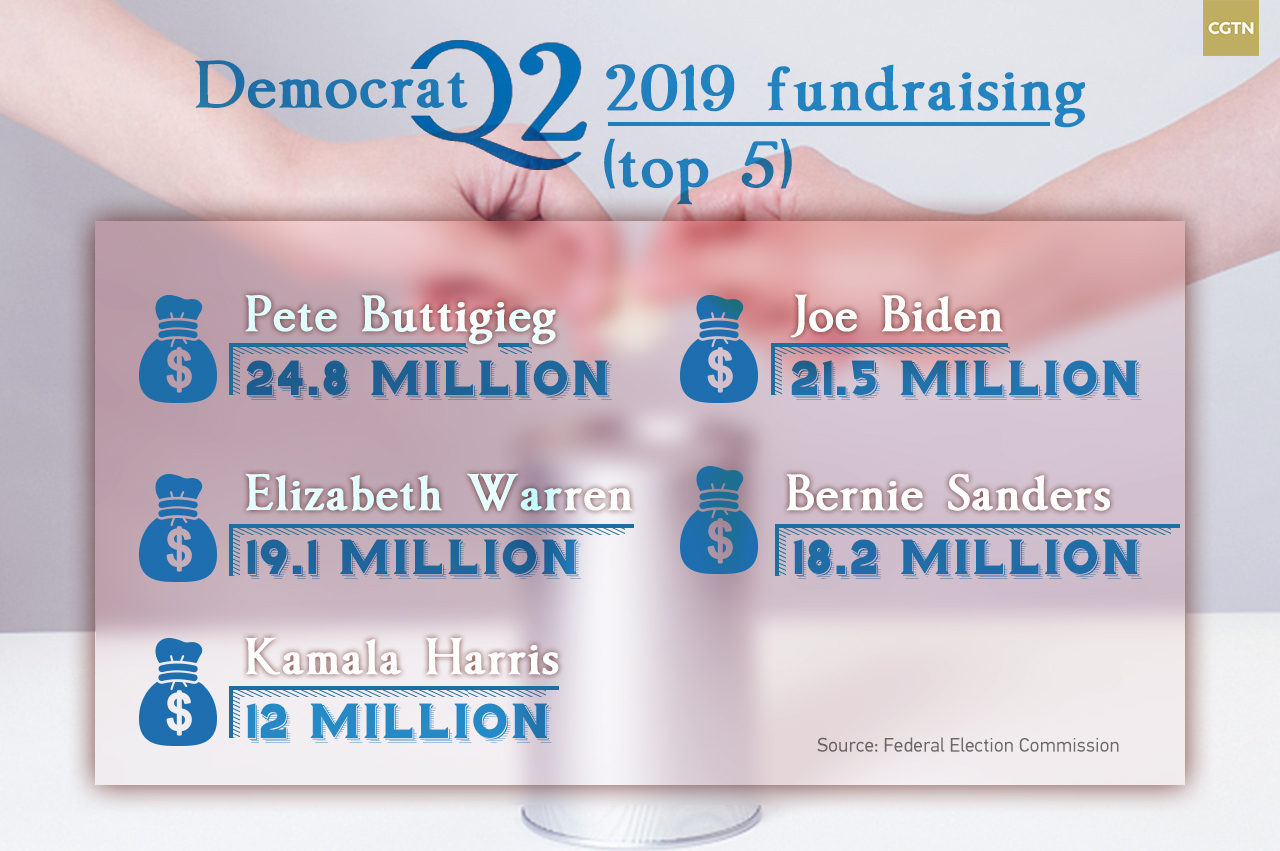
Sanders has raised the most money since 2020 campaigning began, according to the FEC, and both he and Warren have topped up their accounts with around 10 million U.S. dollars from their previous presidential and Senate campaigns respectively.
O'Rourke, who became a national star during his failed bid to win a Senate seat in Texas in 2018, has underperformed despite impressive fundraising numbers in the first quarter – he needs a good debate performance to energize his campaign, and is expected to target Buttigieg on Tuesday.
Buttigieg's current haul of 32 million U.S. dollars is entirely from donations in this cycle, while John Delaney, a former Maryland congressman, has given 24 million U.S. dollars to his own campaign while attracting just two million U.S. dollars in donations.
Beating Trump
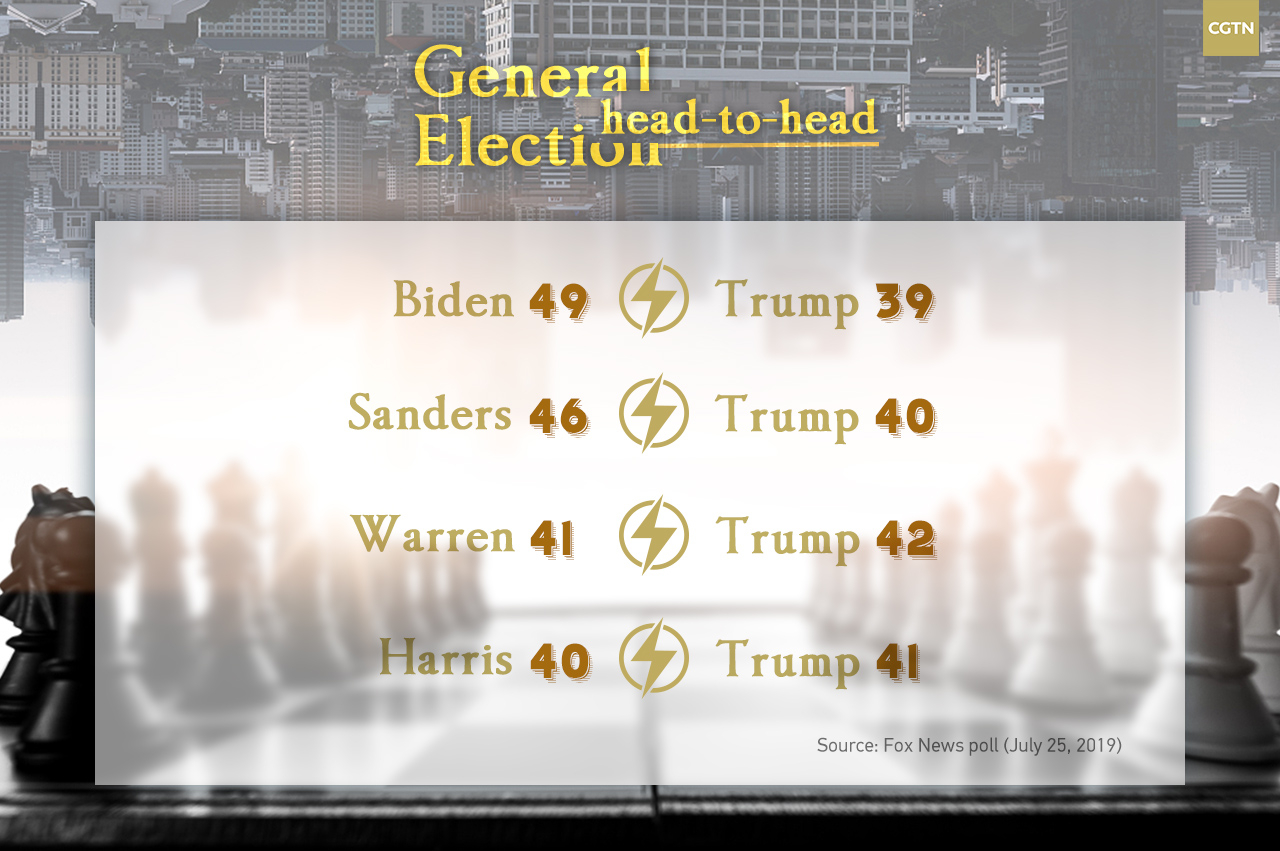
A Fox News poll published on July 25, the most recent national survey, found that 56 percent of Democratic primary voters would prioritize a candidate who can beat Trump, whereas 41 percent would favor a contender who would fundamentally change how the economy works.
This may go some way to explaining the popularity of Biden – the former vice president consistently beats Trump in head-to-head polls, as does Sanders.
The motivations of candidates at this early stage of an election campaign can be multiple. Positioning for a big government, consulting or TV job has a role to play, but most really are battling to win the White House.
With six months to go until the first Democratic vote, in Iowa, there's still all to play for. No candidate will take a decisive step towards securing the party's nomination in Detroit on Tuesday and Wednesday, but a poor performance could leave several struggling to survive.