
 []
[]
Share







Copied
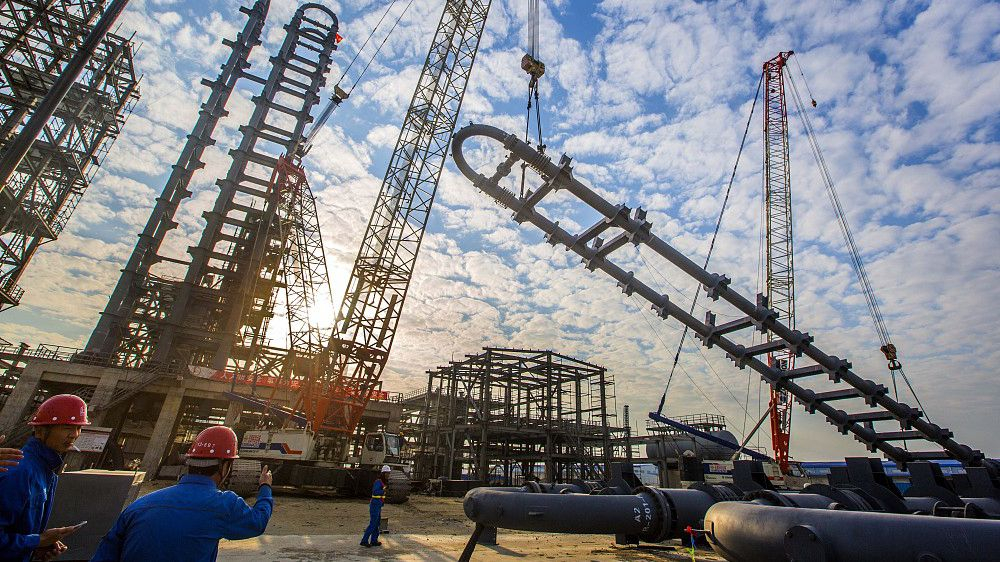
The purchasing managers' index (PMI) for China's manufacturing sector grew to 49.7 in July, up from 49.4 in June, the National Bureau of Statistics (NBS) said Wednesday.
A reading above 50 indicates expansion, while a reading below reflects contraction.
That was the first month-on-month PMI growth in four months, said NBS senior statistician Zhao Qinghe.
Market sentiment warmed up as the sub-reading for business expectation rose to 53.6 in July, according to Zhao.
Wednesday's data also showed the China's composite PMI went up 0.1 points to 53.1, which pointed to steady business expansion.
Chen Jiahe again, the chief strategist of Cinda Securities, said considering the effect of China's deleveraging process as well as trade disputes with the U.S. This figure is really comfortable.
"In terms of the sub-indexes, the good one comes from indexes relating to the domestic economies such as expectation of business activity production," Chen explained.

People walk in a night market in Tianjin. /VCG Photo
"The worse one comes from the trade related areas such as the new export, which is not a surprise."
So this tells you exactly the picture of China's economy, which is composed of a trading sector that is under pressure because of external factors, but also a very vivid and developing domestic economy," Chen added.
Two of the index's sub-indexes – production levels and new orders – firmed up for the first time in four months, indicating a rise in market demand. Analysts say tax cuts contributed to the rebound, but companies still face the challenges of the increasing cost of raw materials.
Meanwhile, non-manufacturing PMI fell 0.5 percentage points to 53.7. Analysts say the fall was mainly due to a weaker construction sector affected by the hot and rainy season.
The market concerns whether the government will take more moves to stabilize growth.
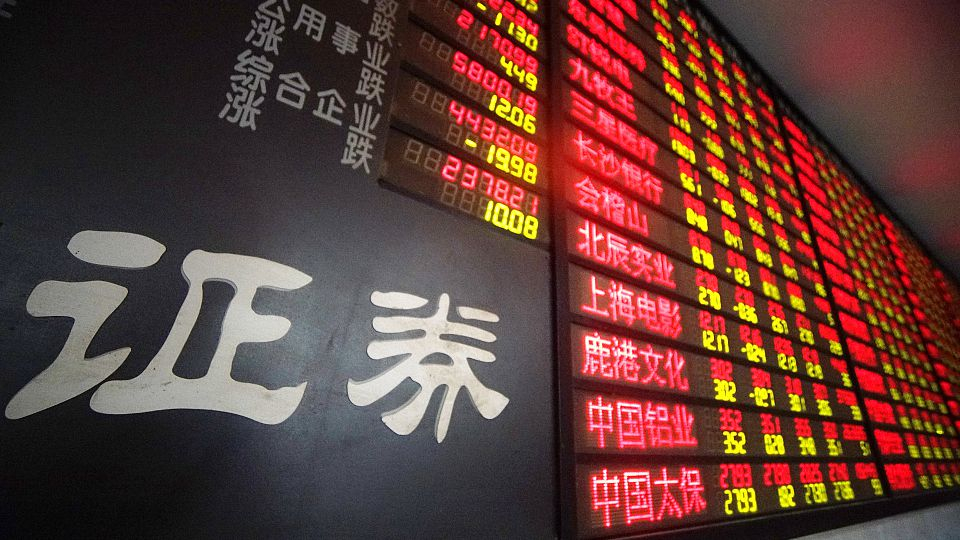
A trading floor in Nanjing, Jiangsu Province. /VCG Photo
Smooth and targeted fiscal and monetary policies
Chen explained that China is adopting smooth and targeted fiscal and monetary policies, rather than an overall relaxing of policies.
"An overall relaxing will cause the liquidity to flow to areas such as equity market, property market, etc. That will create financial bubbles, especially for the property market, which is already pretty expensive," Chen pointed out. "Targeted policies, on the other hand, can really help the specific economic areas."
Another reason is that China's economy has strong internal growth potential. Therefore as long as the economy remains smooth, the economy can gradually adjust itself. On the other hand, there is no urgent need for an overall relaxing at this moment. Now I do not see any signs showing that the economy is not stabilized, Chen said.
"Regarding the market, in 2019, China's A-share market has risen by around 20 percent measured by the gauge of Shanghai-composite index and 30 percent by Shanghai-Shenzhen 300 index. So that has been quite a good rally. But some stocks are still not expensive, such as banks and automobile companies, as well as some medical companies.”
"Moreover, stocks in Hong Kong is pretty weak this year. The Hang Seng China Enterprise Index has rose by merely 5.4 percent this year, although it is also composed by mainland companies, just like the A-share. Therefore, a lot of good targets can be found in these markets. I think some of them can return you five or even tenfold in the future," Chen concluded.