
 []
[]
Share






Copied
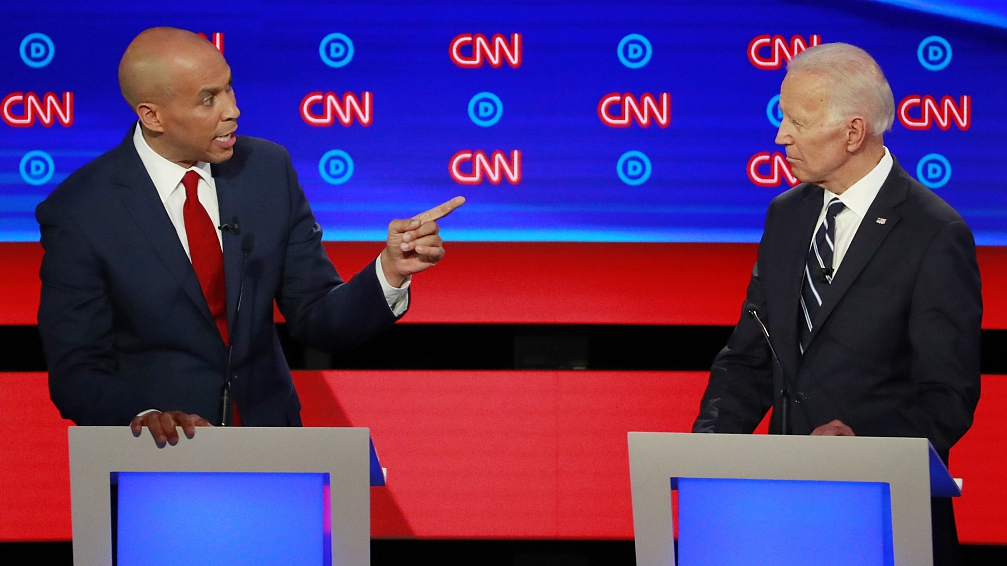
Democrats debated in Detroit on Tuesday and Wednesday in the bid to find a contender to take on President Donald Trump in the 2020 election.
The debates were the last chance for several candidates to make an impression before higher thresholds to enter September's third debate are brought in: If a candidate isn't on the stage, hopes of winning the nomination are close to zero.
Here are four takeaways:
1. Who landed a knockout blow?
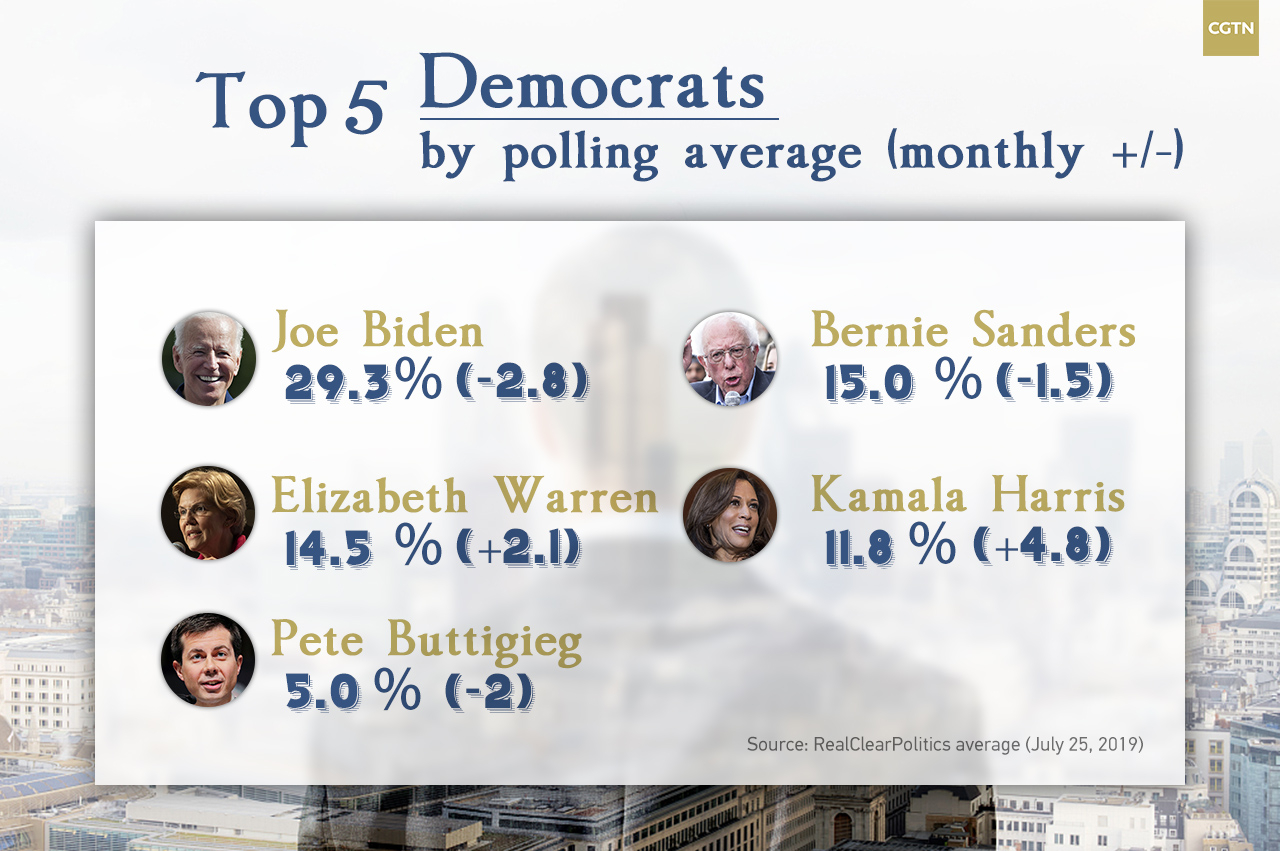
No one. But senators Elizabeth Warren and Cory Booker will likely be the short-term winners in the polls.
Former Vice President Joe Biden was the target of sustained attacks on the second night, and played his hand weakly by being the only candidate to abide by the debates' time limits and seemingly giving up on some answers with an uncertain "anyway."
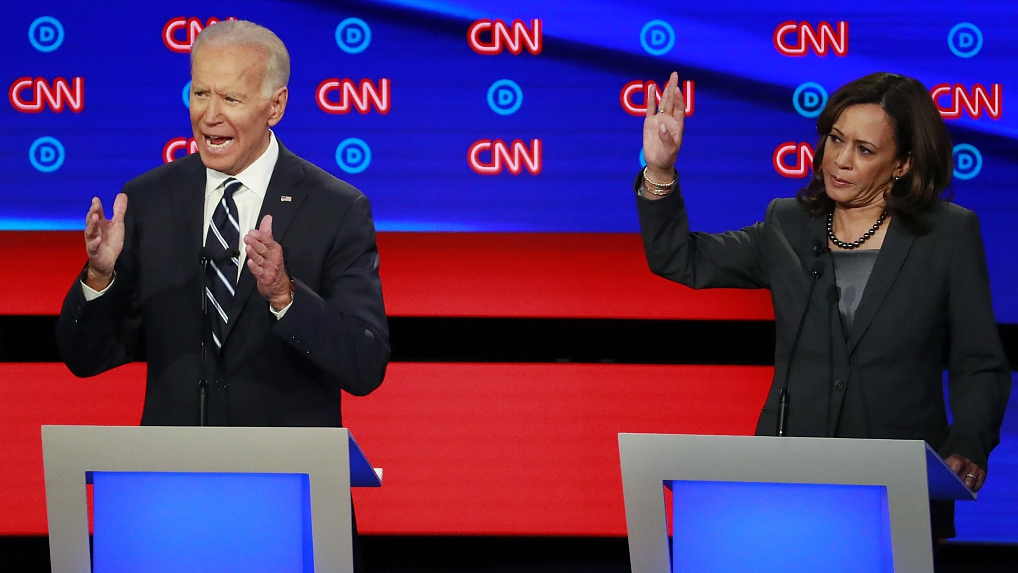
Former vice president Joe Biden and Senator Kamala Harris on the second night of the second 2020 Democratic U.S. presidential debates in Detroit, Michigan, July 31, 2019. /VCG Photo
The frontrunner took a polling hit after the first debate, and his plea to Senator Kamala Harris at the beginning of the debate to "go easy on me, kid" went unheeded.
After sharp criticisms on healthcare, immigration, climate change, and criminal justice from Harris and Booker as well as outsiders like Governor Jay Inslee, Biden may well face another polling setback, though he did engage more effectively than in the first debate and was willing to fight back.
Harris was also a target, notably from Hawaii representative Tulsi Gabbard, and was unable to deliver a consistent message under pressure, while Booker enjoyed a very strong debate combining upbeat rhetoric with sharp criticism of Biden on criminal justice.
On the first night Senator Bernie Sanders, who has slipped in the polls recently after a lackluster first debate, fought back along with Senator Elizabeth Warren against moderate criticisms that progressive plans were unrealistic.
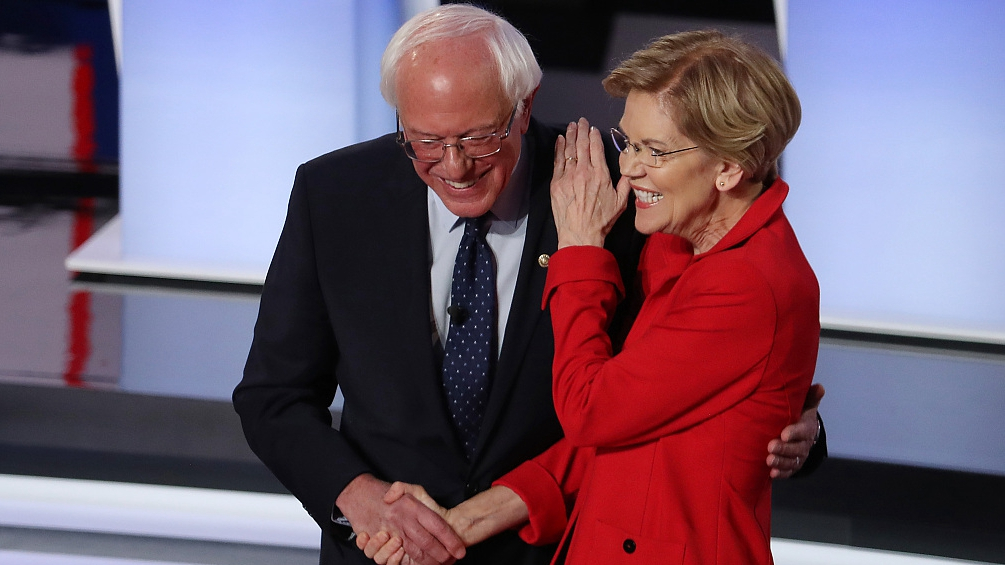
Senators Bernie Sanders and Elizabeth Warren on the first night of the second 2020 Democratic U.S. presidential debates in Detroit, Michigan, July 30, 2019. /VCG Photo
Warren had a particularly good night, delivering a clear and consistent progressive message and energy along with some memorable soundbites. She is targeting the same voter pool as her old friend Sanders however, and at some stage the two may have to cross swords.
Of the outsiders, Gabbard, Inslee, Governor Steve Bullock, and self-help guru Marianne Williamson all caught attention online. Bullock in particular could be set for a polling bump after making his first appearance on the debate stage, having joined the race late, and Gabbard stood out with criticisms of Harris.
2. … and whose campaign is on the ropes?
The debates were an opportunity for outsider candidates to grab the imagination of voters and donors at a critical point in the campaign: To get on the stage for the third debate, candidates must have 130,000 unique donors and be polling at least two percent in three surveys.
Former Houston mayor Julian Castro, as well as senators Amy Klobuchar and Kristen Gillibrand, will be looking over their shoulders nervously after solid but unspectacular evenings – they all need an uptick in the polls to make it on to the stage in September.

Former Colorado Governor John Hickenlooper and former Maryland Representative John Delaney on the first night of the second 2020 Democratic U.S. presidential debates in Detroit, Michigan, July 30, 2019. /VCG Photo
Williamson and entrepreneur Andrew Yang will hope to expand their own dedicated but narrow bases of followers, but New York Mayor Bill de Blasio again failed to make a breakthrough. Moderates like Tim Ryan, Michael Bennet, John Hickenlooper and John Delaney struggled to make a lasting impression.
Surprise success story Mayor Pete Buttigieg and former congressman Beto O'Rourke have already qualified for the third debate, but neither had strong debates and will be under pressure to up their games.
3. Sharp divides
The two debates had different narratives: Night one was a policy battle between pragmatism and idealism, pitting Warren and Sanders against the rest; night two featured a more personal scrap, putting Biden in the crosshairs of all the other candidates.
While CNN was criticized by some online for playing up divisions, it was clear that there are major splits between two wings of the party on the key election issues of health and immigrations as well as what electability – beating Trump – means.
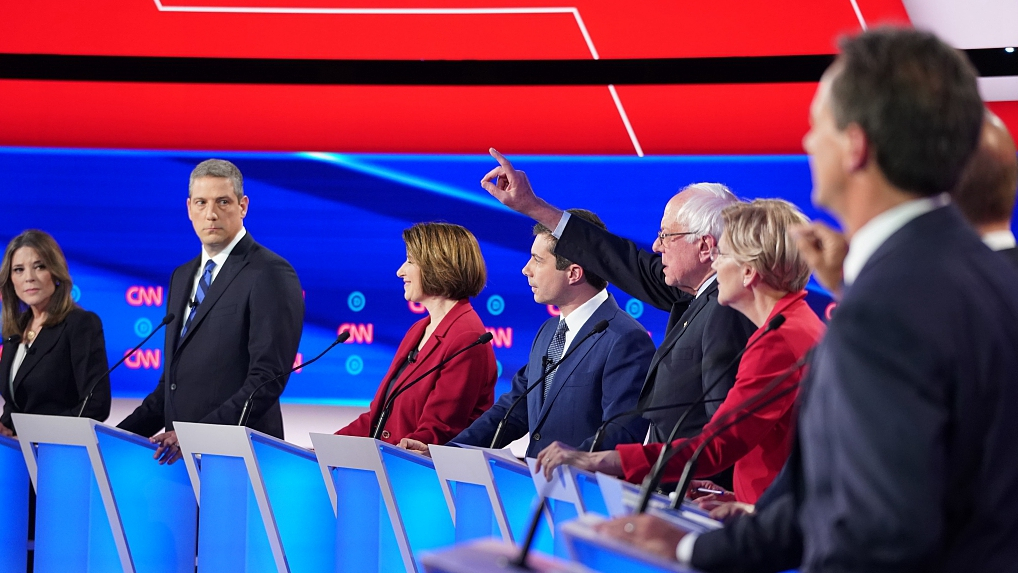
Democratic candidates on the first night of the second 2020 Democratic U.S. presidential debates in Detroit, Michigan, July 30, 2019. /VCG Photo
Democrats are essentially stuck between promising hugely ambitious projects that excite but may not be deliverable, and pragmatic solutions that don't inspire but are realistic.
Warren summed up the divide with the standout quote of the first night in response to calls for a more moderate approach, "I don't understand why anybody goes to all the trouble of running to the president of the United States to talk about what we really can't do and shouldn't fight for."
4. Trade policy
Candidates clashed on trade policy on both nights of the debate, with U.S. participation in multilateral trade deals a particular bone of contention.
The vast majority of candidates spoke out in opposition to the Trans-Pacific Partnership (TPP), the multi-nation trade agreement finalized by the Obama administration, that Trump withdrew the U.S. from. One exception was Biden, who said he would look to enter into a renegotiated TPP – he said environmentalists and union representatives would be part of any renewed talks.
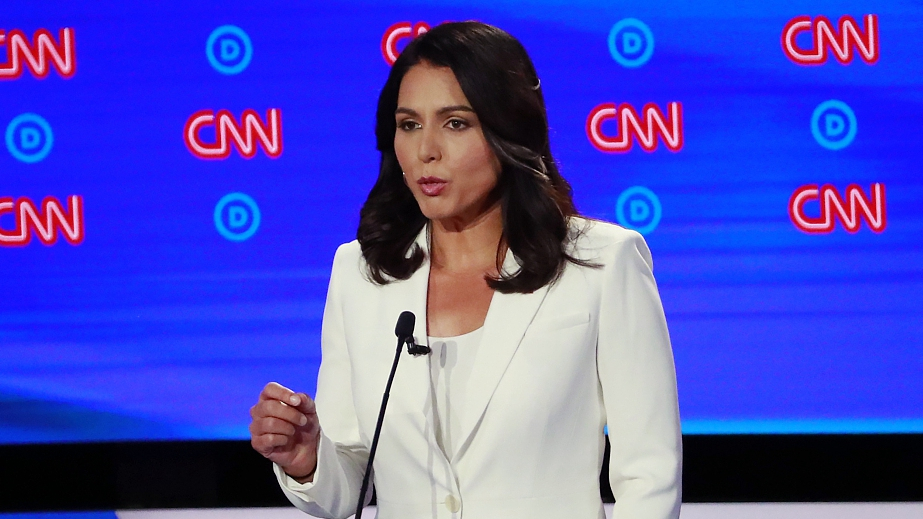
Representative Tulsi Gabbard speaks on the second night of the second 2020 Democratic U.S. presidential debate in Detroit, Michigan, July 31, 2019. /VCG Photo
Warren's argument that "trade policy written by giant multinational corporations to help giant multinational corporations" carries a lot of weight among Democrat primary voters, but she was also accused of being isolationist on trade by Delaney – who also voiced support for TPP. There was also broad criticism for the updated version of NAFTA negotiated under Trump, but yet to be ratified.
Harris argued that Trump's tariff policy "is a tax on American families" – a criticism echoed by others, including Gabbard.