- Home
- China
- World
- Europe
- Politics
- Business
- Opinions
- Tech & Sci
- Culture
- Sports
- Travel
- Nature
- Picture
- Video
- Live
- TV
- Specials


Share







Copied
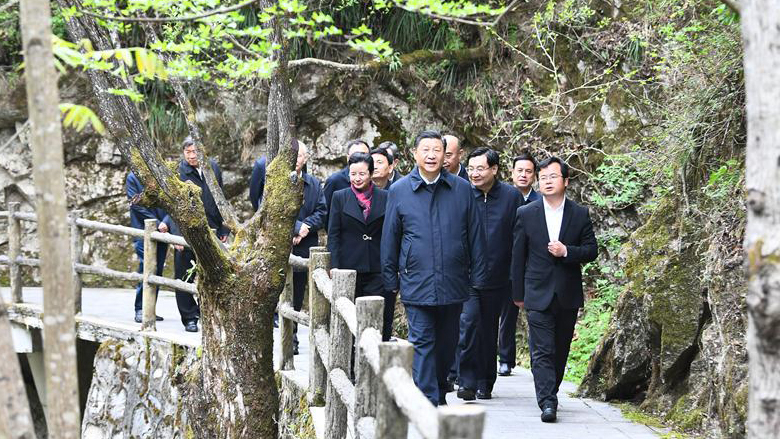
To kickstart his inspection tour in northwest China's Shaanxi Province, Chinese President Xi Jinping, also general secretary of the Communist Party of China Central Committee, visited a nature reserve in the province and learned about its ecological preservation efforts.
Niubeiliang National Nature Reserve is a key component of the ecological system around the Qinling Mountains, the geographic barrier that divides northern and southern China.
Covering over 16,000 hectares of land and with an elevation of 1,100 to 2,802 meters, the reserve is listed among the top 40 protected areas in China's national biodiversity strategy and action plan.

Built in 1987, the reserve is dedicated to the protection of takins, an animal under first-class state protection, and other wildlife. Its mixed broadleaf-conifer forest is home to over 2,000 plant species, including Chinese yew, which is under first-class state protection, and over 300 animal species, including takins, black bears, leopards and golden eagles.
73 endangered vertebrates listed by the Convention on International Trade in Endangered Species of Wild Fauna and Flora(CITES) also live in the reserve.
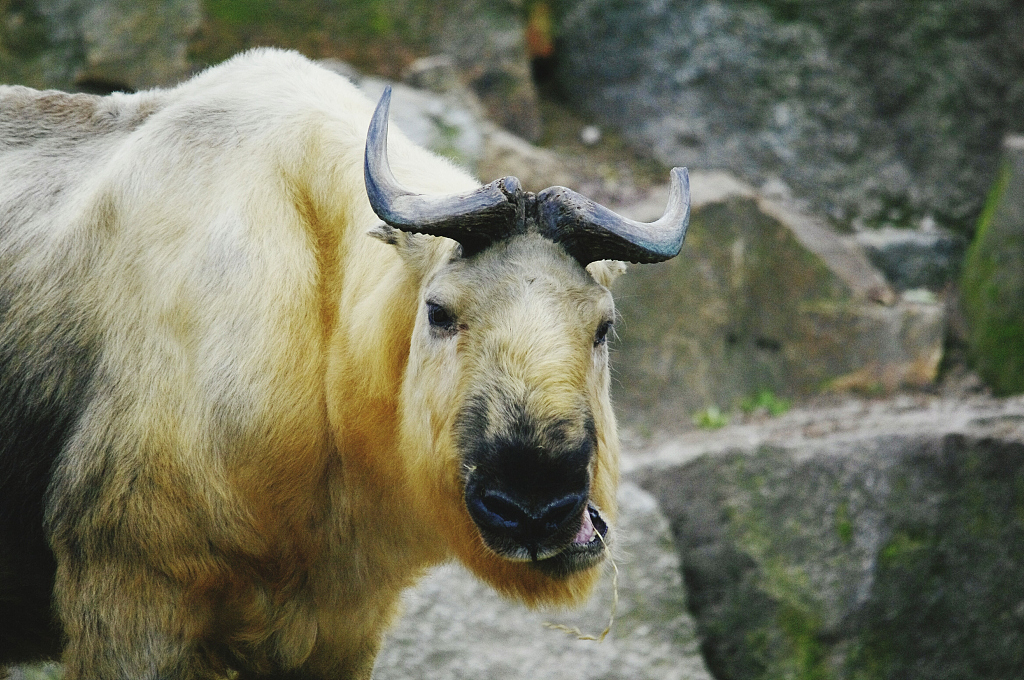
A golden takin. Takins are a hoofed mammal living in mountains and valleys over 1,000 meters above sea levels. There are four subspecies, and Qinling Mountains have its own subspecies called the golden takin. /VCG Photo
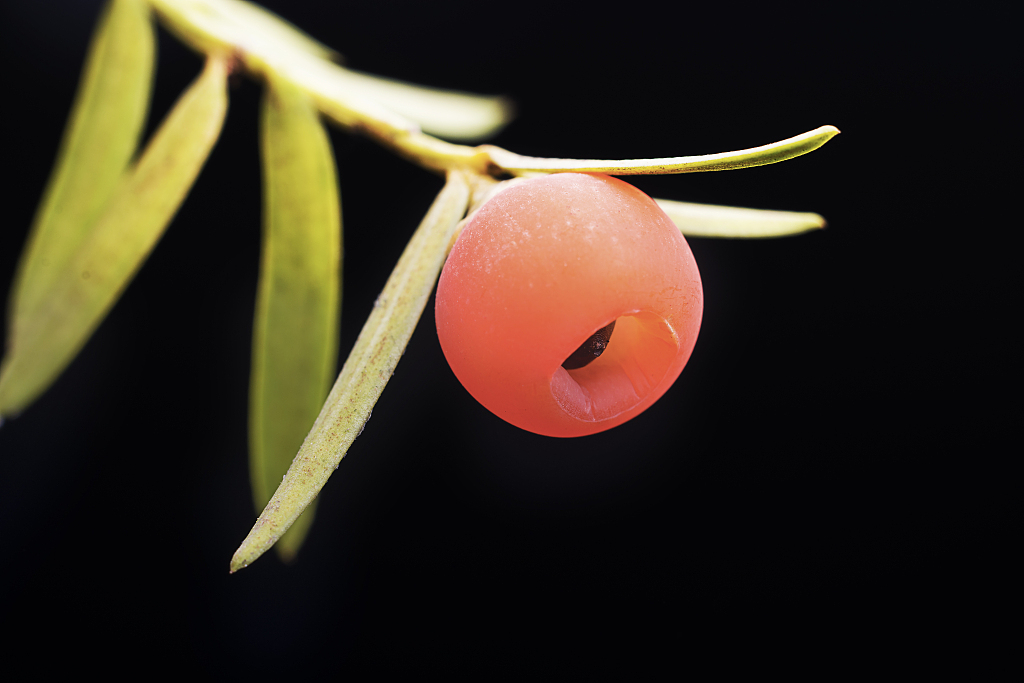
Chinese yew, a unique evergreen species surviving from the cretaceous period, has been listed as endangered species in the Red List of the International Union for the Conservation of Nature. It's scattered in southeastern China. /VCG Photo
In order to preserve the forest and wildlife, many villagers have been hired as forest rangers since the reserve was founded. They have been closely monitoring wildlife within the area through infrared cameras. Thanks to their conservation efforts, the number of takins in the reserve has risen from 78 in 1980 to over 350.
The unique natural environment here serves as a haven for wildlife, but it has also created many obstacles for local residents.
Due to bad road conditions resulting from steep cliffs and deep valleys, the vast mountainous areas surrounding Niubeiliang are hit hard by poverty, with villages isolated and villagers without stable income.
For years, the central government has been sending financial and personnel support to poverty-stricken villages in remote areas. With the help, villages around Niubeiliang have explored different ways to earn a better life. In addition to road construction, local villagers have learned to sell their forest products, such as honey, tea and mushrooms, to consumers across China and even the world, via the internet. Livestreaming, which is a new and very popular way to boost sales, has been introduced in these villages.
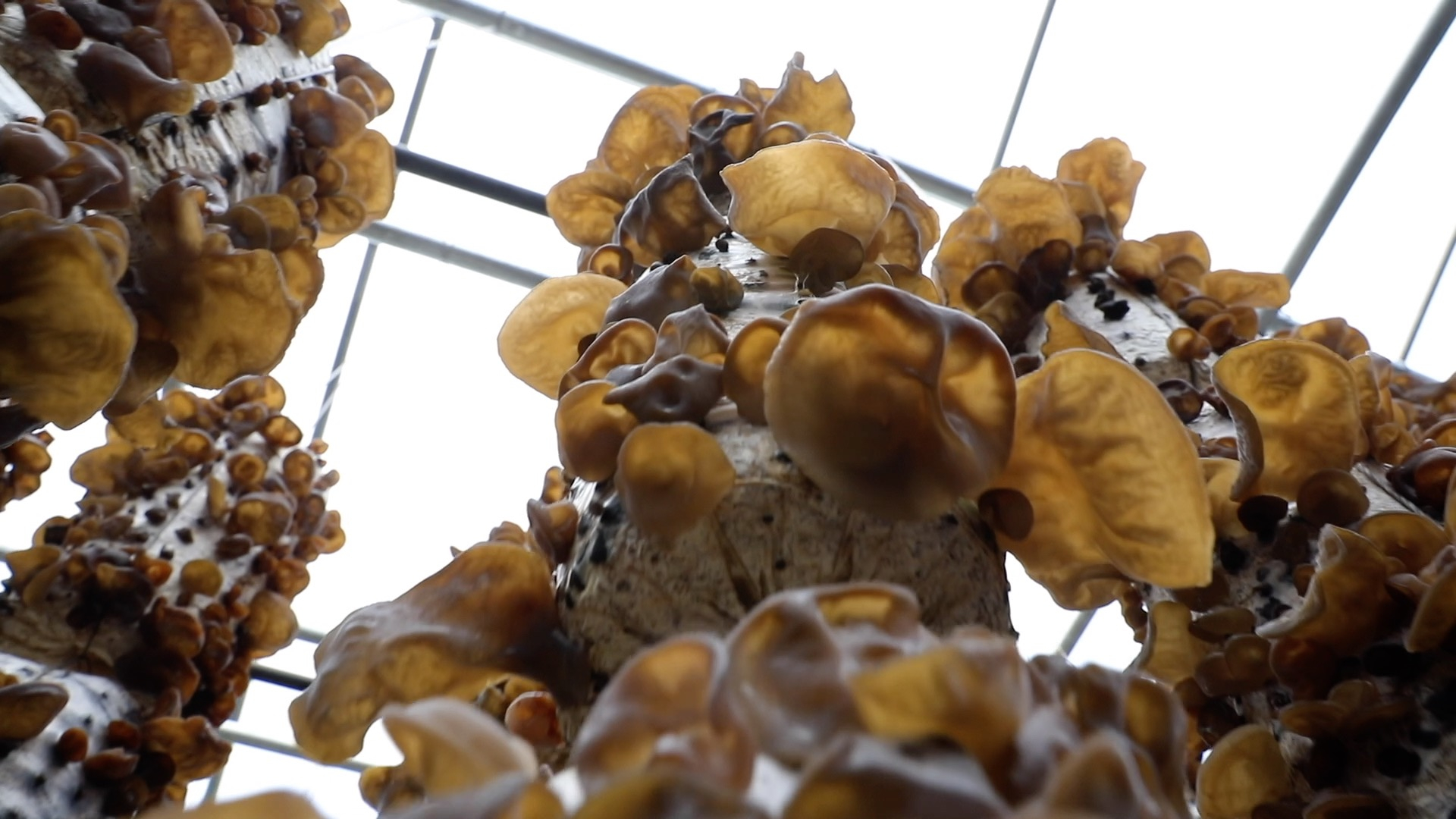
Villagers in Jinmi Village within the Niubeiliang National Nature Reserve have been growing edible fungus to earn a living. /Image via screenshot
The abundant natural resources have provided a stable source of income for villagers, proving that people can benefit from preserving the ecological system and thus live in harmony with nature.
Xi once compared lucid waters and lush mountains to invaluable assets, saying that when ecology thrives, civilizations will thrive. Such belief has been recognized by more and more people: sustaining the ecological system will allow the environment to offer people resources in a sustainable way.
Xi also laid out plans to tackle pollution to ensure "blue skies" and promote a revolution in clean energy in order to build a "beautiful China" by 2035.
As places across China are implementing such policies, the idea that through conservation efforts people can live in harmony with nature will gather more momentum.
For more:
Qinling Mountains: The central park of China
(Cover image via VCG)
(If you want to contribute and have specific expertise, please contact us at nature@cgtn.com.)