- Home
- China
- World
- Europe
- Politics
- Business
- Opinions
- Tech & Sci
- Culture
- Sports
- Travel
- Nature
- Picture
- Video
- Live
- TV
- Specials


Share







Copied
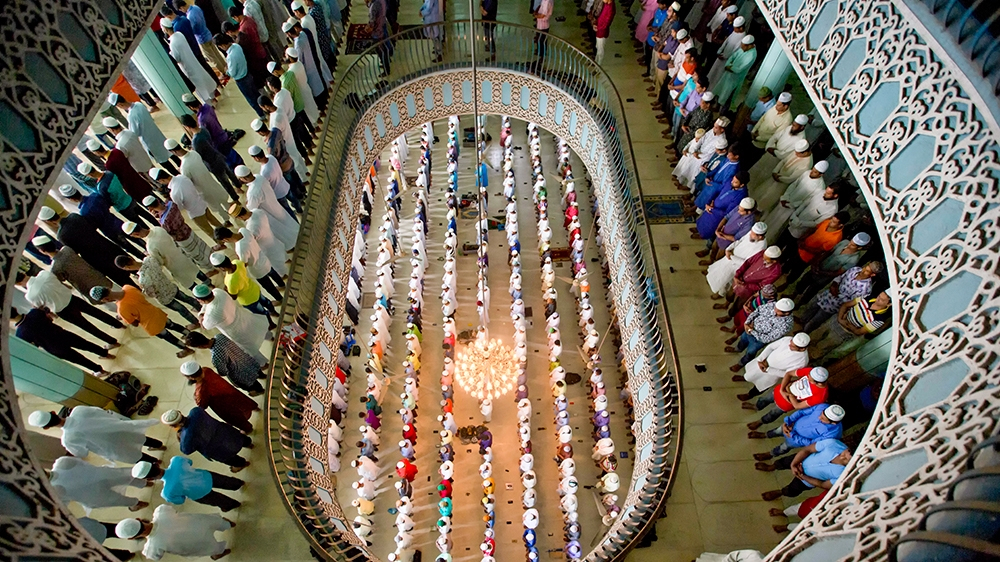
April 23 marks the start of Ramadan, the holiest month on the Islamic calendar, for some 1.8 billion Muslims around the world. But with the coronavirus pandemic, things will look very different this year.
Mosques from Saudi Arabia in the Middle East to Indonesia in Southeast Asia have closed their doors, with religious leaders telling people to stay home to pray instead of gathering in large numbers. And this is especially difficult during Ramadan, which emphasizes gathering, community, charity, and prayer,
"Throughout the year, people don't meet on the table at the same time and have a meal together. And that only happens in Ramadan. Usually it's the best time of the year for that to happen," said Aya Jubeh, who lives with her family in Ramallah, Palestine, to CGTN.
Prayers and charity in the time of coronavirus
Communal prayers are an important part in the daily lives of Muslims, and more so during Ramadan, where nightly Tarawih prayers are held. During the day, Muslims observe Ramadan by fasting, and in the evening they break the fast with their families before heading to the mosques.
"It's usually done in the mosques, in large numbers and they usually they even choose to go to one main mosque rather than going to like various Muslim in each area to go to the biggest mosque to have the biggest number of people together praying together," recounted Jubeh.
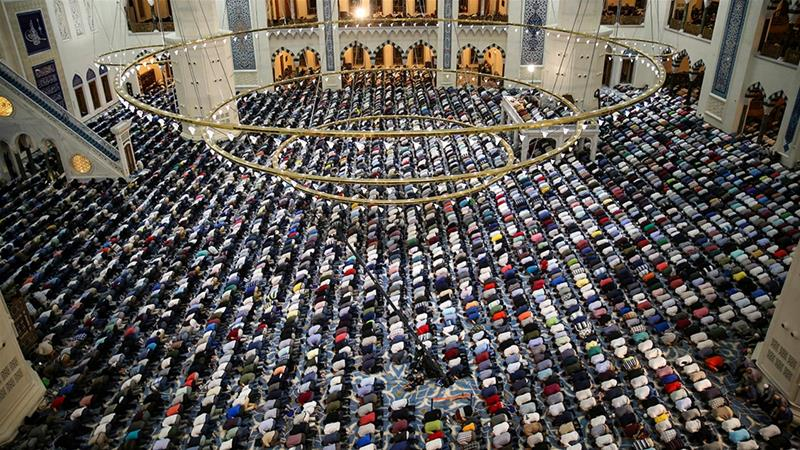
Mosques worldwide have banned all congregations, using their speakers to remind people to stay at home. Muslims throughout the world are preparing to celebrate Ramadan, the holiest month in the Islamic calendar, refraining from eating, drinking, smoking and sex from sunrise to sunset. /Reuters
Saudi Arabia announced two holy mosques in Mecca and Medina would remain closed throughout Ramadan, and it's the same in Jerusalem's Al-Aqsa Mosque compound. Saudi Arabia and Palestine have 12,772 and 355 COVID-19 cases respectively, as of April 22.
"This Ramadan is different. We ask for God's contentment as we fast. And as a Muslim, it is difficult not to go to the mosque, as we do a lot of things like praying and reading the Quran," told Saudi Arabia citizen Rayan to CGTN.
Religious leaders have taken to online platforms to make sure people are still able to practice their faith even without going to mosques. Saudi Minister of Islamic Affairs, Dawah and Guidance Sheikh Abdullatif Al-Asheikh launched a Ramadan program online, that's expected to start on the third day of Ramadan, reported Arab news.
"We launch this Ramadan program, in which a group of distinguished officials, sheikhs and scholars participate, as part of the ministry's role in providing knowledge and dawah, the Muslims' role in investing in this Holy Month through good deeds, and to fulfill the directives of the Saudi leadership," Al-Asheikh said.
Meanwhile, Iftar tents in many places will not be allowed to operate this year in many countries. These tents are where many organizations and charities offer free meals to the poor and needy at sunset, when the fast is broken. And with the economic downturn, needs are more acute this year.
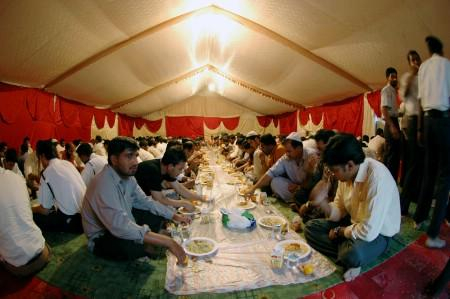
Muslim laborers and workers prepare to break their fast, during the Muslim holy month of Ramadan, in a charity tent set up to offer free Iftar meals to poor working laborers in one of the residential areas in Dubai, October 2, 2007. /Reuters
Instead of tents, charities are delivering Iftar meals instead. Shukoor Kallungal, president of Kerala Muslim Cultural Center in Abu Dhabi, told the National they are expecting to distribute more than 700 food bags a day during Ramadan.
Bazaars shifting shape
Besides observing Ramadan through fasting and prayers, late-night eating and shopping sprees are a common sight too. It is also when traders come out in full force to peddle food and decorations.
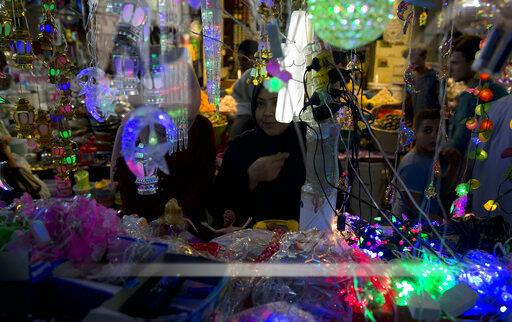
Palestinians shop for traditional Ramadan lanterns for the month of Ramadan, at the main market in Gaza City, Tuesday, May 7, 2019. /AP
"It's not a religious thing, but people just like to stay up all night to eat, drink, chat and spend time with friends and families," said Jubeh. Things will look vastly different this year with shops closed and empty streets.
"Usually we have the city getting decorated, all the houses or the windows full with with lights and colors. It gets you in the mood. And now since all the shops are closed, people are not encouraged to go out. So that part is also not there. And it's more of something that like hits the morale," she added.
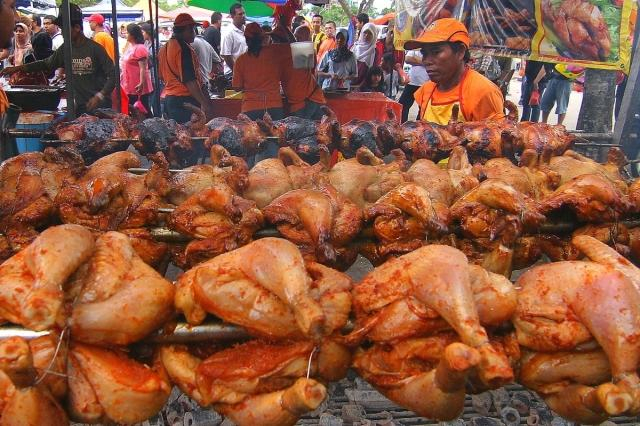
A stall worker prepares roasted chicken to be sold at a Ramadan bazaar at Shah Alam Stadium, west of Kuala Lumpur, in Malaysia's state of Selangor, September 6, 2009. /Reuters
Brunei, Malaysia and Singapore have cancelled Ramadan bazaars, leaving vendors unsure about what to do with the goods they've already prepared, especially those that are perishable. This has pushed vendors to go online.
In Malaysia, Graphic designer Amirul Rafiq, started a Facebook page called "Seremban Online Bazaar Ramadhan 2020" to help connect stall owners with customers via a network of riders. In just about a month, the group has gathered close to 30,000 sellers and buyers.
Even with online platforms, however, there are still worries over demand. Ramadan is expected to end on May 23, when Eid al-Fitr or Hari Raya Puasa starts. That's when friends and family gather in large numbers decked out in new clothes for a time of feasting and sharing.
With no end in sight of the pandemic, hopes for gathering this year remains dim. "We're not allowed to meet and gather so either ways it's not gonna it's not gonna be pointless either way," lamented Jubeh.
Travel bans scupper reunion
The end of the holy month of Ramadan begins the great migration, where millions of Muslims abroad head home to reunite with their families. With the ongoing pandemic, however, world leaders have warned citizens against coming home for the holiday.
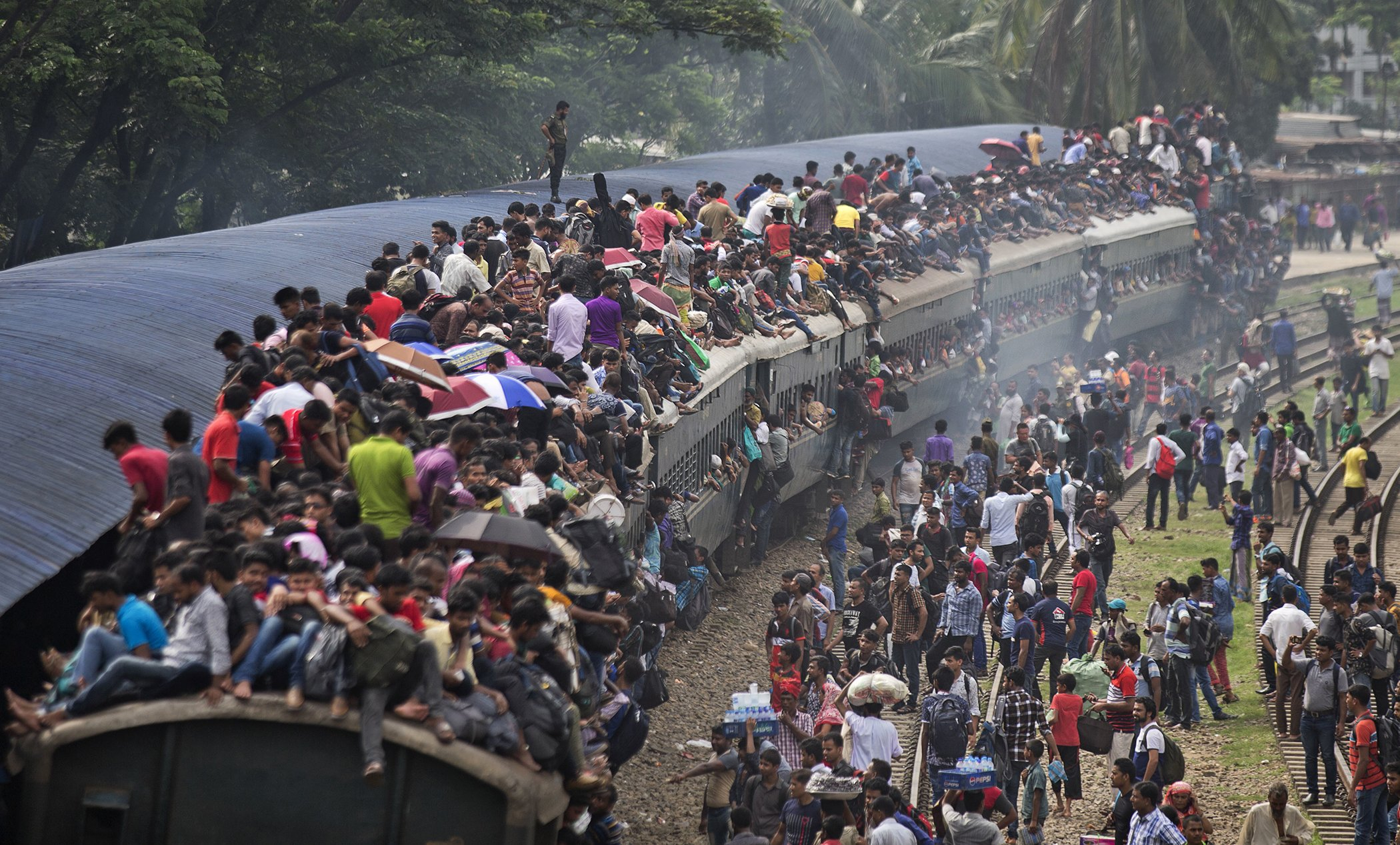
Muslims maneuver their way on the roof of an overcrowded train to travel home for Eid al-Fitr celebrations, at a railway station in Dhaka, Bangladesh, June 14, 2018. /AP
The world's most populous Muslim country, Indonesia, earlier this week announced a travel ban for all citizens planning to go home for the holiday, where at least 15 million people travel home for Eid.
Muslims around the world will be facing a very different Ramadan and Eid al Fitr this year, where instead of communal prayers and feasting, they'll be spending their long days of fasting at home. But Jubeh remains optimistic.
"Now since all the people are home and people are spending all their time together, it kind of you know, it's like we were looking forward to that part to like spending time together. And now we are spending all the time together," quipped Jubeh.
(Cover image: Mosques worldwide have banned all congregations, using their speakers to remind people to stay at home. /AP)