- Home
- China
- World
- Europe
- Politics
- Business
- Opinions
- Tech & Sci
- Culture
- Sports
- Travel
- Nature
- Picture
- Video
- Live
- TV
- Specials


Share







Copied
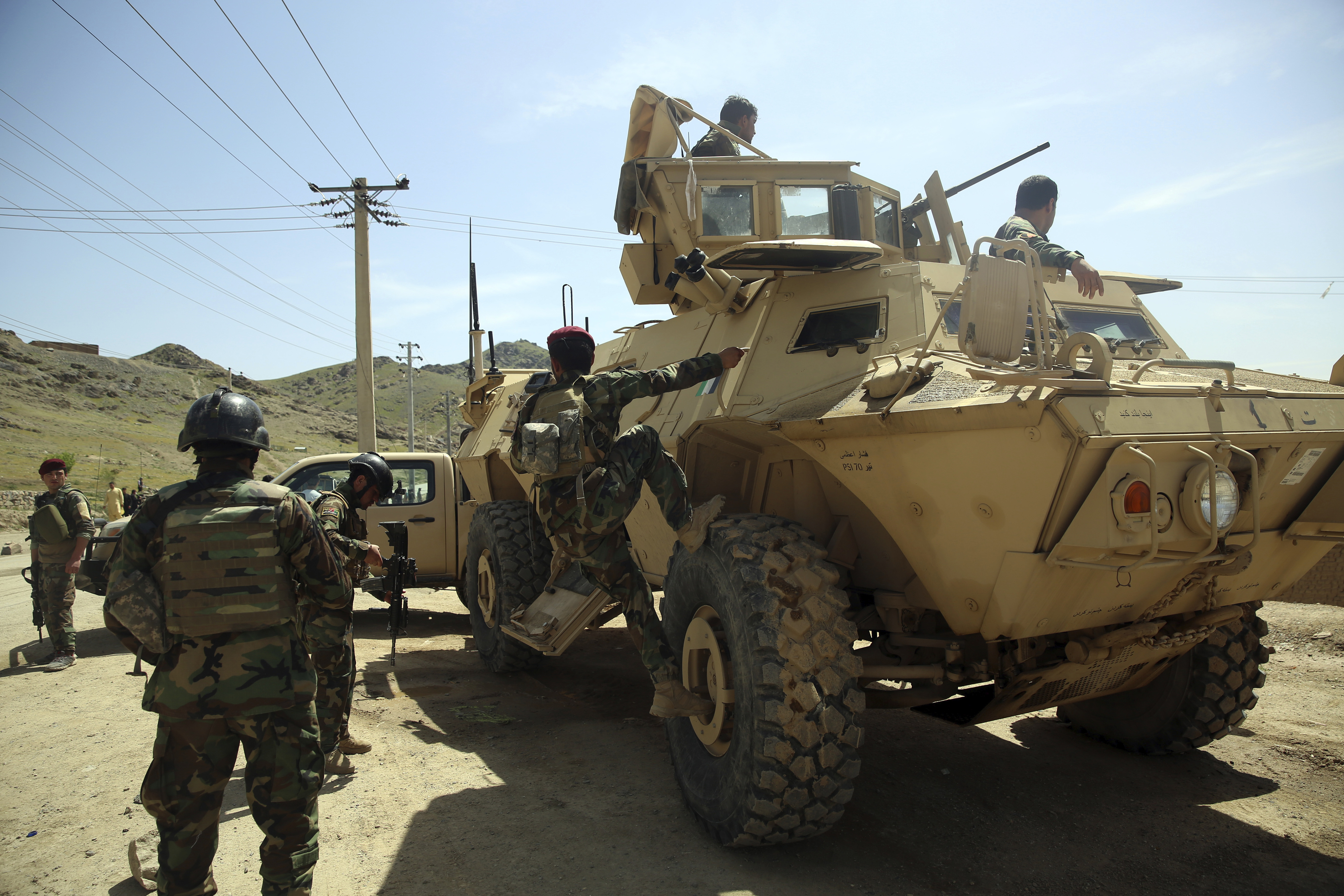
Afghan special forces stand guard at the site of a suicide bomber attack on the outskirts of Kabul, Afghanistan, Wednesday, April 29, 2020. /AP
A suicide bombing in Kabul province not far from Afghanistan's capital killed three people and wounded 15 on Wednesday, the Ministry of Interior said.
"A suicide bomber detonated his explosives among civilians in Reshkhor area of Char Asiab district of Kabul on Wednesday morning," Ministry of Interior spokesman Tariq Arian said in a statement, referring to the district which is about 11 kilometers from Kabul city.
It was not immediately clear who was responsible for the blast, which came during the Islamic holy month of Ramadan, and as the coronavirus pandemic and U.S. led efforts to broker peace talks between the insurgent Taliban and the Afghan government have left many calling for a ceasefire and reduction in violence.

A man wearing a mask to protect him from coronavirus walks past a wall painted with images of U.S. Special Representative for Afghanistan Reconciliation Zalmay Khalilzad and Taliban co-founder Mullah Abdul Ghani Baradar, in Kabul, Afghanistan, April 8, 2020. /AFP
Peace process risks collapse
Two months after the U.S. and the Taliban signed a deal Washington heralded as the way to end Afghanistan's war, violence is spiraling out of control and experts say a fragile peace process risks collapse.
Dozens of Afghan security forces and Taliban fighters have been dying almost daily with civilian casualties rising across the country as both sides ramp up operations.
The insurgents have been emboldened by a deal that gave them many concessions in exchange for few commitments, fueling their surge of attacks in recent weeks, analysts say.
The timing could hardly be worse, as Afghanistan also grapples with a coronavirus epidemic.
"The peace process isn't dead yet, but it is on life support", said Ashley Jackson, a researcher at the Overseas Development Institute.
"It's anyone's guess how much time we have before it does begin to irrevocably fall apart."
An Afghan official said that on average, the Taliban have launched 55 attacks each day since the deal signing in Doha on February 29, while a UN agency reported that Afghan forces are causing more child deaths than the insurgents – mainly from air strikes and shelling.
Analysts say the bloodshed was predictable – or inevitable – given the wording of the deal and the sweeping concessions the U.S. granted its foe of more than 18 years.
Titled the "Agreement for Bringing Peace to Afghanistan," the accord promises a full withdrawal of the U.S. and foreign forces without the Taliban committing to a ceasefire or even any reduction in violence.
President Donald Trump has repeatedly said he wants American troops home quickly, and the Taliban realize that as long as they don't hit American or foreign troops, there are few consequences for continued attacks.
The insurgents see the agreement as "an end-of-occupation deal", said Bill Roggio, a senior fellow at the Foundation for Defense of Democracies think tank.
"The U.S. wants out of Afghanistan and it has ceded to all the Taliban demands."
Nishank Motwani, a Kabul-based strategy and security expert, said the Doha agreement had emboldened and legitimized the Taliban, who think they have won the war so have little incentive to stop fighting.
"The Taliban fundamentally believe that victory is theirs," Motwani said.
(With input from agencies)