- Home
- China
- World
- Europe
- Politics
- Business
- Opinions
- Tech & Sci
- Culture
- Sports
- Travel
- Nature
- Picture
- Video
- Live
- TV
- Specials


Share







Copied
NATO's US-led mission in Afghanistan is withholding key information about Taliban attacks, a U.S. government watchdog said Friday, potentially making insights into the war harder just as the Pentagon slashes its troop presence.
The Resolute Support (RS) mission previously disclosed data on "enemy-initiated attacks", one of the few remaining public metrics of the conflict and the strength of the Taliban and other insurgent groups.
In its quarterly report released Friday, the office of the Special Inspector General for Afghanistan Reconstruction (SIGAR) said RS had stopped providing numbers.
Instead, RS gave only a short statement noting the Taliban had stepped up attacks in March, immediately after the signing of a U.S.-Taliban deal that was supposed to pave the way to peace talks.
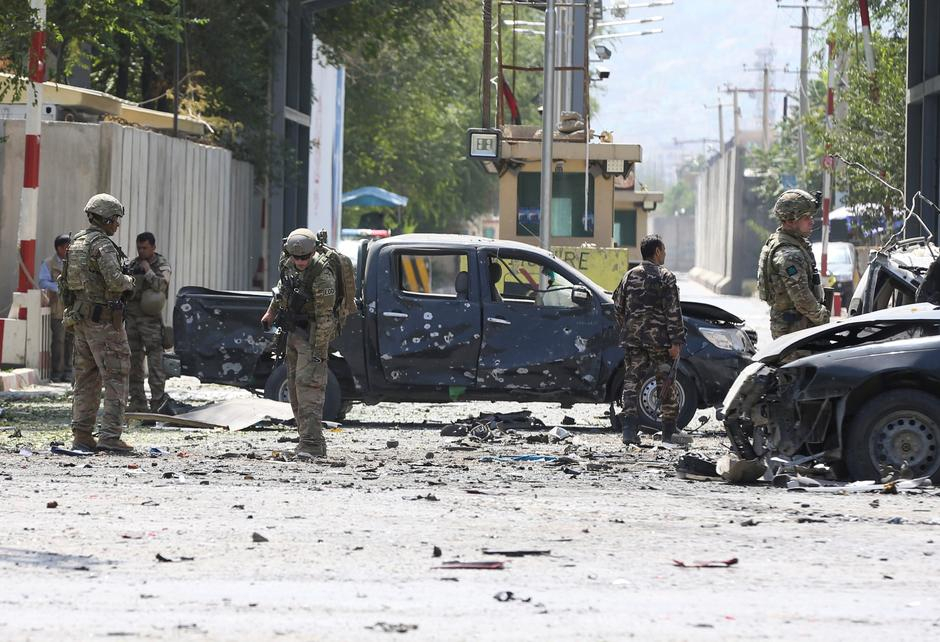
Foreign troops with the NATO-led Resolute Support Mission investigate the site of a suicide attack in Kabul, Afghanistan September 5, 2019. /Reuters
"Between March 1 and 31, the Taliban refrained from attacks against coalition forces; however they increased attacks against (Afghan forces) to levels above seasonal norms," RS said, according to the report.
Under the deal, U.S. and other foreign forces will quit Afghanistan next year if the Taliban start peace talks with Kabul and stick to various security commitments.
In the week ahead of the February 29 deal signing in Doha, violence plummeted during a partial truce and US officials hoped attacks would stay low.
Instead, the Taliban immediately resumed assaults on Afghan forces.
During the deal negotiations, the Taliban had agreed to stop hitting foreign troops, but there was no such prohibition on targeting Afghan forces.
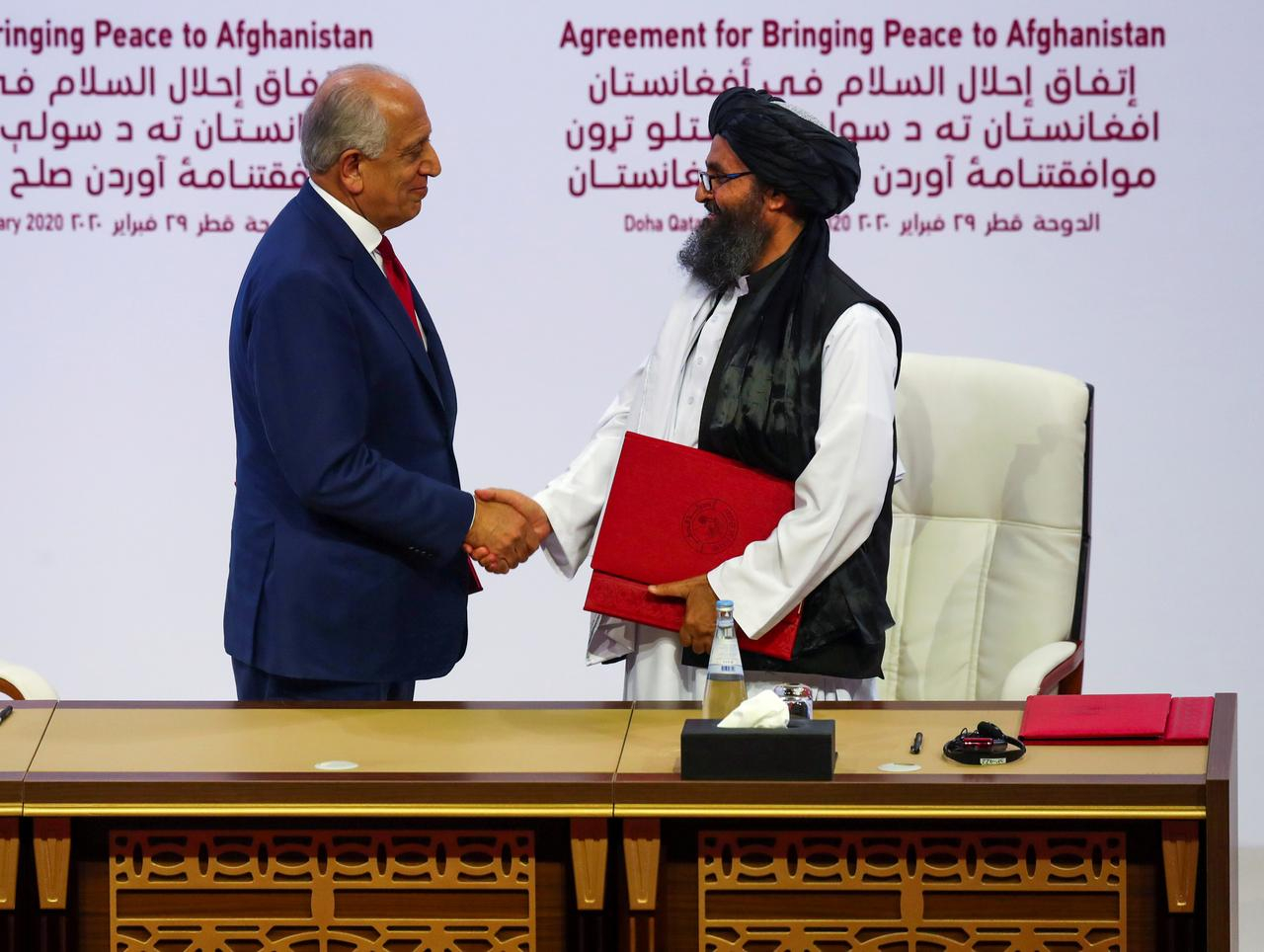
Mullah Abdul Ghani Baradar, the leader of the Taliban delegation, and Zalmay Khalilzad, U.S. envoy for peace in Afghanistan, shake hands after signing an agreement at a ceremony between members of Afghanistan's Taliban and the U.S. in Doha, Qatar, February 29, 2020. /Reuters
'Unacceptably high' violence
RS told SIGAR that it chose to restrict data because enemy attacks were now a "critical part" of discussions "regarding ongoing political negotiations between the U.S. and the Taliban."
SIGAR noted the Pentagon said it might release the information in the future.
A Pentagon spokesman justified the decision to withhold data, citing ongoing talks.
"So the decision was that we're working toward a better solution and a better place for Afghanistan and that the sharing of that information would not... move the ball forward," the spokesman, Jonathan Hoffman, told reporters.
"The level of violence by the Taliban is unacceptably high," he said, adding that it was not conducive to a diplomatic solution.
According to data seen by Reuters, the Taliban have mounted more than 4,500 attacks in Afghanistan, marking a sharp escalation in violence, in the 45 days since signing a deal with the United States that paves the way for a U.S. troop drawdown.
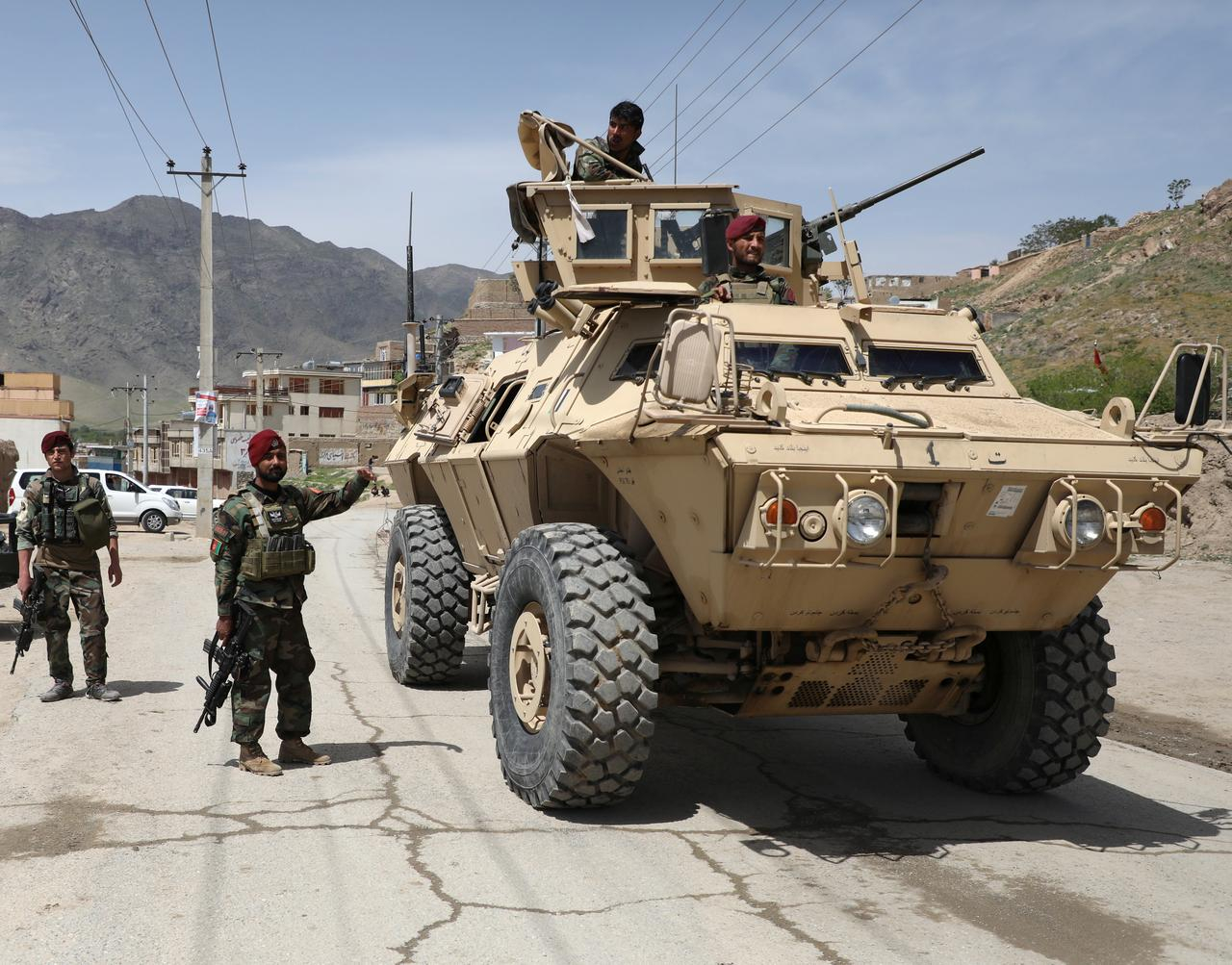
Afghan National Army soldiers keep watch at the site of a suicide attack in Kabul, Afghanistan April 29, 2020. /Reuters
Two sets of data, one from a Western military source and one from an independent body, both show attacks by the hardline Islamist group up by more than 70 percent between March 1 and April 15 compared with the same period a year ago.
Separately, Afghan government data indicates that more than 900 Afghan local and national forces were killed during that same period, up from about 520 a year earlier.
Meanwhile, Taliban casualties fell to 610 in the period, down from roughly 1,660 a year ago, as U.S. and Afghan forces have reduced the number of offensive attacks and air strikes following the U.S.-Taliban accord.
Senior Western, Afghan and independent officials tracking the ground situation say that the increase in attacks shows the insurgent group's wilful disregard of a pledge to reduce violence made as part of the accord signed in late February.
The violence in the war-damaged nation has coincided with the rapid spread of the coronavirus infection.
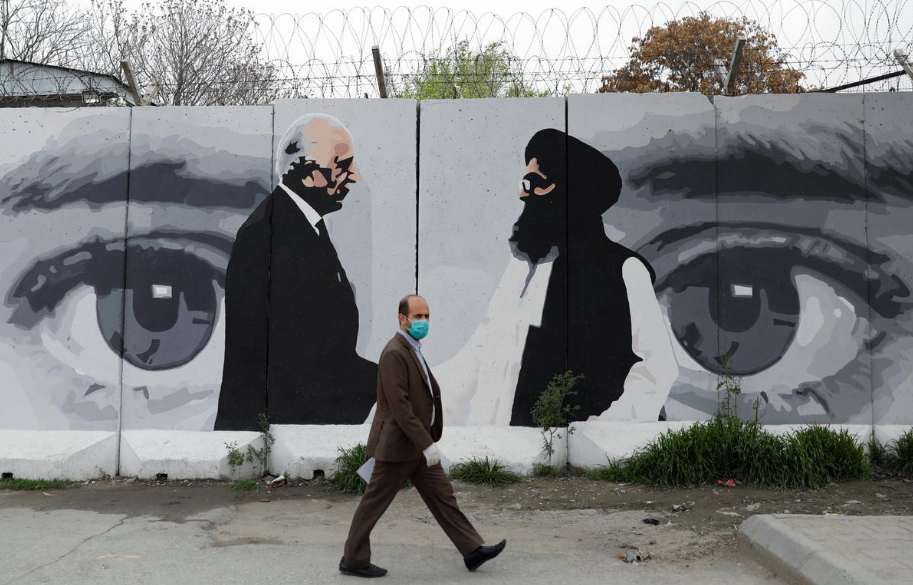
An Afghan man wearing a protective face mask walks past a wall painted with photo of Zalmay Khalilzad, U.S. envoy for peace in Afghanistan, and Mullah Abdul Ghani Baradar, the leader of the Taliban delegation, in Kabul, Afghanistan, April 13, 2020. /Reuters
The four provinces that have reported the highest number of cases of the infection have also been the ones hit the most by Taliban violence in recent weeks, according to the two data sets and at least three senior Afghan and Western officials.
As of May 1, Afghanistan has reported over 2,335 coronavirus cases and 68 deaths, but international observers believe numbers could be much higher, given the lack of testing.
(With input from Reuters, AFP)