- Home
- China
- World
- Europe
- Politics
- Business
- Opinions
- Tech & Sci
- Culture
- Sports
- Travel
- Nature
- Picture
- Video
- Live
- TV
- Specials


Share







Copied
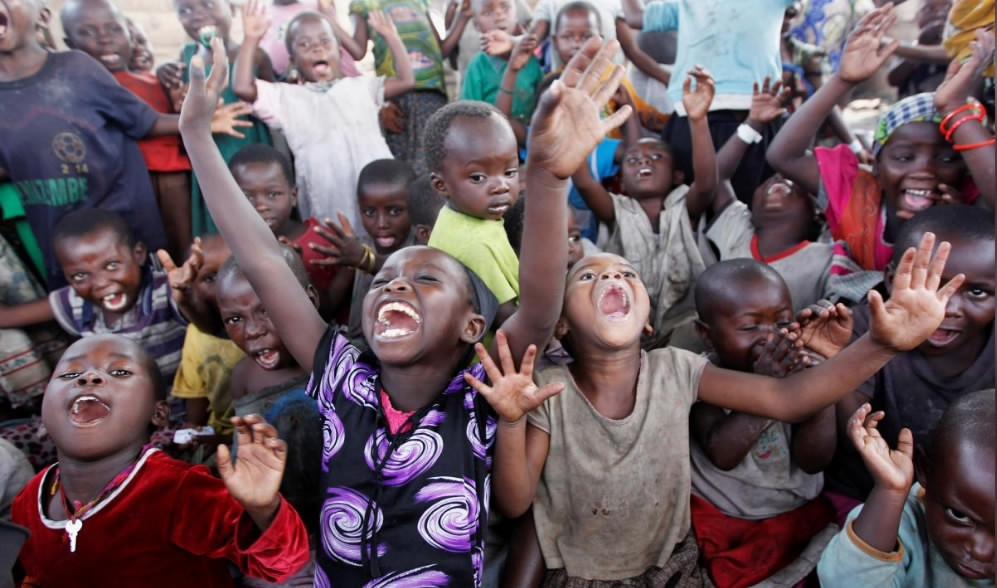
The number of children displaced within their own countries by violence and conflict reached a record 19 million in 2019, the United Nations Children's Fund (UNICEF) says in a new report.
In the report titled "Lost at Home," the UNICEF warns that the global spread of COVID-19 "threatens to further erode these children's already precarious existence."
The UN agency estimates that 45.7 million people overall were internally displaced by conflict and violence at the end of last year. That means children comprise about 41 percent of the total.
The UNICEF says the number of internally displaced has been growing annually in recent years at a rate twice that of refugees, who tend to receive greater international attention.
Three nations account for more than a third of all child displacement due to conflict and violence – Syria, the Democratic Republic of Congo and Yemen. Others that harbor more than one million children within their borders include Colombia, Sudan, Somalia, Afghanistan and Nigeria.
In many countries, these children lack regular access to basic services. "This effectively limits or denies them the right to education, health, protection and non-discrimination," the report says.
COVID-19 is making their plight worse. "When new crises emerge, like the COVID-19 pandemic, these children are especially vulnerable," UNICEF Executive Director Henrietta Fore said in a news release accompanying the report.
"It is essential that Governments and humanitarian partners work together to keep them safe, healthy, learning and protected."
Natural disasters also lead to displacement
Though children have so far been spared the worst direct effects of COVID-19, the UNICEF says the socioeconomic impacts for them stand to be enormous, with those displaced feeling the losses more intensely.
In addition, they inhabit the type of crowded living spaces and unhealthy environments that scientists say encourage the spread of the disease.
Weather-related events like flooding and storms actually accounted for more new displacements than conflict and violence in 2019.
The trend has been seen in the Caribbean for several years. In the region's 29 "small island developing states," storms and flooding led to 3.4 million displacements between 2014 and 2018 – including 761,000 of children – six times as many as over the preceding five years, the report notes.
It is a pattern that experts have linked to the climate crisis.
The UNICEF suggests we should expect more of the same in the future.
"Looking ahead, climate-related resource scarcity and conflicts will likely continue to trigger massive – and extensive – displacement," it says.
(Top photo: Congolese children play at a child friendly space for internally displaced people near Goma, eastern Democratic Republic of Congo, August 7, 2013. The country still has one of the highest rates of child displacement. /Reuters