- Home
- China
- World
- Europe
- Politics
- Business
- Opinions
- Tech & Sci
- Culture
- Sports
- Travel
- Nature
- Picture
- Video
- Live
- TV
- Specials


Share







Copied
More than half the states in the U.S. have started to reopen their economies in some meaningful way or have plans to do so as soon as Thursday, raising public health concerns over a new surge in infections.
Meanwhile, the Centers for Disease Control and Prevention (CDC) released long-delayed guidance that schools, businesses and other organizations can use as states reopen from coronavirus shutdowns, but was reported to be insufficient and heavily-edited.
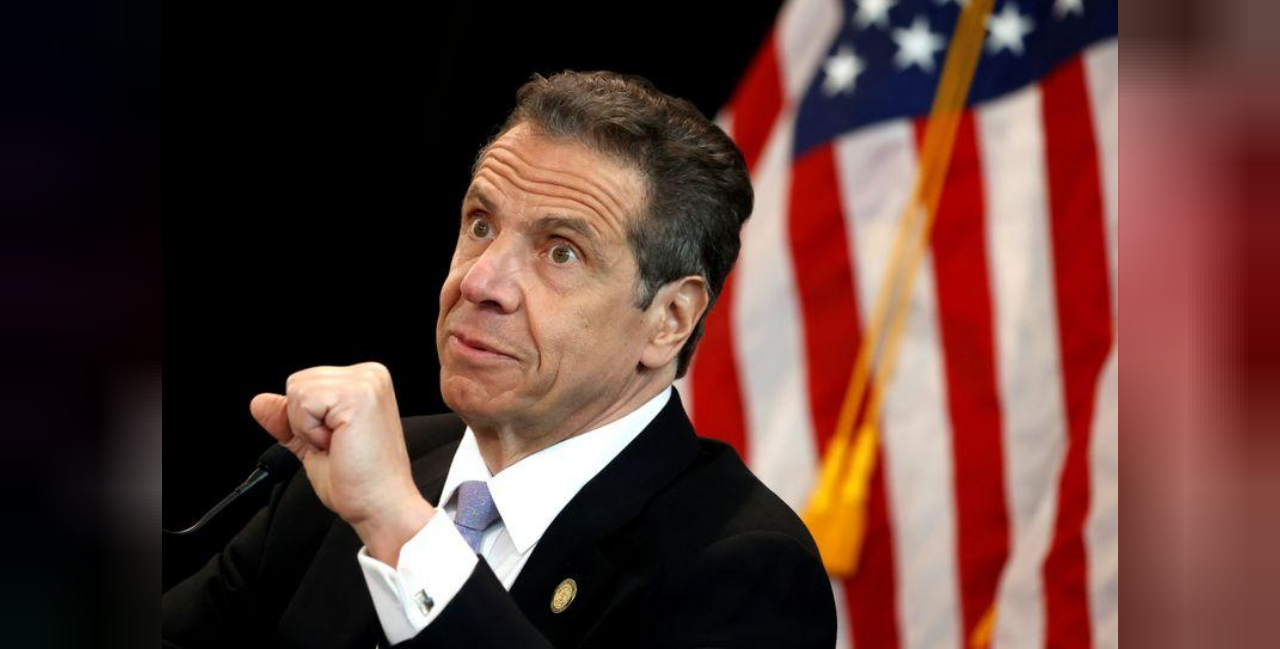
New York Governor Andrew Cuomo holds his daily briefing at New York Medical College during the coronavirus outbreak in Valhalla, New York, U.S., May 7, 2020. /Reuters
America's reopening has begun in force, just weeks after the coronavirus put most of the country on lockdown. New York Governor Andrew Cuomo also said on Thursday that a central area of his state was now ready to open, bringing to five the number of regions that can take the first steps to reopen some businesses, when a statewide stay-at-home order lapses on Friday.
The newly published guidance released by CDC is directed to schools, workplaces, camps, childcare centers, mass transit systems, bars, and restaurants. The CDC originally authored a document for churches and other religious facilities, but that wasn't published Thursday. The agency declined to say why.
Early versions of the documents included detailed information for churches wanting to restart in-person services, with suggestions including maintaining a distance between parishioners and limiting the size of gatherings. The faith-related guidance was taken out after the White House raised concerns about the recommended restrictions, according to an AP source.
On Thursday, a Trump administration official also speaking on condition of anonymity said there were concerns about the propriety of the government making specific dictates to places of worship.
President Donald Trump has championed religious freedom as a way to connect with conservative evangelical voters and has shown eagerness for in-person religious services to restart. He consulted interfaith leaders last month for suggestions on how to reopen and said on a recent Fox News town hall that "we have to get our people back to churches, and we're going to start doing it soon."
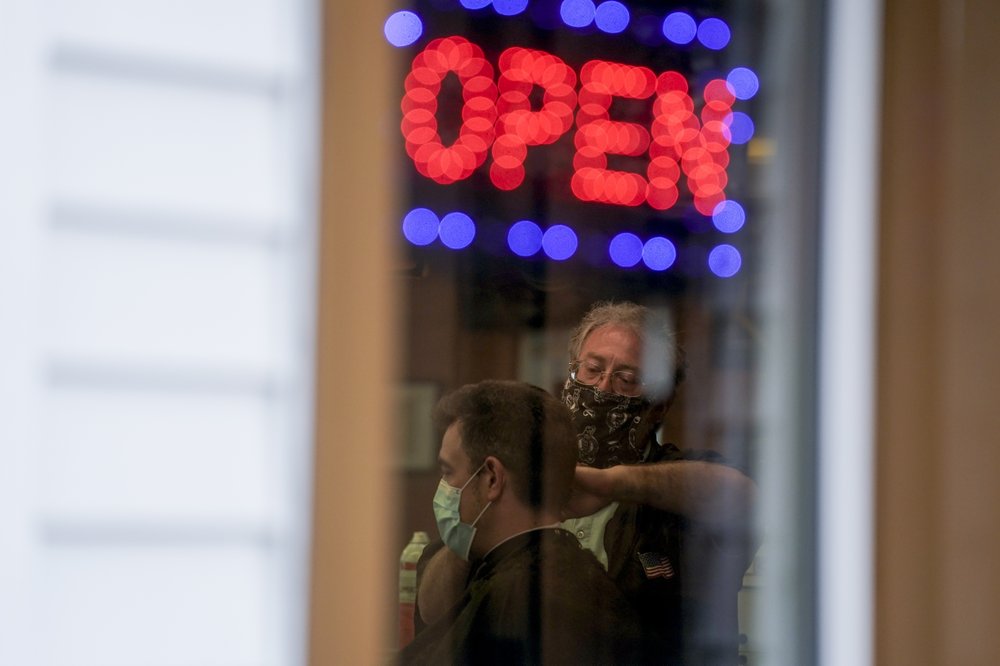
Owner Paul Furrer cuts the hair of Jeff Jones at Rick's Barber Shop, May 14, 2020, in Waukesha, Wisconsin. /AP
The published guidance is only six-pages long. The CDC had prepared more extensive guidance — about 57 pages — that has not been published.
That longer document, which AP obtained, would give different organizations specifics about how to reopen while still limiting the spread of the virus, including spacing workers or students six feet apart and closing break rooms and cafeterias to limit gatherings. Many of the suggestions already appear on federal websites but they haven't been presented as reopening advice.
Some health experts and politicians have been pushing for the CDC to release as much guidance as possible to help businesses and organizations decide how to proceed.
"They want to be able to tell their employees the guidance of the federal government," Dr. Tom Inglesby, director of the Center for Health Security at Johns Hopkins University, said at a congressional hearing Wednesday. "They want to be able to tell their customers, 'We've done everything that's been asked of us.'"
The guidance relates to another document released by the Trump administration on April 17. That phased-in reopening plan broadly outlines how to move away from stay-at-home orders, school closures and other measures designed to stop the spread of the new coronavirus that has caused more than 1.3 million reported U.S. illnesses and more than 80,000 deaths.

Documents that U.S. health officials have released as part of some long-delayed specific guidance that schools, businesses, and other organizations can use as states reopen from coronavirus shutdowns are photographed on May 14, 2020. /AP
U.S. Senator Charles Schumer, a New York Democrat, on Wednesday offered a resolution — blocked by Republicans — to encourage the release of all the documents.
"America needs and must have the candid guidance of our best scientists unfiltered, unedited, uncensored by president Trump or his political minions. The CDC report on reopening the country is an important piece of that guidance," Schumer said.
The decision tools have been undergoing review by different federal officials, and they've been edited from earlier versions.
For example, an earlier draft of the one-page document on camps obtained by AP asked organizers if their program would limit attendance to people who live nearby. If the answer was no, the camp was advised not to reopen. That local attendance limitation was dropped and is not in Thursday's version.
In that document and others, language has been dropped that asked if the organization is in a community that is still requiring significant disease mitigation. If the answer was yes, the organization was advised not to reopen.
Many of the changes provide more wiggle room than what was in the initial versions. For example, in the document for people who run child care centers, the older version obtained by AP stated that CDC recommended "checking for signs and symptoms of children and staff." The new guidelines add "as feasible" to the end.
Similar new language about feasibility appears in sections about promoting healthy hygiene, such as hand washing and employees wearing cloth masks.
(With input from agencies)