- Home
- China
- World
- Europe
- Politics
- Business
- Opinions
- Tech & Sci
- Culture
- Sports
- Travel
- Nature
- Picture
- Video
- Live
- TV
- Specials


Share







Copied
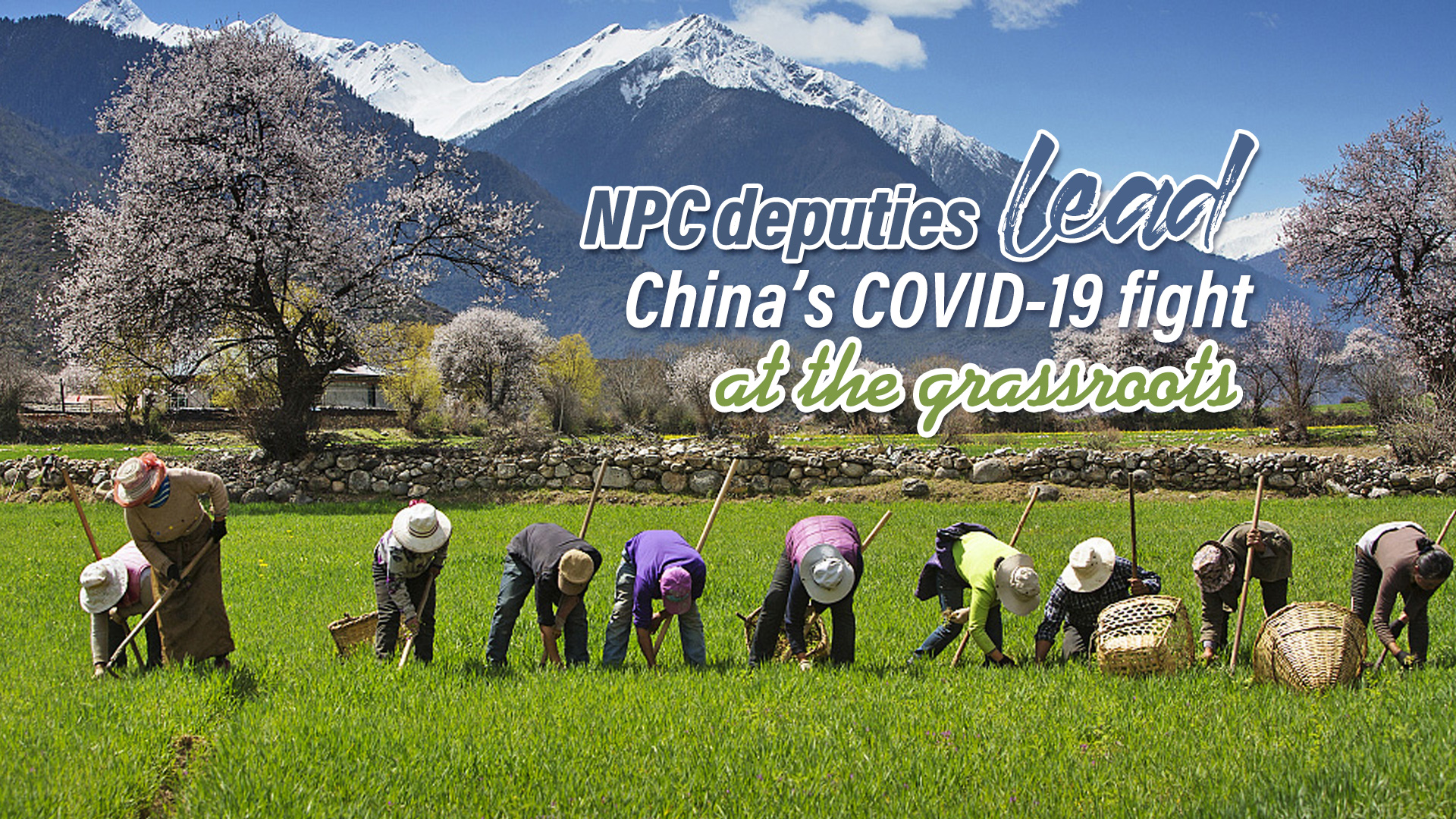
National People's Congress (NPC) deputies are on the move in villages around China, implementing epidemic prevention and control measures in the fight against COVID-19.
Shen Biao, an NPC deputy and Party chief of Beiguan Village, nestled on the outskirts of Shanghai, is responsible for over 2,400 registered villagers and 8,000 migrant workers employed by 136 enterprises in the village. Since the start of the COVID-19 outbreak, he has been leading a team to ramp up efforts to ward off infection from the novel coronavirus.
The village acted in its response to the outbreak. Shen led the grassroots organization to run road checkpoints with volunteers and village cadres around the clock and an emergency response mechanism was at once in place. The vilage was geared up to keep the virus out.
Thanks to the strict sealed-off measures taken, no suspected or confirmed COVID-19 case has been reported in the village.
As COVID-19 cases plummet in China, Beiguan Village has been meticulously resuming work while keeping the virus resurgence at bay. Village cadres in charge of enterprise services have been ending their days at midnight for nearly two months. They helped with enterprise registration, business license approval and qualification accreditation. All of its enterprises hit by the epidemic have resumed operations.

An employee wearing a face mask works on a production line manufacturing socks for export at a factory in Deqing County, Huzhou City, Zhejiang Province, east China. /Reuters
For Shen, keeping an eye on the health of villagers is an arduous task. But as an NPC deputy, he said it is his responsibility and commitment to them.
Shen is by no means alone in powering up China's grassroots coronavirus fight. Gesang Zhuoga has served as an NPC deputy three consecutive times and is the Party chief of Tamar Village in Lhasa, capital of southwest China's Tibet Autonomous Region. An access point to Lhasa along National Highway 318, the village has seen a stream of people passing through as they return to work after the virus situation improved. It obviously is a hard job to curb the spread of the virus while making efforts to resume business as the mass movement of returing workers posed a high risk to worsen the situation.
"In the past two months, we adopted grid-based management, conducting daily quarantine checks, registering the information of those who returned from Tibet, spreading quarantine measures and arranging face masks, disinfectant and daily necessities, especially for pregnant women and the elderly," said Gesang, noting that on her busiest day, she worked all night.
Besides, Gesang, other village cadres and volunteers are often multitasking, ensuring villagers of the food and medicine needed and addressing their difficulties during home quarantine.
Continuous work has created a peaceful scene on the plateau. The situation in rural areas is increasingly improving since epidemic control and prevention measures were effectively in place.
Now spring plowing is underway in an orderly manner and poverty alleviation efforts are all being made on schedule. However, Gesang couldn't keep from choking up when asked to recall those hard moments during the epidemic.
These NPC deputies, village cadres and volunteers may not get well prepared for such a major health crisis, yet they did whatever they could in safeguarding the residents in the village.