- Home
- China
- World
- Europe
- Politics
- Business
- Opinions
- Tech & Sci
- Culture
- Sports
- Travel
- Nature
- Picture
- Video
- Live
- TV
- Specials


Share







Copied
At the media center for the annual session of China's national legislature, the supply of hand sanitizers and face masks is a constant reminder of why the event was delayed nearly three months. The instructions on social distancing are strict and detailed – down to exactly how far two chairs must be apart.
Anything that could be done to ensure the press conference zone is free of the virus that has killed hundreds of thousands of people worldwide has been done. Yet the virus is ever-present in discussions, deliberations and the deluge of questions reporters are asking.
When I was halfway through taking stock of the precautions in place, a flashback hit me.
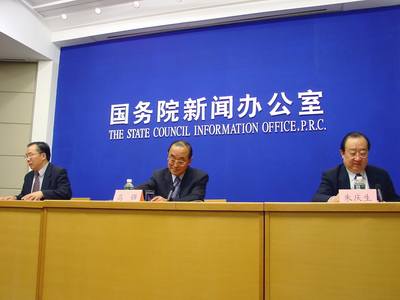
Gao Qiang (C) and Zhu Qingsheng (R), both vice ministers of China's Ministry of Public Health, brief the press amid the peak of SARS outbreak in Beijing, April 20, 2003. /People's Daily
On April 20, 2003, amid the SARS outbreak, the illness that first alerted Chinese people to the notorious coronavirus family, two vice ministers of China's ministry of public health were sent to brief the press. On the same day, the ministry's head, together with Beijing's mayor, was sacked over their poor handling of the situation.
"Is China concealing the real number of confirmed cases?" The question, fired by an American reporter, was among many on the day about the mysterious pneumonia, later known to have been caused by a coronavirus strain originating from bats.
"Not as far as I know," replied then Vice Minister Gao Qiang. "We have dispatched inspectors nationwide and one of their missions is to verify the statistics."
I was a high school student stuck at home in Beijing when I read the transcript of the Q&A session online. SARS hit the Chinese capital badly. Schools were shut. Students were asked to stay indoors and watch sketchy pre-recorded classes on TV. Equally fuzzy was the information we could get about the disease at the onset of the outbreak – a pathogen was traveling from the south and killing people along the way.
Before the press conference, rumors had been swirling. Nobody seemed to know for sure how to protect themselves from what. News emerged of panicked people stocking up on vinegar, thinking that boiling the liquid and fumigating every room in the house could kill the virus. The absence of an official death toll left a vacuum that was filled with hearsay-induced imagination.
Then came the April 20 press conference when figures of confirmed cases in Beijing were announced for the first time, along with a promise by Gao that the ministry would keep informing the general public of the epidemic's development.
Another 60 media briefings and eight press conferences followed. Panic was soothed gradually as people came to know more about what the threat was and how it could be dealt with. By mid-June, the last patient was discharged from the hospital.
The April 20 press conference was later hailed as a watershed moment not only for the country's battle against SARS, but also for transparent governance in China. The consequences of withholding information at a time of crisis were laid bare. Three months after SARS was brought under control, the first-ever training course for government spokespeople was set up by China's State Council Information Office. Before long, guidelines on freedom of information were laid down for the governments.
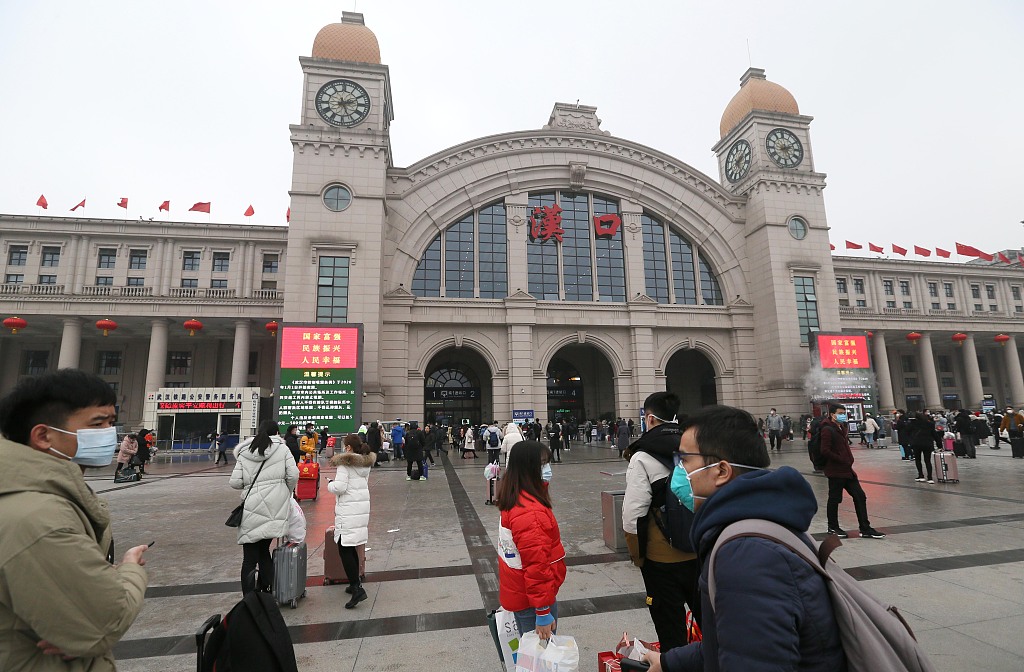
Wuhan's Hankou railway station, January 22, 2020, a day before the entire city was placed on lockdown because of the new coronavirus outbreak. /CFP
Few could have foreseen in 2003 the importance of this legacy 17 years later when another member of the coronavirus family reared its ugly head in the shape of COVID-19, a far more infectious and therefore more dangerous disease. The situation was deteriorating fast in late January ahead of the national Spring Festival holiday, which prompted quick government action to get important information across to the public.
On January 23, 2020, the Chinese Lunar New Year, the first press conference by the authority in Hubei Province was broadcast live to the rest of the world from its capital Wuhan, where the virus was first reported, triggering what would later become a three-month lockdown.
From the media briefings of the following days, the messages repeated were simple but urgent: the disease can spread among humans, don face masks, stay at home and observe social distancing … The country was rapidly mobilized.
The anxiety rippling across Chinese society didn't blow over overnight. But as experience has shown, the sooner the public is informed, the quicker people can channel their panic-driven energy to the right use. With a population of 1.4 billion, China has kept the total death toll under 5,000.
After three months and hundreds of press conferences on the deadly disease, the victory over the novel coronavirus finally appeared to be within reach. Yet as I ready myself to cover more government-public communications, I can't help myself but to think about what could have happened to China in 2020 had the lesson from the press conference 17 years ago gone unnoticed. The repercussions of slow and confusing communication would be dire, as evidenced by what's happening in the U.S. at the moment.
The lives we failed to rescue from the grip of SARS were not lost for nothing.

Because of COVID-19, this year's Two Sessions have been cut short. There are also fewer press conferences by lawmakers and government officials. However, in such a crisis, it's all the more important that policymakers seek more ways to address the public and explain their decisions. A laid-back attitude could cost dearly. We've seen that the online format of officials meeting the press in virtual briefings works rather well. It's new but involves no rocket science. And I see little reason why we cannot continue with it in the post-pandemic era.
Could the response be quicker from a public communication point of view to address the crisis? It always could. Information breeds confidence, silence breeds fear – 17 years ago, China learned this lesson the hard way. For a country to soldier through a crisis, its people must know that their government trusts them, and vice versa. At the heart of that mutual trust lies open and transparent communication.
(Dean Yang works at CGTN's social media desk.)