- Home
- China
- World
- Europe
- Politics
- Business
- Opinions
- Tech & Sci
- Culture
- Sports
- Travel
- Nature
- Picture
- Video
- Live
- TV
- Specials


Share







Copied
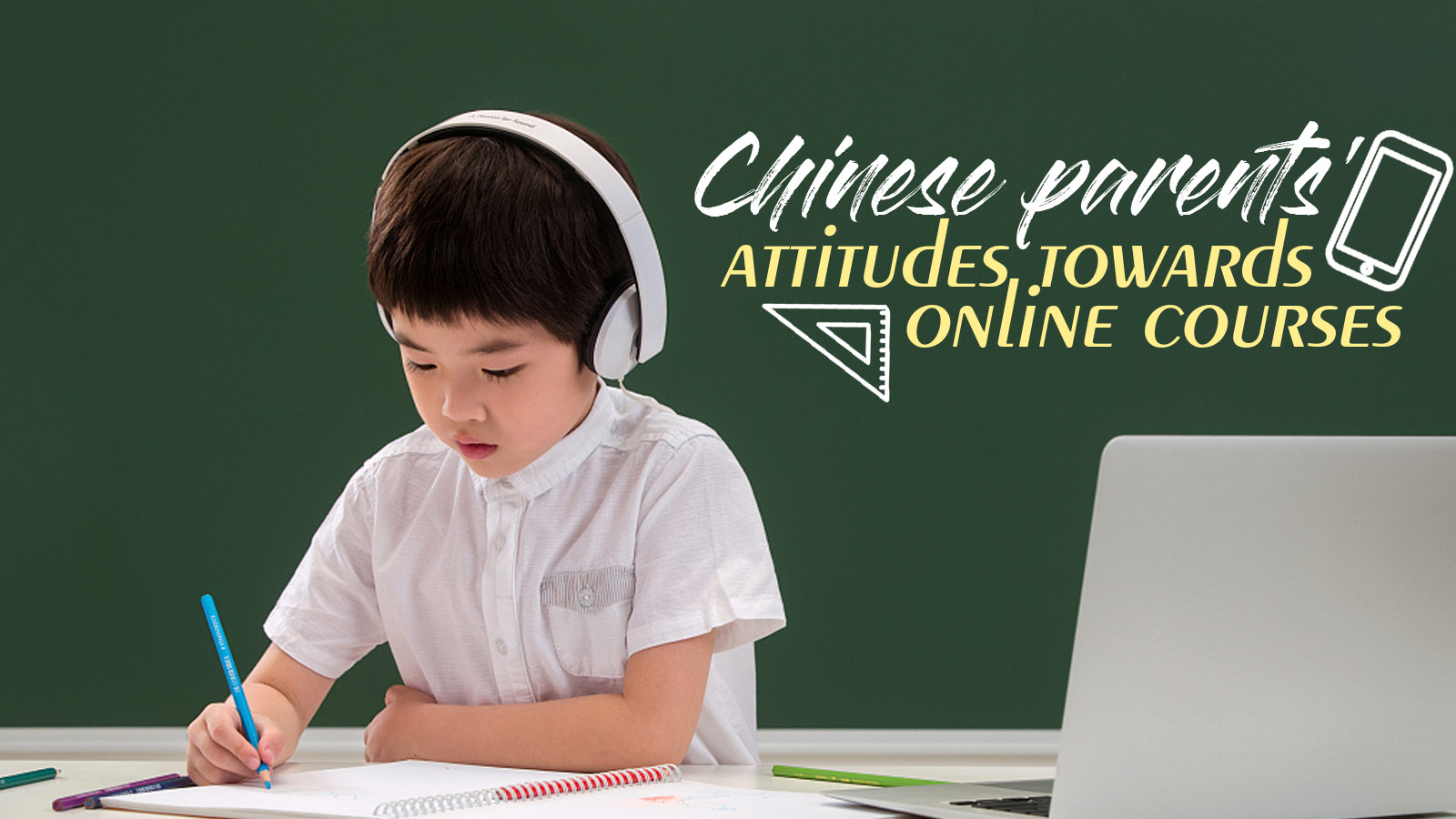
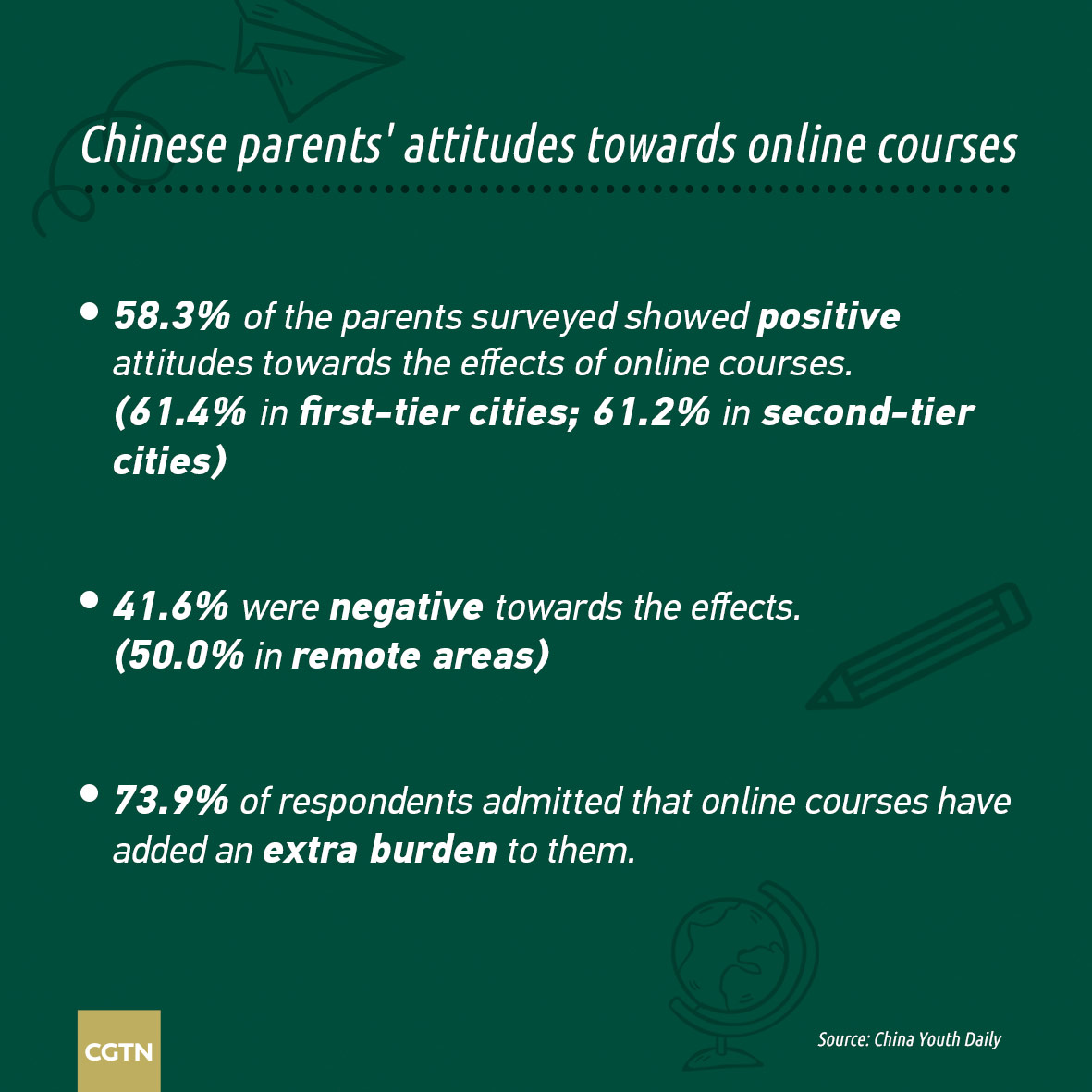
Around 58.3 percent of the Chinese parents of middle and primary school students showed a positive attitude towards the effects of online courses provided by the schools this semester during the novel coronavirus pandemic, according to a survey conducted by the China Youth Daily.
It also showed that 61.4 percent of the parents living in first-tier cities were satisfied with online courses, reaching the highest rate, followed by that of parents in the second-tier cities, while about half of those living in counties, villages and other remote areas felt dissatisfied.
Nearly 73.9 percent of the respondents admitted that it has added an extra burden to them as they have to spend more time assisting their children and following up on them, the survey has found.
"Most of the children's courses are recorded videos instead of livestreams, so the students have no interaction with the teachers," said a parent from Beijing, adding that parents need to keep a close watch on their children to ensure they stay focused during classes.
According to the report, nearly 70.5 percent of the respondents complained that their children were easily distracted in online courses recorded in advance, with 92.8 percent ascribing it to the lack of interaction they would have had in a classroom.
Less interactive and effective
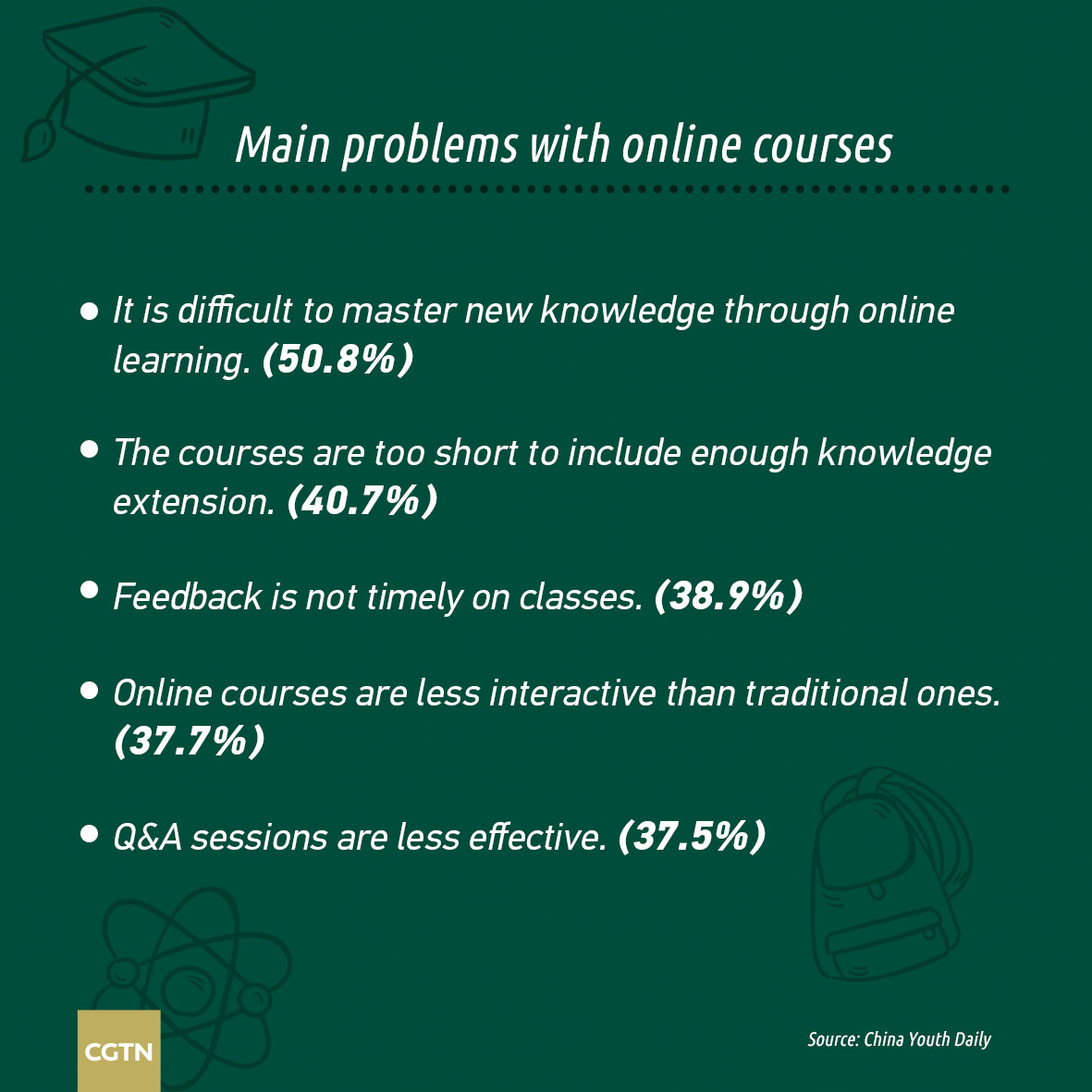
Regarding the main problems with online courses, 50.8 percent of the surveyed parents found it difficult to master new knowledge through online learning, and 40.7 percent believed that the courses are too short to include enough knowledge.
They also pointed out that feedback is not timely on classes, and online courses are less interactive than traditional ones with less effective Q&A sessions.
Compared with the traditional form of teaching, it is more difficult for the teachers to monitor students' learning and react promptly due to the constraints of teaching form, network and hardware during online courses, which pose higher requirements among the teachers, according to a teacher from Shijiazhuang Middle School in central China's Hebei Province.
Noting that online courses have limitations on duration and teaching scenarios, the father of a three-grade student from Hebei said that it is difficult for the teachers to go into detailed explanations as before, leaving the parents to tutor the children in this regard.
Follow-up and feedback matter
The father believed that teachers should pay more attention to students' mastery of new knowledge. "For example, a questionnaire survey can be used to collect student feedback, so that teachers can focus on key points during Q&A sessions and improve learning," he added.
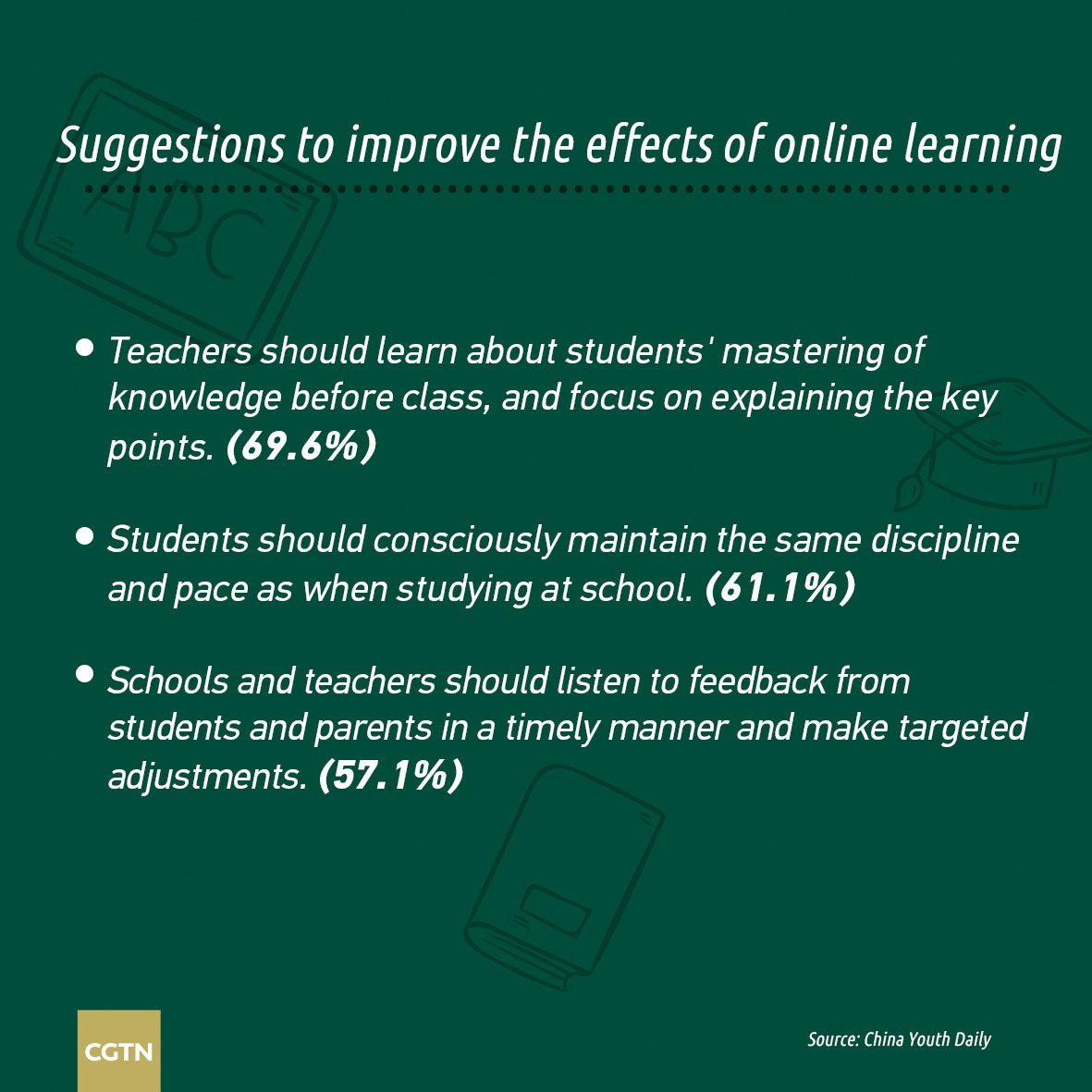
Parents suggested that teachers should understand their students' academic performances before and after a classroom scenario, and try to make recorded lessons more interesting by adjusting tones and facial expressions.
Some also pointed out that schools and teachers should listen to feedback from students and parents in a timely manner and make targeted adjustments.
The survey, jointly conducted by the China Youth & Children Research Center and wenjuan.com – China's popular online survey platform - interviewed 2,470 parents of middle and primary school students.
Among them, 76 percent are parents of primary school pupils and nearly 75 percent live in first- and second-tier cities.
Most of schools across China have gradually reopened, with Beijing having seen its non-graduating middle school students and sixth-grade pupils return to schools on June 1. Fourth- and fifth-graders in the capital city are expected to be back in class on June 8.
(Cover and infographics by Qu Bo)
Read more:
Report: Chinese students most positive toward online learning