- Home
- China
- World
- Europe
- Politics
- Business
- Opinions
- Tech & Sci
- Culture
- Sports
- Travel
- Nature
- Picture
- Video
- Live
- TV
- Specials


Share







Copied
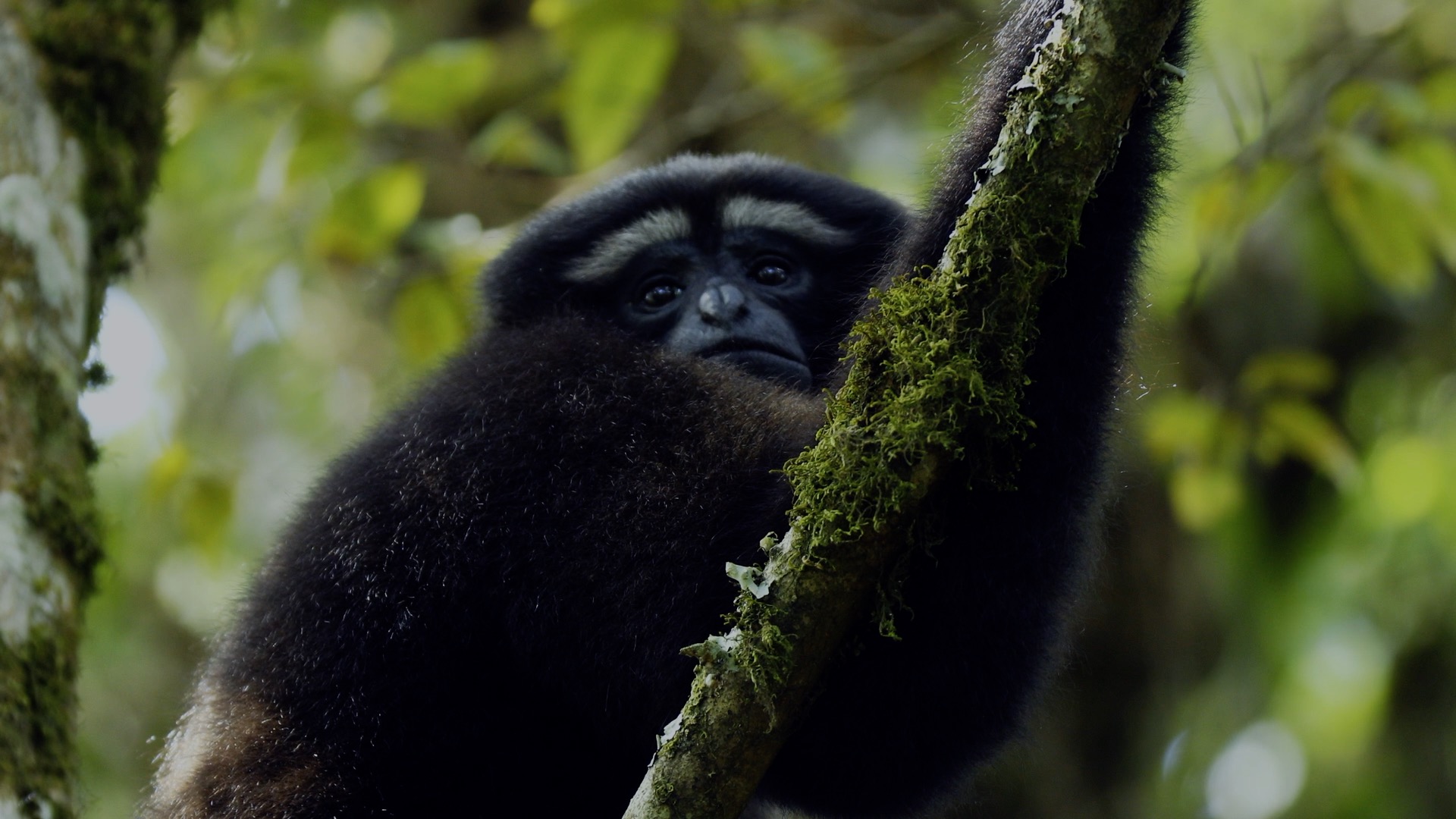
The most prominent and swift black shadow that shuttles in the lush forests of Gaoligong Mountain is that of the gibbon that is unique to this region – the Gaoligong hoolock gibbon. Also known as the "Skywalker" hoolock gibbon, it is the most endangered gibbon in the world, with less than 150 left.
It is the first gibbon species named by the Chinese, and was named after Luke Skywalker from the "Star Wars" franchise, as the scientist who found it was a big fan.
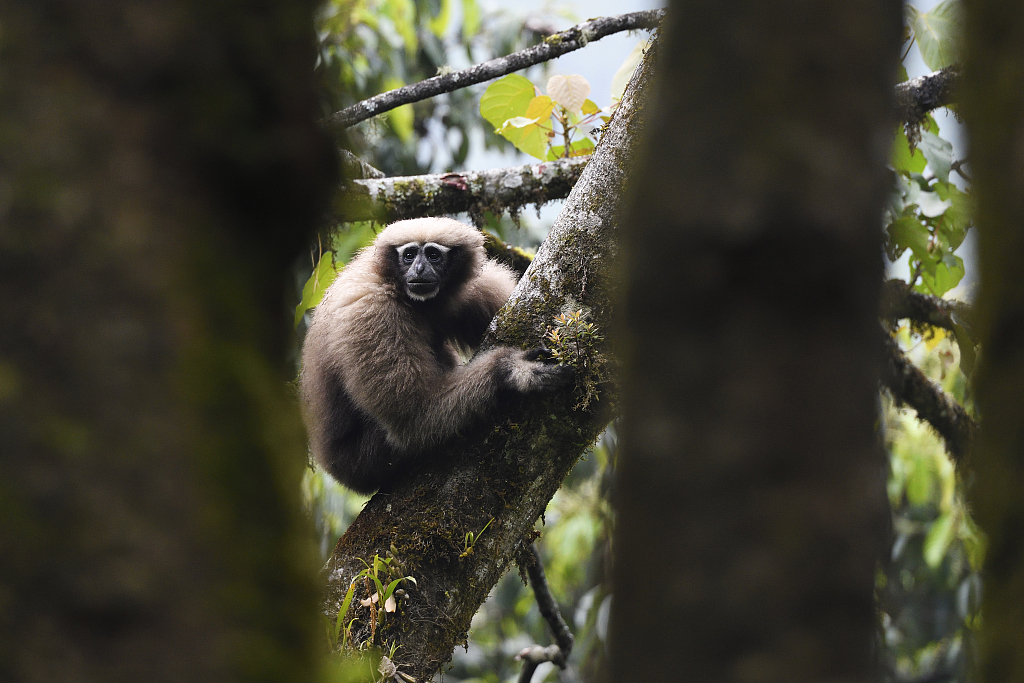
A female gibbon. /VCG
The white "brows" of the Gaoligong hoolock gibbon give it a serious look, as if it is a contemplative old man. The males and females are different in appearance: the males are covered in a black coat while the females have a light-colored coat ranging from pale gray to yellowish brown.
The Gaoligong Mountain sits on the plateau in southwestern China, and straddles the border of China and Myanmar. Every morning in summer, they "sing" loudly in the forest to mark their territory. The sound can be heard from several kilometers away. But in winter, the frequency of the calls reduces as the winter on plateau is harsh and they need to save energy to make it through.
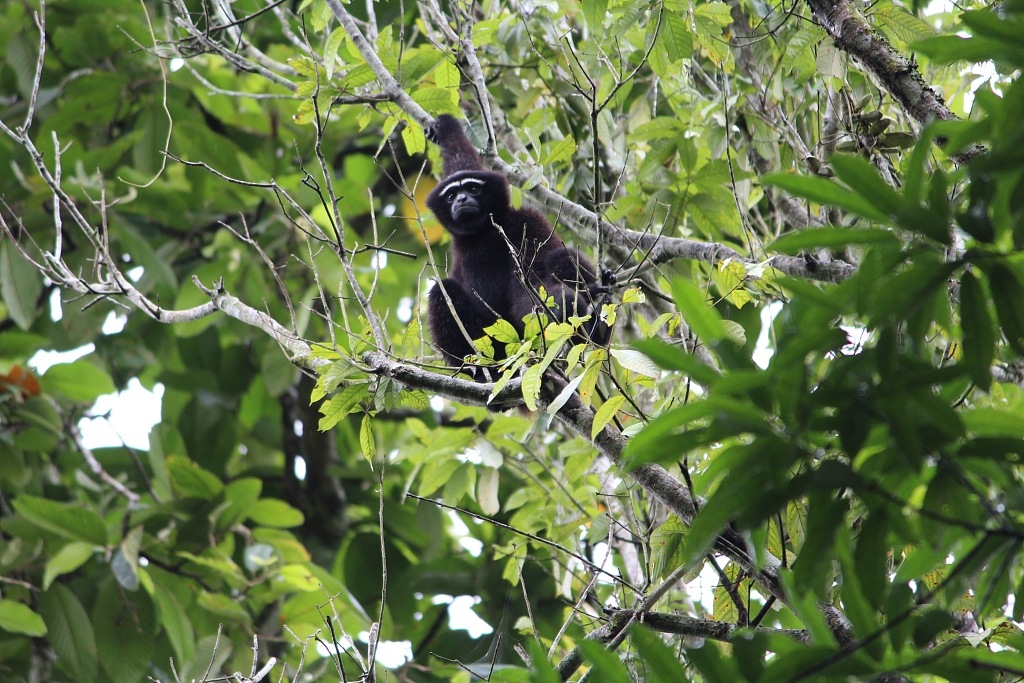
A male gibbon sitting on a branch. /VCG
The Gaoligong hoolock gibbon mating season starts in September. The males and females mate while hanging on branches with their long and strong arms. They give birth to only one child at a time, and the baby is pale white at birth.
Primates in jeopardy
As the most common primate on Earth, homo sapiens share the same order with other 512 species across 93 countries. Non-human primates are our closest relatives on this planet. They play a significant role in various types of ecosystems, from the mysterious tropical forests to the grand African savannas, their intelligence is fascinating and sheds light into studies of human society and behaviors.
However, many species of primates are on the brink of extinction. The series "Primates in jeopardy" is based on the list "World's 25 Most Endangered Primates (2018-2020)" co-published by IUCN SSC Primate Specialist Group (PSG), International Primatological Society (IPS), Global Wildlife Conservation (GWC) and Bristol Zoological Society (BZS).
This is the tenth iteration of a biennial listing of a consensus of the 25 primate species considered to be among the most endangered worldwide and the most in need of conservation measures.
(Video provided by CGTN Nature film crew, cover image designed by CGTN's Chen Yuyang.)
(If you want to contribute and have specific expertise, please contact us at nature@cgtn.com)