- Home
- China
- World
- Europe
- Politics
- Business
- Opinions
- Tech & Sci
- Culture
- Sports
- Travel
- Nature
- Picture
- Video
- Live
- TV
- Specials


Share







Copied
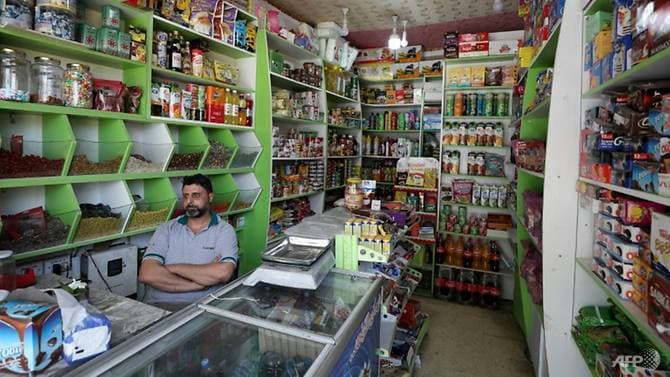
A Syrian shopkeeper waits for customers in the rebel-held town of Binnish, where the pound's rapid depreciation has put goods beyond many people's means. /AFP
Umm Ahmed and her family have survived years of war, but now the mother of five is terrified uncontrolled devaluation of the Syrian pound will prevent her from feeding her children.
"Since the war started, we've tasted all sorts of suffering," said the 39-year-old, displaced three times by fighting in the rebel stronghold of Idlib. The hunger would be among the next, she added.
The value of the Syrian pound has plummeted with dizzying speed in recent days on the informal market, sending prices skyrocketing, shuttering shops, and sparking unprecedented protests.
Umm Ahmed said she was so alarmed she was considering buying flour in bulk to start hoarding supplies.
"If the pound continues to collapse like this, we are facing a huge famine," said Umm Ahmed, who is relying on dwindling savings as her husband struggles to help with odd jobs. We sold some land we inherited and we had been living off that but I didn't think it would last long with these obscene price hikes," she said in the town of Binnish.
In Idlib, the increase in the price of bread has sparked protests against Hayat Tahrir al-Sham jihadists in charge of the region of three million people, around half displaced by the conflict and many dependent on aid.
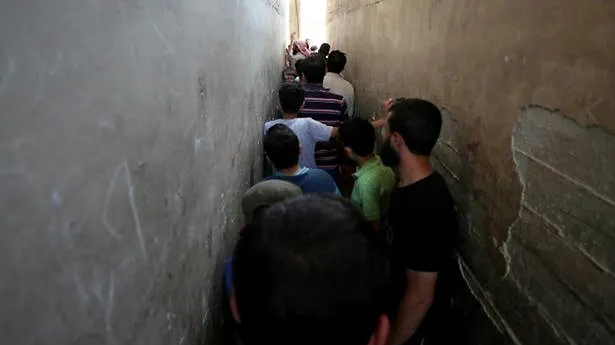
Syrians queue to buy bread in the rebel-held town of Binnish. /AFP
Syria's economy has been battered by nine years of war, compounded by a financial crisis in neighboring Lebanon, which had served as a conduit for dollars into government-held areas under international sanctions.
Down with Assad
But in recent days the value of the Syrian pound on the black market has started to tumble even faster from one record to the next.
From Saturday to Monday alone, the exchange rate soared from 2,300 to more than 3,000 pounds to the dollar, more than four times the official rate of around 700. It hovered close to 3,000 on Wednesday. Before the conflict, it was 47.
Analysts say the recent spike is likely due to worries ahead of the introduction of new U.S. sanctions from June 15, and the sudden fall from grace of tycoon and cousin of the president, Rami Makhlouf, which has set other top businessmen on edge.
Prices have risen across the country, though the Turkish lira is used in some parts of the rebel-held north.
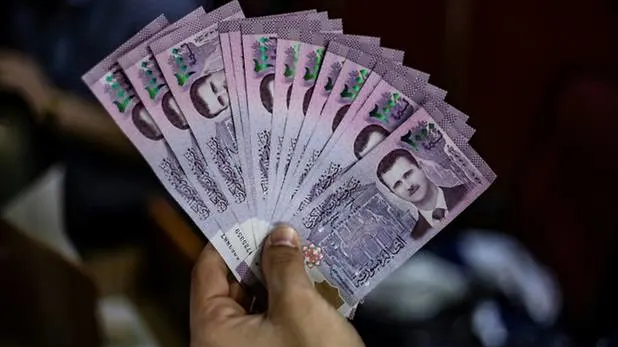
From Saturday to Monday alone, the black market value of the Syrian pound plumtted from 2,300 to more than 3,000 to the dollar, over four times the official rate of around 700. /AFP
The government has blamed the unofficial devaluation on U.S. sanctions, and "manipulation" of the exchange rate.
But the rapid deterioration has sparked unprecedented criticism in government-held areas, including in the southern city of Sweida, where dozens have demonstrated for three days since Sunday, boldly chanting against the president.
"Down with Bashar al-Assad," a video carried by a local news outlet showed them chanting.
"Revolution, freedom, social justice," they shouted in slogans reminiscent of the 2011 uprising whose repression sparked the civil war that has killed more than 380,000 people.
In the capital Damascus, one lawmaker said Sunday that part of the blame for the unofficial devaluation lay with the "wrong policies practiced by the government".
Another demanded action from the central bank, which increased the official exchange rate from 434 to 700 in March, but has since maintained that peg.
Analyst Zaki Mehchy said that, without a political solution to the war, the devaluation would likely continue, leaving the government scrambling to control the damage.
It would probably use "security and coercive measures to control speculators", and give more economic privileges to allies Russia and Iran hoping to secure desperately needed hard currency.
The regime couldn't allow further increases in prices as it is known that this would lead to uncontrollable social unrest, he said.
(With input from AFP)