- Home
- China
- World
- Europe
- Politics
- Business
- Opinions
- Tech & Sci
- Culture
- Sports
- Travel
- Nature
- Picture
- Video
- Live
- TV
- Specials


Share







Copied
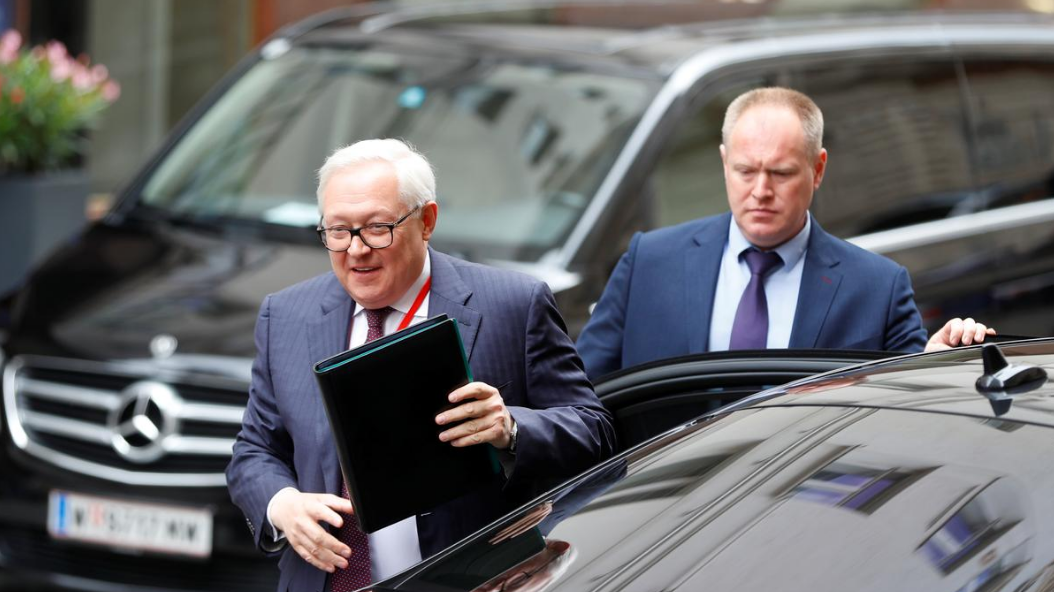
Russian deputy Foreign Minister Sergei Ryabkov arrives for a meeting with U.S. special envoy Marshall Billingslea in Vienna, Austria, June 22, 2020. /Reuters
Nuclear weapons talks between the United States and Russia started in Vienna on Monday, with the two countries' envoys making only guarded comments shortly before they met.
Little has been said officially about the arms control negotiations but the U.S. envoy has made clear they will be about nuclear weapons, suggesting they will include replacing the New Strategic Arms Reduction Treaty (START), the only remaining U.S.-Russia arms control pact that will expire in February next year.
Related reading: U.S.-Russia arms talks: Start for New START Treaty?
"We'll see," U.S. Special Presidential Envoy for Arms Control Marshall Billingslea told Reuters when asked what he expected to come of the talks as he arrived with his delegation at a palace adjoining Austria's Foreign Ministry.
His Russian interlocutor, Deputy Foreign Minister Sergei Ryabkov, was equally cautious, telling reporters soon afterwards: "Let's see, let's see. We are always very hopeful."
Both did not elaborate on what was being discussed in the talks.
The U.S. State Department has said Billingslea will be in Vienna for the talks on Monday and Tuesday.
New START imposes the last remaining limits on U.S. and Russian deployments of strategic nuclear arms to no more than 1,550 each. It can be extended for up to five years if both sides agree to.
Russia has offered to extend New START for up to five years, but U.S. President Donald Trump, who insists on China's participation in trilateral talks, is holding out.
Citing the fact that its nuclear power is not on the same order of magnitude as that of the United States and Russia, China has reiterated many times that it has no intention to join the so-called China-U.S.-Russia trilateral arms control negotiations and this position is "clear and consistent."
(With input from Reuters)