- Home
- China
- World
- Europe
- Politics
- Business
- Opinions
- Tech & Sci
- Culture
- Sports
- Travel
- Nature
- Picture
- Video
- Live
- TV
- Specials


Share






Copied
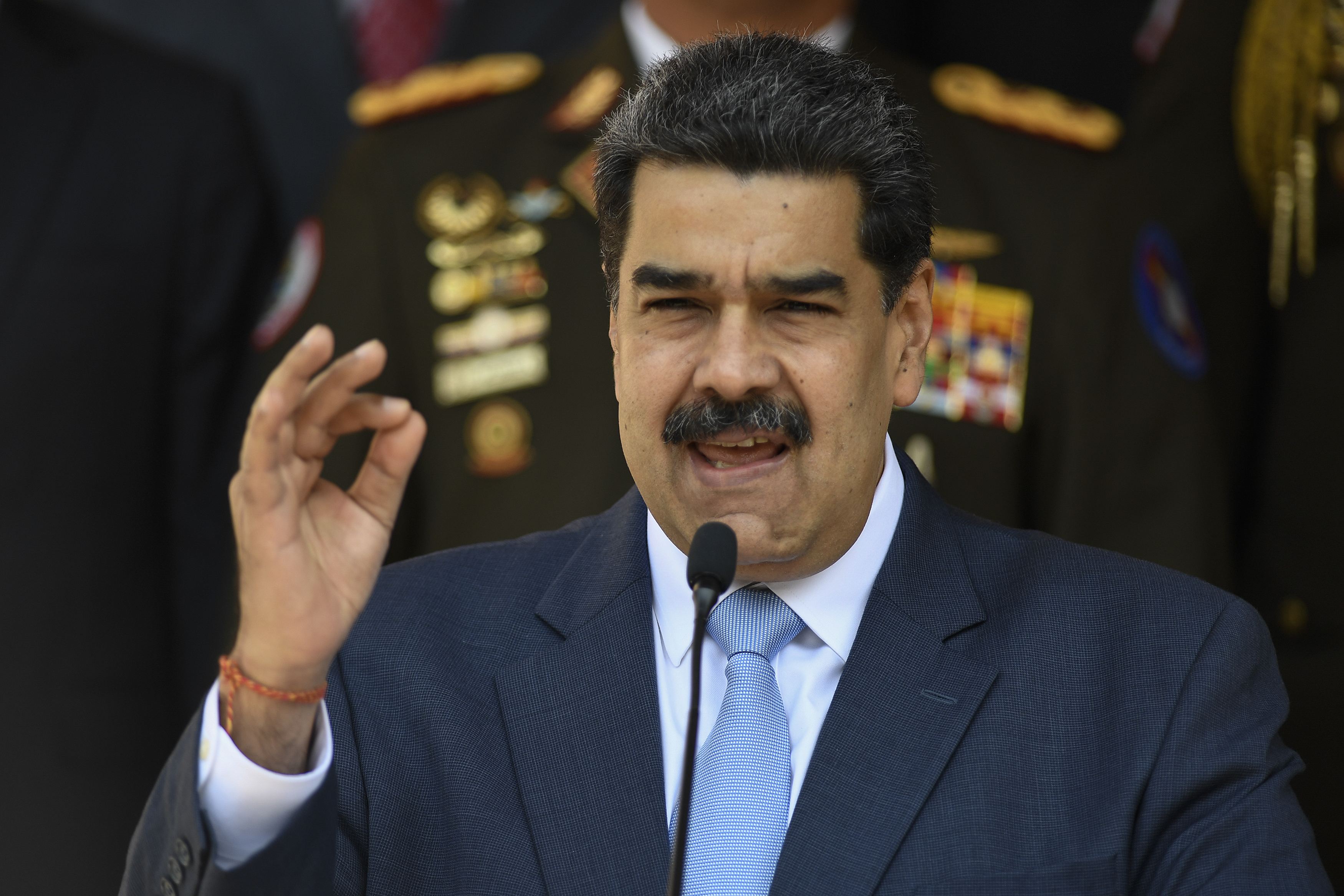
Venezuelan President Nicolas Maduro gives a press conference at the Miraflores Presidential Palace in Caracas, Venezuela, on March 12, 2020. /AP
Venezuela President Nicolas Maduro said on Monday he is "prepared" to talk to U.S. counterpart Donald Trump, who earlier claimed he was open to meeting the socialist leader to discuss his exit from power.
"When the time comes I'm prepared to speak respectfully with President Donald Trump," Maduro told the state news agency AVN.
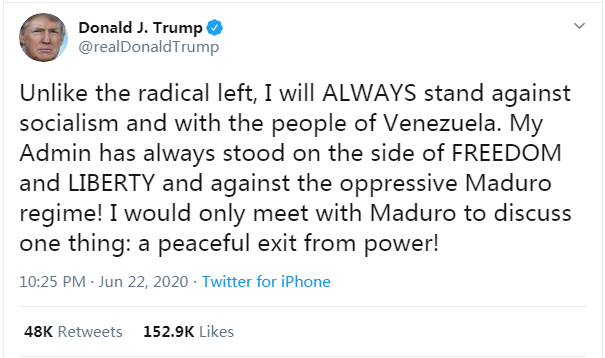
Trump said he "would maybe think about" meeting Maduro in an interview with Axios published on Sunday, but he changed track in a tweet on Monday.
"My Admin has always stood on the side of FREEDOM and LIBERTY and against the oppressive Maduro regime! I would only meet with Maduro to discuss one thing: a peaceful exit from power!" said Trump on Twitter.
Trump had expressed similar willingness to meet with Maduro in 2018, and Maduro also made overtures for talks. However, nothing materialized and the U.S. instead ratcheted up the pressure.
Maduro made no specific mention of Trump's quotes but said that "in the same way I spoke with [Joe] Biden, I could speak with Trump."
State TV throughout the day also played a video clip of Maduro informally talking with Biden in 2015 outside a meeting in Brazil. The two men were smiling, appearing to have a cordial conversation.
Maduro met Biden in 2015 when the latter was vice-president to Barack Obama. Biden is running against Trump for president in November's U.S. elections.
Presidential candidate Joe Biden in his own tweet took a shot at Trump.
"Trump talks tough on Venezuela, but admires thugs and dictators like Nicolas Maduro," Biden said. "As President, I will stand with the Venezuelan people and for democracy."
Washington has been one of the chief allies to Venezuela's opposition leader Juan Guaidó but that support has waned as the National Assembly president's challenge to Maduro's authority has lost impetus.
Guaido caused a stir 18 months ago declaring himself acting president after the opposition-controlled parliament decreed Maduro a usurper over his 2018 re-election in a poll widely viewed as rigged.
The U.S. was one of the first of more than 50 countries to recognize his claims and the Trump administration ramped up sanctions on Maduro and his inner circle in an effort to starve him of revenue and force his resignation.
After initially drawing huge crowds in anti-Maduro rallies, Guaidó's influence has been going downhill.
In January he even faced a challenge to his position as National Assembly leader from an opposition legislator and former ally -- an issue that has never been resolved.
The United States was first among more than 50 nations to back Guaidó, who as head of the opposition-led congress claimed presidential powers in early 2019, arguing that Maduro's reelection had been invalid.
Guaidó was a surprise guest at Trump's annual State of the Union address in February, where Trump recognized Guaidó as the only "legitimate president of Venezuela" and said that Maduro's hold on power "will be smashed and broken."
But Trump's former national security advisor, John Bolton, says in an upcoming book that Trump had wavered on his support for Guaidó. At times Trump wanted to take military action to oust Maduro, but he also said the socialist leader was too strong for Guaidó to topple, according to Bolton.
(With input from agencies)