- Home
- China
- World
- Europe
- Politics
- Business
- Opinions
- Tech & Sci
- Culture
- Sports
- Travel
- Nature
- Picture
- Video
- Live
- TV
- Specials


Share







Copied
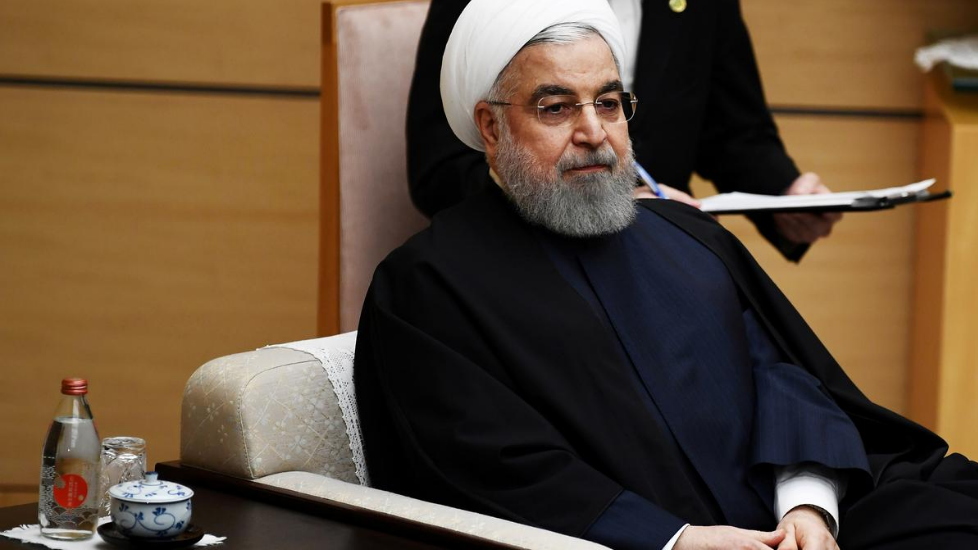
Iranian President Hassan Rouhani in Tokyo, Japan, December 20, 2019. /Reuters
Iran would be open to talks with the United States if Washington apologizes for exiting a 2015 nuclear deal and compensates Tehran, Iranian President Hassan Rouhani said on Wednesday.
U.S. President Donald Trump pulled out of the pact between Iran and six world powers in 2018 and reimposed sanctions, saying the agreement did not do enough to contain Tehran's missile program and regional influence.
We had no problem with talks with the U.S., but only if Washington would fulfill its obligations under the nuclear deal, apologize and compensate Tehran for its withdrawal from the 2015 deal, Rouhani said in a televised speech.
"But we know these calls for talks with Tehran are just words and lies," he added.
The National Security and Foreign Policy Commission of Iran's Parliament on Tuesday approved a plan to stop Iran's "voluntary" implementation of the Additional Protocol to the Non-Proliferation Treaty (NPT), semi-official Fars news agency reported.
In a reaction to the recent approval of a resolution by the International Atomic Energy Agency (IAEA), the Iranian Parliament has urged the government to reconsider the implementation of the Additional Protocol.
The IAEA's 35-nation board of governors passed a resolution on Friday, calling on Iran to cooperate fully with it and let the agency access two locations inside the country.
The board "calls on Iran to fully cooperate with the agency and satisfy the agency's requests without any further delay, including by providing prompt access to the locations specified by the agency," according to the text of the resolution submitted by France, Germany and Britain and adopted by a vote of 25 to two with seven abstentions, the IAEA said on its website.
Under the 2015 nuclear deal, also known as the JCPOA, signed by Iran and six world powers, including the United States, the Additional Protocol allows UN inspectors from the IAEA to carry out more intrusive inspections of Iran's nuclear program.
Earlier on Tuesday, the National Security and Foreign Policy Commission of Iran's Parliament in a statement condemned the recent resolution of the IAEA as "politicized and unprofessional."
"Over the past years, Iran has been more cooperative with the IAEA than other member states," said the Iranian parliament's statement.
However, "the IAEA adopted the anti-Iran resolution under the political and unprofessional pressures of the United States and its allies," it said.
Iran will not allow international institutions to be used as instruments by the United States and its allies to threaten the country's sovereignty, the statement stressed.
(With input from Xinhua and Reuters)