- Home
- China
- World
- Europe
- Politics
- Business
- Opinions
- Tech & Sci
- Culture
- Sports
- Travel
- Nature
- Picture
- Video
- Live
- TV
- Specials


Share







Copied
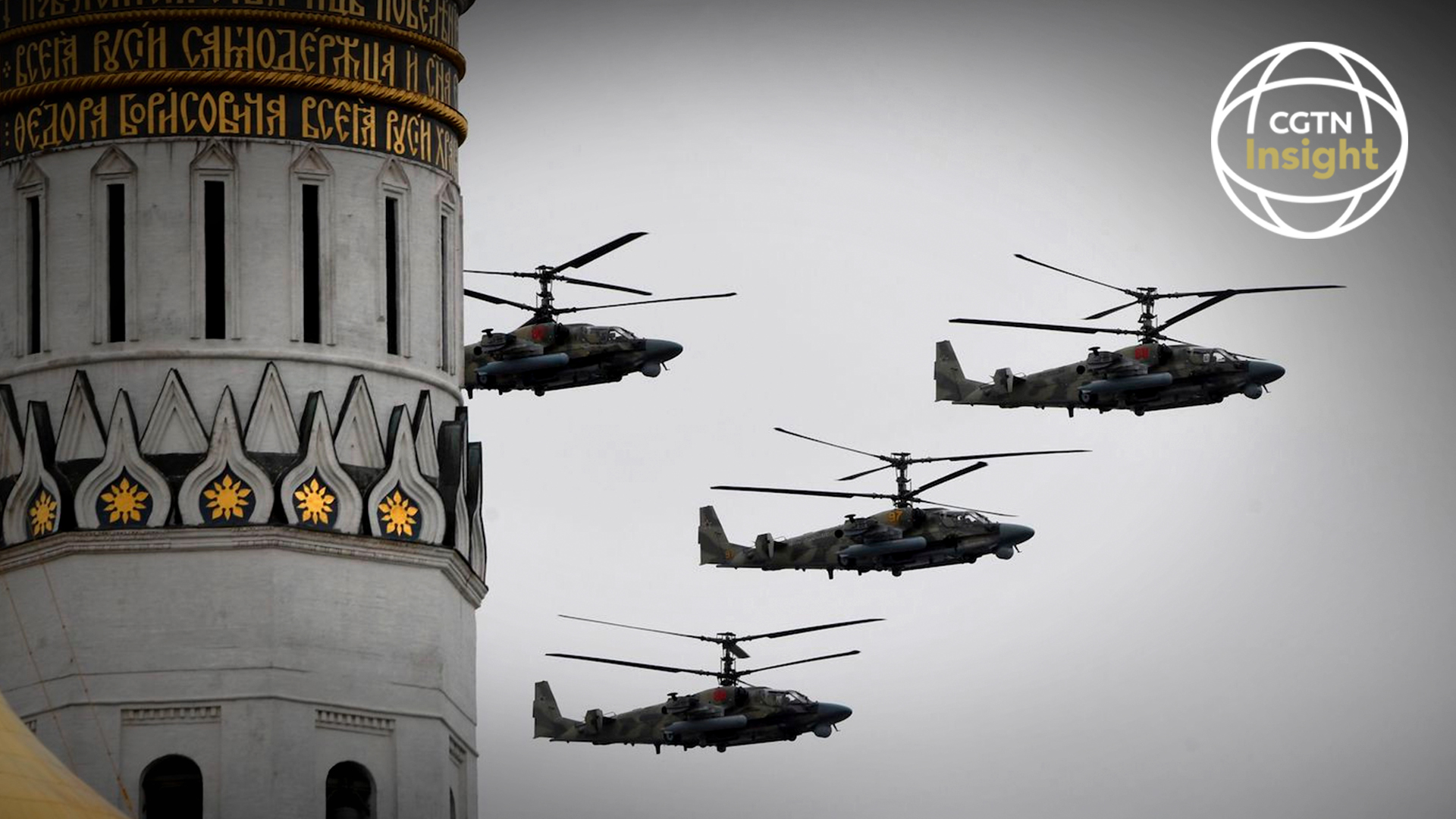
Russian Kamov Ka-52 "Alligator" attack helicopters fly over the Kremlin and Red Square to mark the 75th anniversary of the victory over Nazi Germany in the Second World War, Moscow, Russia, May 9, 2020. /AFP
Participants in the Treaty on Open Skies (TOS) assessed the consequences of Washington's planned exit from the accord on Monday. "This step can seriously damage the architecture of pan-European security and the arms control system," read the statement released after the meeting. It's no exaggeration that Washington's capriciousness is pushing the global security architecture to the brink of collapse.
Since assuming office, U.S. President Donald Trump has knocked down major pillars of the U.S.-Russia arms control system one after another. Despite his rhetoric of going big on arms control, Trump has been actively withdrawing the country from a slew of security pacts – the Anti-Ballistic Missile Treaty (ABMT) in 2002, the Joint Comprehensive Plan of Action (JCPOA) in 2018, and the Intermediate-Range Nuclear Forces Treaty (INF) in 2019. So far, the U.S. has shown no intension of agreeing on a five-year extension to the New Strategic Arms Reduction Treaty (START) that is poised to expire in February 2021.
These pacts had managed to bring Moscow's and Washington's deployed arsenals to the lowest level since the Cold War. Trump's quit from them means the TOS is one of the very few remaining arms control pact between the world's largest two nuclear powers. Although the TOS carries less importance than the INF and New START in terms of arms control, it aims to lessen military tensions among states-parties via their participation in the overflights.
Washington's quit means Moscow is highly likely to follow suit. "We have already said that the key condition for our ratification of the Treaty on Open Skies was a possibility to survey the United States' territory," Russian Foreign Minister Sergey Lavrov reportedly said. The absence of the world's largest two nuclear powers could result in an effective end of the TOS, thus destructing the decades-long arms control arrangements between them.
"This may trigger a new round of arms race," Xin Qiang, the deputy director of the Center for U.S. Studies at Fudan University, told CGTN. Without arms control, the two traditional rivals would be freer to build up their stockpiles, thus boosting the chances of the return to the Cold War era.
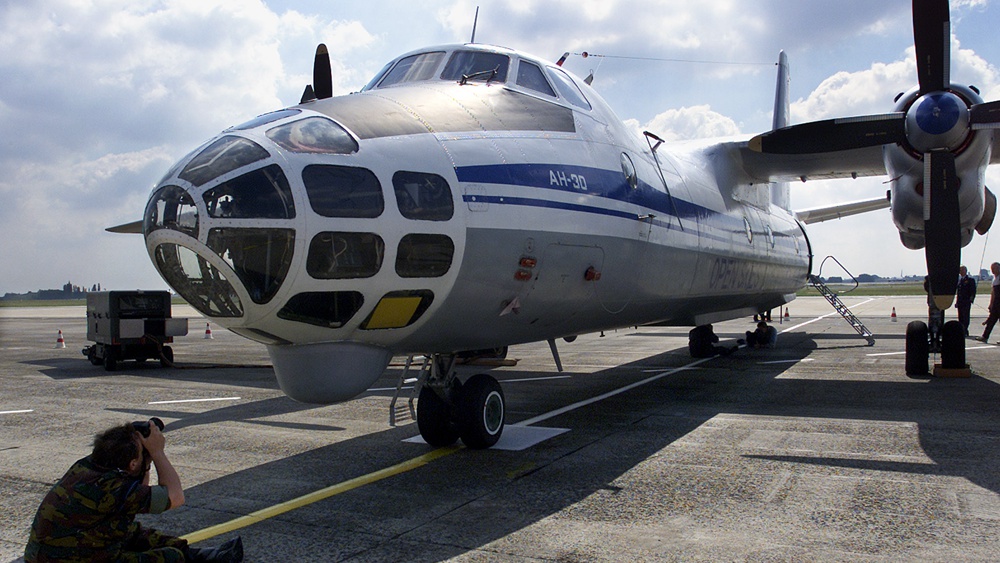
A Russian Antonov aircraft stands on the tarmac of Brussels military airport before flying over the Benelux and Germany under the Treaty on Open Skies, August 13, 2002. /AP
Worse still, the Russia-U.S. arms race may exert domino effects. A slew of members of the North Atlantic Treaty Organization (NATO) have played a part in the TOS, and as the treaty stipulates, they are free to share the intelligence the U.S. collected. As a result of Washington's quit, these European participants cannot obtain military information via this means. This would tremendously raise their security anxieties and firmed up their determination to enhance military might.
Many other countries, including India and the DPRK, would also be encouraged to ramp up their efforts in developing nuclear weapons. In this way, the global security architecture established after the Second World War would gradually collapse as a result of Washington's capriciousness.
The White House is fully aware of the consequences of its withdrawal. But the country's strategic concept under the Trump administration determines its insistence on the pullout, Xin said. The TOS was clinched in 1992 when the U.S. and Russia were well-matched in the military. After almost three decades' development, the world's superpower has seen its military strength far more advanced than its previous rival and thus believed it is at a disadvantage in the 1992 deal. Withdrawing the country from all international pacts and organizations deemed not beneficial has long been a strategic choice of the Trump administration. The businessman-turned-president has been shouting "America First" since his campaign trail in 2016.
In addition, the U.S. has seen its ties with Russia deteriorating in recent years in the wake of Russia's "annexation" of Crimea, its Constitutional changes, and the Russiagate scandal. In response to the rising anti-Russia sentiments in American society, Trump has been acting tough on Russia. In this context, American officials announced to withdraw from the TOS in May and have been reluctant to extend the New START in last month's Vienna talks. Washington may consider using its quit from the arms control pacts as leverage for more concessions from Moscow.
Trump's TOS withdrawal is shortsighted, to say the least. "America First" doctrine may bring the country some interests in the short term, but has put the world's stability in jeopardy, and the U.S. will eventually suffer losses in the long term. After all, no state can benefit from a world with no effective security architecture.
(If you want to contribute and have specific expertise, please contact us at opinions@cgtn.com.)