- Home
- China
- World
- Europe
- Politics
- Business
- Opinions
- Tech & Sci
- Culture
- Sports
- Travel
- Nature
- Picture
- Video
- Live
- TV
- Specials


Share







Copied
Replacing fossil fuel with a new energy network powered by and shared with every household, business and community domestically or internationally is the only way out before global warming hits its worst point in 2040 as estimated by many scientists.
Jeremy Rifkin, president of the Foundation on Economic Trends, economist and futurist, speaks at length about the urgent need to deal with climate for the sake of humanity in his latest book "The Green New Deal: Why the Fossil Fuel Civilization Will Collapse by 2028." In it, Rifkin speaks of the need for a bold economic plan to save life on Earth.
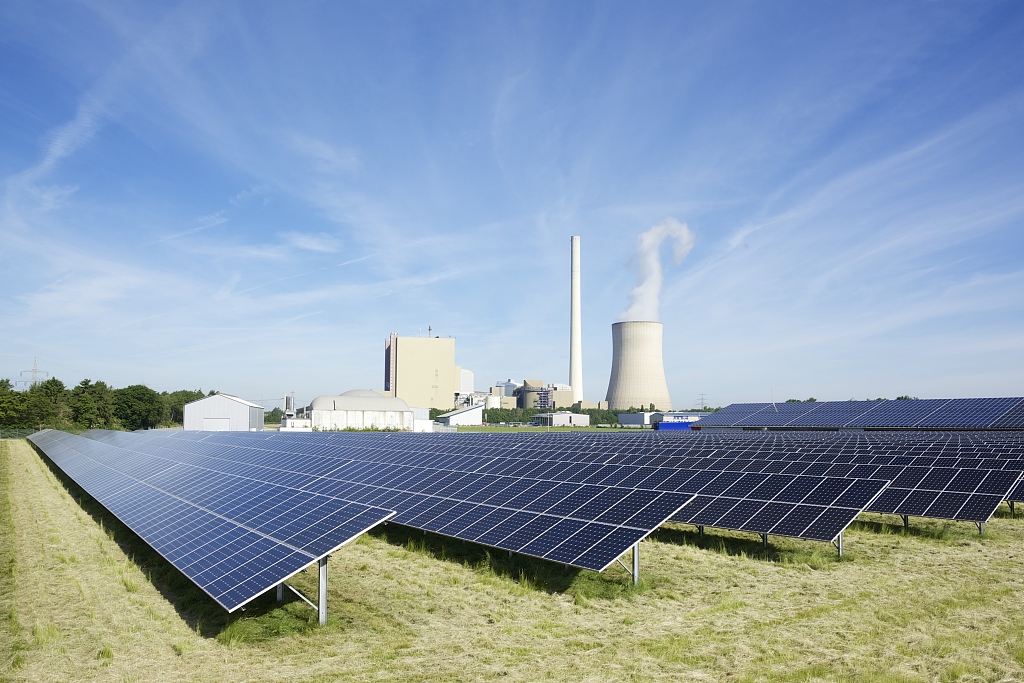
The new book comes in at a very delicate time when the world is struggling to cope with the COVID-19 pandemic. The economy has slowed down, mobility is constrained, and lives lost to the virus keep rising. Nevertheless, Rifkin thinks this couldn't be a better lesson as we are so intertwined with nature that any turbulence in the natural world as the result of our behavior will consequently take a toll on us in return.
"There is a clear relationship between the escalating number of pandemics we have had over the last many years and climate change, and there will be more," he said.
Nonetheless, however messy and bleak a reality it unveils, hope remains.
"The developing model based on fossil fuel is dying, dying in real time," said Rifkin. "We are now in a crisis, and we need now to create a new narrative, a new vision for the world."
Rifkin has painted quite a blueprint in which a new digitalized energy internet will emerge as a major power engine by merging communication, electricity and mobile internet with the help of internet-of-things technology.
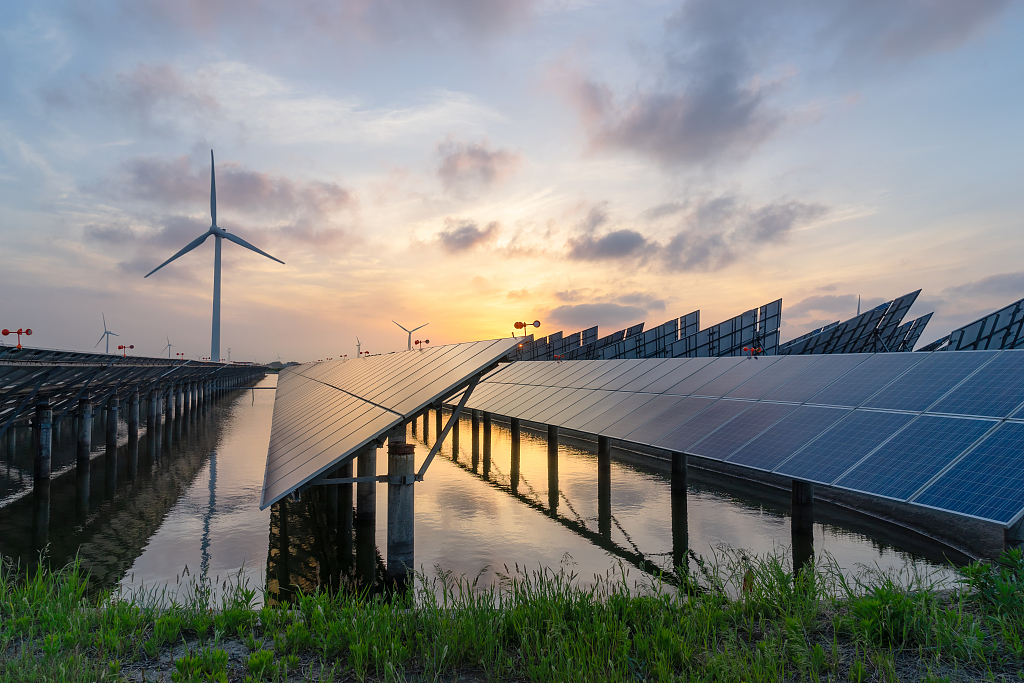
When these three internets connect, it allows millions of families, small businesses and communities to produce their own solar or wind energy for the national or international grid and allows power sharing through the same internet we use to share information and communicate. What's more, the microgrid connection enables our resilience in case of future natural disasters. If the national grid dies, many other micro grids would step in and guarantee the energy supply.
A good vision requires swift action
"We have one country now, in official policy which has begun to make this move. It's the People's Republic of China," said Rifkin.
He said China is the only country that has made the necessary changes to its constitution and "the first country to say that all future development in China must adhere to the principles of nature."
What Rifkin advocates, in many ways, resonates with China's carbon-free resolution. To achieve its decarbonization goals, China has pushed several green initiatives, including efforts to transition from coal to renewable energy, investments in new technologies and mechanisms to put a price on carbon. The country's Made in China 2025 strategy has already started to push the development in industries like electric cars.
"China has cultural DNA for the belief that nature is not resource (that) human beings are always part of the natural world, while in the Western world, the religion-based tradition leads people to the understanding that nature is for humans to dominate," said Rifkin.
The European Union (EU) has also begun to shift its old economic model from one reliant on fossil fuel to green energy. With renewable energy like wind and solar power becoming much cheaper, more investment tends to flow into this sector quickly.
Despite the early moves made by the EU and China, concerns remain over the new deal's feasibility. During the discussion session organized by the Center for China and Globalization (CCG), Wang Yi, vice president of the Science and Technology Strategy Institutes, pointed out that China is still a developing country and requires reform, change of governance and tons of details to consider before blending smart technology with renewable energy to replace the current coal-depended developing model.
Still, Rifkin is confident enough to say that it is not important how big the shift is, what matters the most is how fast the shift is happening.
"It is important to have a protocol agreed to first by Europe and China, and hopefully America will come in to share these energy," Rifkin said. "It only works if it is shared. I do not believe there is any superpower to control this; that is not happening. "
( All photos via VCG. )
(If you want to contribute and have specific expertise, please contact us at nature@cgtn.com)